If you’ve spent any time around performance cars, you’ve heard the term “ECU tuning” thrown around like it’s magic. It isn’t magic — it’s software. But understanding what that software actually does can help you make a smarter decision before you hand your car over for a flash.
What the ECU Actually Does
Your vehicle’s Engine Control Unit (ECU) is the onboard computer that manages nearly every function of how your engine runs: fuel delivery, ignition timing, boost pressure on turbocharged and supercharged vehicles, throttle response, and emissions behavior. It’s constantly reading sensor data — airflow, oxygen levels, knock, temperature — and adjusting output in real time.
Factory ECU calibrations are built conservatively. Manufacturers have to account for cheap gas, poor maintenance habits, extreme climates, and emissions regulations across every market the vehicle is sold in. That means there’s almost always performance left on the table, even on a completely stock engine.
What Changes When You Tune
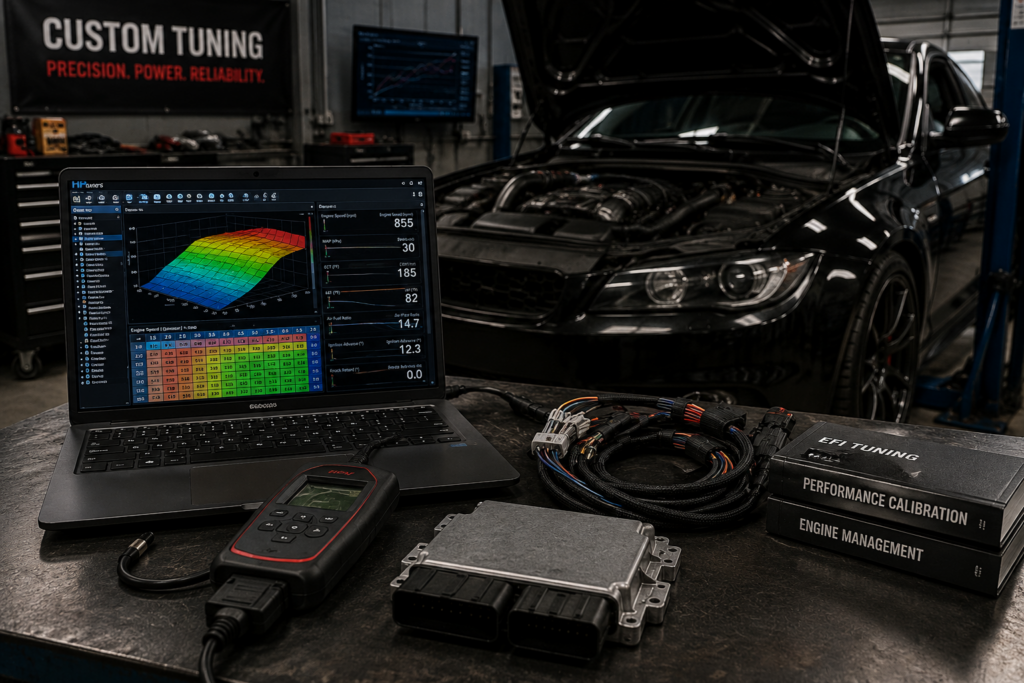
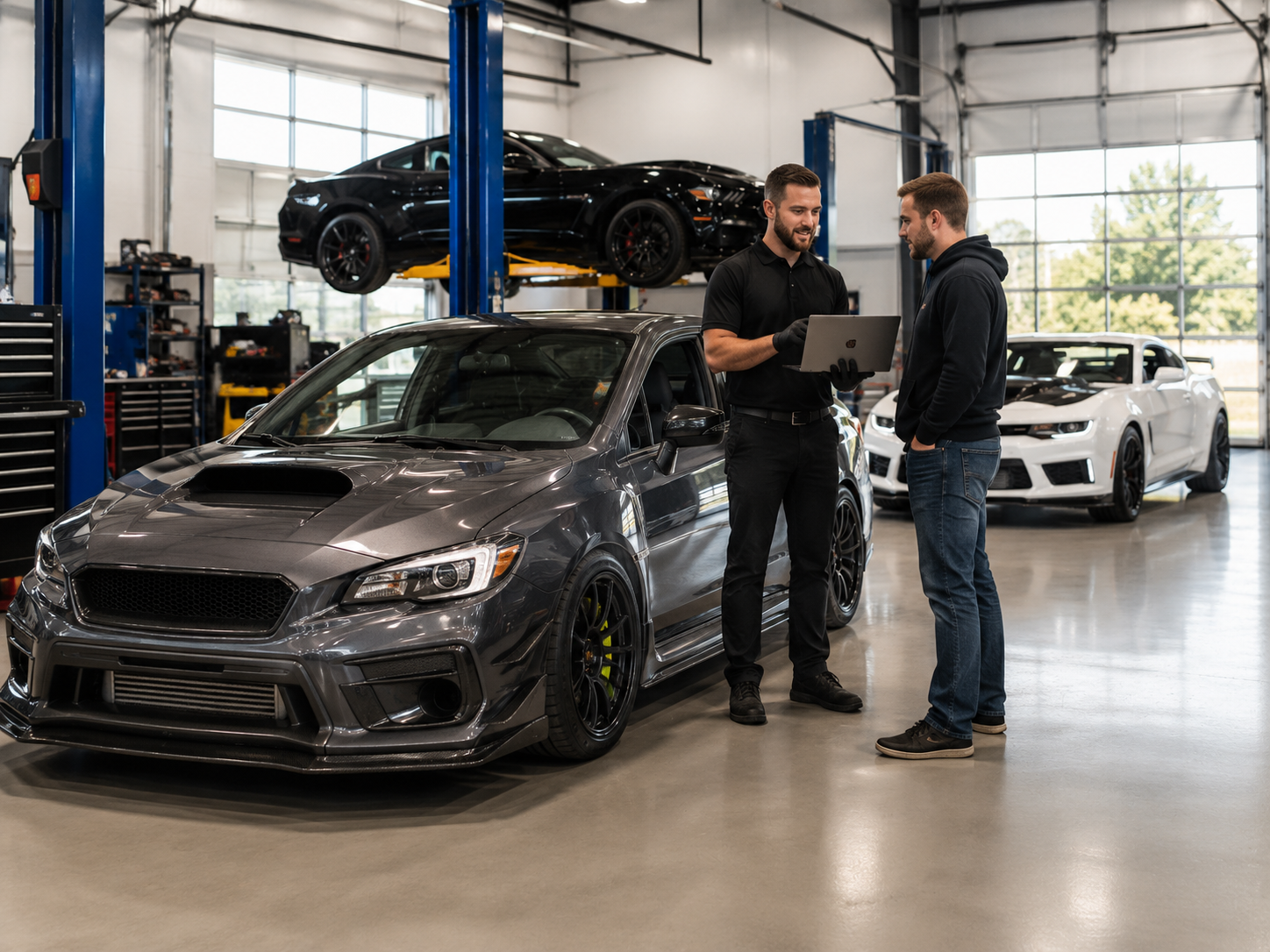
ECU tuning, sometimes called a “flash” or “reflash,” rewrites the parameters the factory computer uses to run the engine. Depending on the vehicle and the goals, a tune can:
- Sharpen throttle response and reduce lag
- Optimize air/fuel ratios for the fuel you’re actually running
- Adjust boost targets on turbocharged or supercharged platforms
- Smooth out shift points on automatic transmissions
- Correct fueling and timing after bolt-on parts like intakes or exhaust systems
The difference between a generic “canned” tune and a professionally calibrated one usually comes down to how the vehicle is actually tested — on a dyno, with real sensor data, accounting for the specific combination of parts, fuel, and driving conditions.
Before You Tune: What Needs to Be Right First
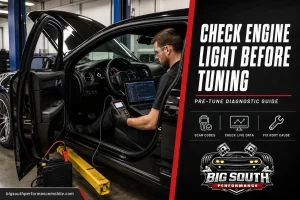
A tune amplifies whatever condition your vehicle is already in. If there’s a vacuum leak, worn spark plugs, a marginal fuel pump, or an unresolved check engine light, tuning on top of that can create new problems instead of solving them. That’s why any legitimate shop should start with a diagnostic check and a mechanical readiness inspection before touching the calibration.
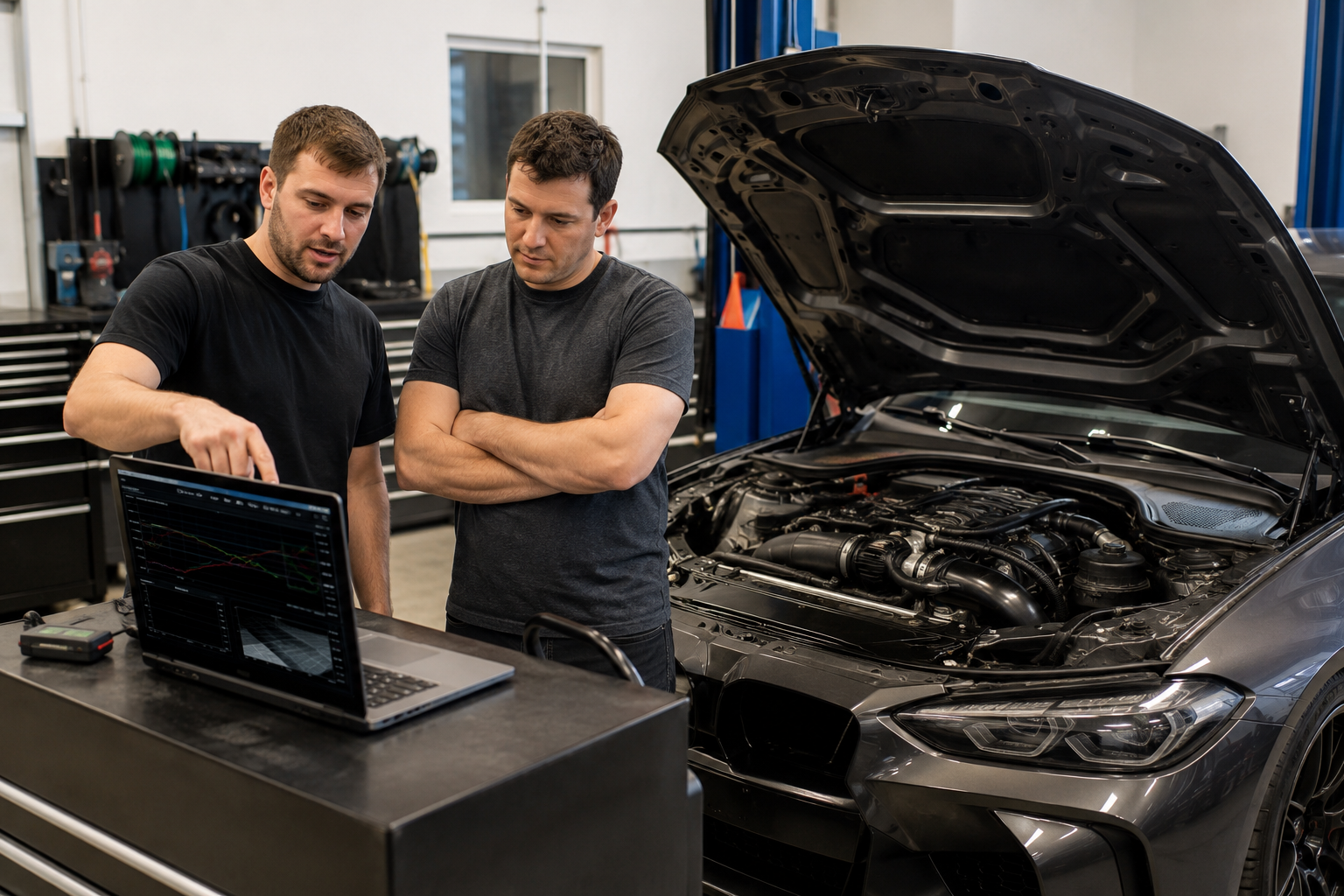
Fuel quality matters too. A tune built around premium fuel won’t behave the same on regular, and running the wrong octane after a tune can lead to knock and, over time, engine damage. Part of a proper tuning consultation includes talking through what fuel you’ll realistically run day to day.
Is ECU Tuning Right for Your Vehicle?
Whether you’re chasing more power out of a turbocharged platform, want crisper daily driving manners, or just modified your car and need the ECU recalibrated to match, tuning is one of the highest-value upgrades available — as long as it’s done with the right diagnostics, the right equipment, and a technician who understands your specific combination.
At Big South Performance, every tuning project starts with a conversation about your goals, your driving style, and your fuel plan, followed by a full mechanical check before any calibration work begins. If you’re in Winston-Salem or the greater Piedmont Triad and you’re curious whether your vehicle is a good candidate for a tune, reach out to our team or stop by the shop to talk through your options.