
Most major repairs don’t happen out of nowhere. They usually start as a small symptom — a light, a sound, a slight change in how the car feels — that gets put off until it turns into something expensive. A proper diagnostic check exists to catch problems while they’re still small and affordable to fix.
1. The Check Engine Light Is On
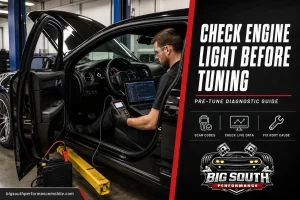
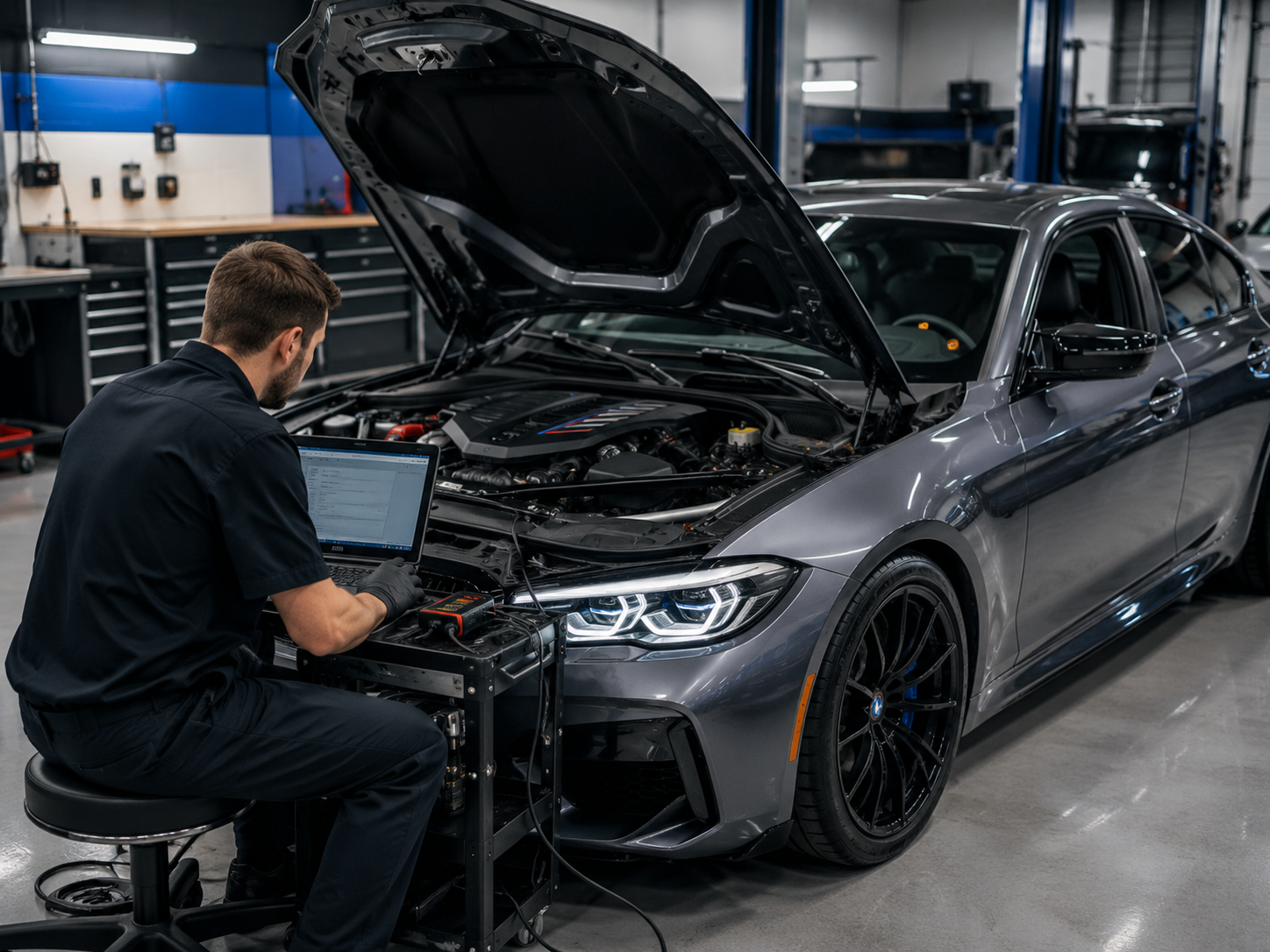
It’s tempting to ignore a check engine light, especially if the car still seems to drive fine. But that light can mean anything from a loose gas cap to a failing sensor that’s about to cause real fueling or timing problems. A diagnostic scan pulls the actual trouble codes so you know whether it’s a quick fix or something that needs immediate attention — and it’s a required first step before any ECU tuning work, since tuning on top of an unresolved fault code just compounds the problem.
2. Noticeable Changes in Power or Throttle Response
If your car feels noticeably slower to respond, hesitates under acceleration, or seems to be down on power compared to how it normally drives, that’s usually a sign something in the fuel, ignition, or sensor system isn’t performing the way the ECU expects. These symptoms are easy to write off as “just getting older,” but they’re often diagnosable and fixable.
3. Unusual Noises Under the Hood
Ticking, knocking, grinding, or squealing noises are the engine and drivetrain’s way of telling you something is wearing out or making contact it shouldn’t be. Catching these early — before a belt fails completely or a bearing seizes — is almost always the difference between a routine repair and a tow truck.
4. Fluid Leaks or Unusual Smells
A drop of fluid under the car, a burning smell, or a sweet coolant odor in the cabin are all signals worth investigating. Cooling and lubrication systems are especially important to catch early, since running low on coolant or oil — even briefly — can cause serious, expensive engine damage.
5. You’re Planning to Modify or Tune the Vehicle
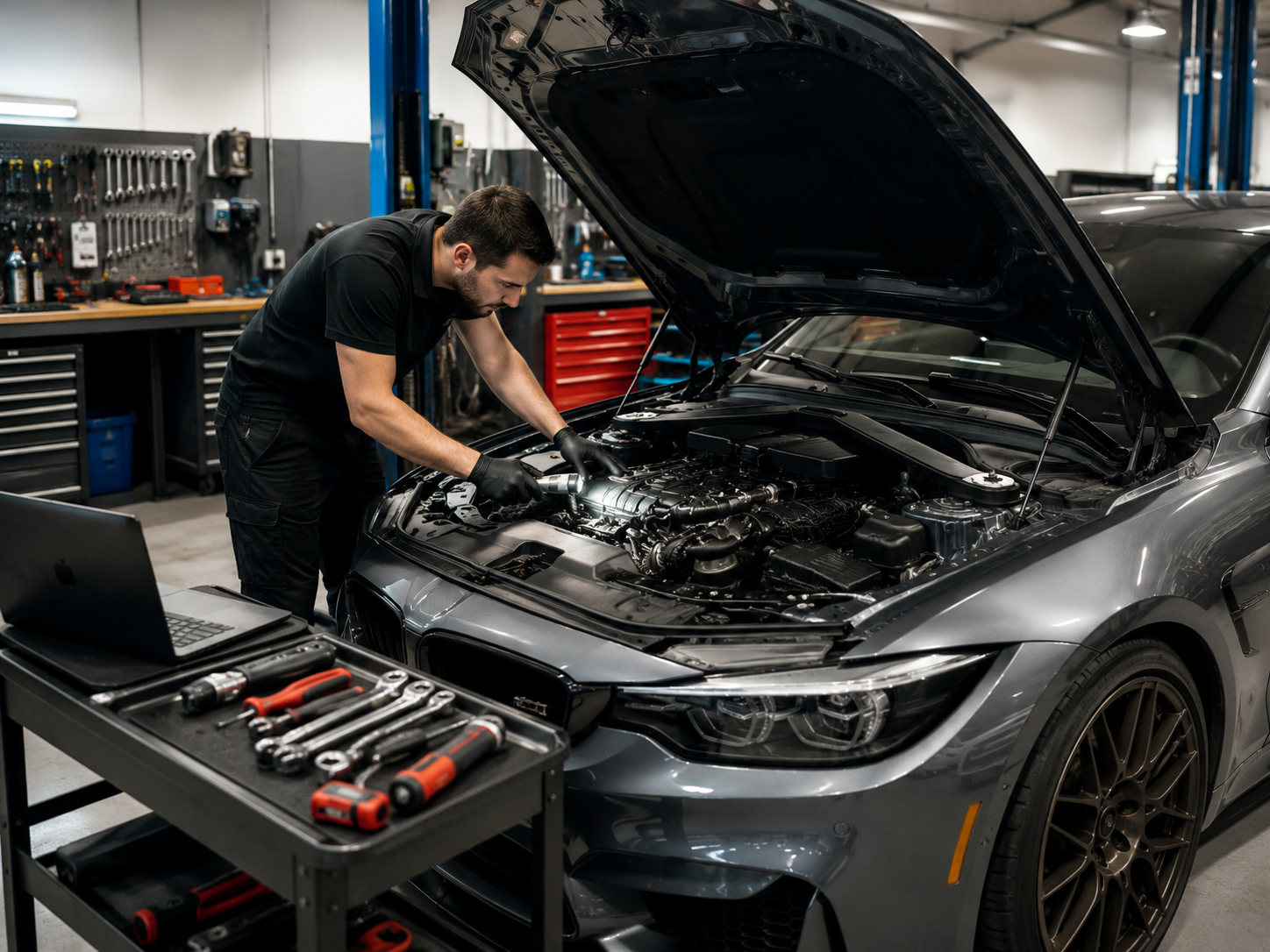
Even if nothing feels wrong, a diagnostic and mechanical readiness inspection should be step one before any performance upgrade — a new intake, a tune, forced induction, or an engine swap. Modifications amplify whatever condition the vehicle is already in, so it’s worth confirming everything is healthy first, rather than finding out mid-project.
When in Doubt, Get It Checked
A diagnostic check is quick, affordable, and gives you real information instead of guesswork. If you’re noticing any of these signs, or you’re planning an upgrade and want to make sure your vehicle is ready for it, schedule a visit with Big South Performance in Winston-Salem or anywhere across the Piedmont Triad.