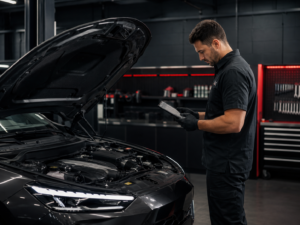
It’s easy to get focused on horsepower numbers and forget that a car has to stop, turn, and put that power down just as well as it makes it. Brake and suspension upgrades don’t get the same attention as an engine build or a tune, but they’re what actually make added power usable — and safe.
Why More Power Means More Braking Demand
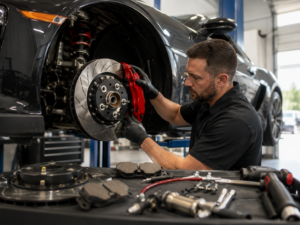
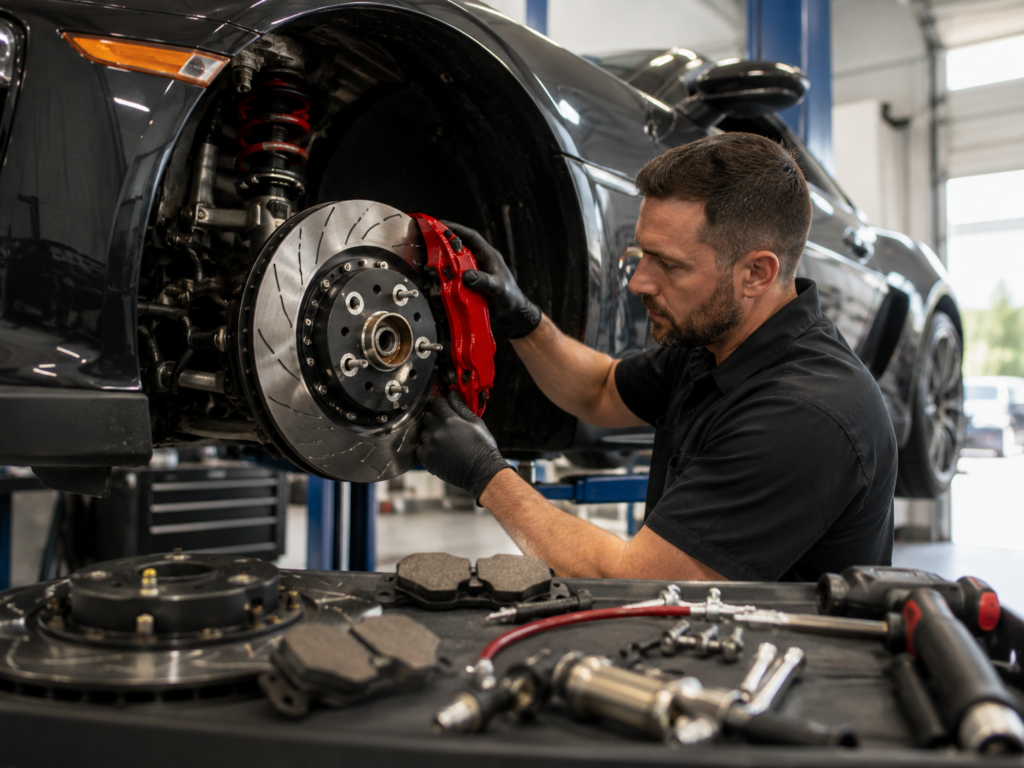
Every added bit of horsepower and torque means higher speeds and harder acceleration, which means your brakes are being asked to dissipate more kinetic energy every time you slow down. Factory brake systems are sized around factory power and factory weight — once you change either, the margin those brakes were designed with starts to shrink. Upgraded pads, rotors, and in some cases larger calipers restore (or improve on) that margin.
Suspension: Where Power Actually Meets the Road
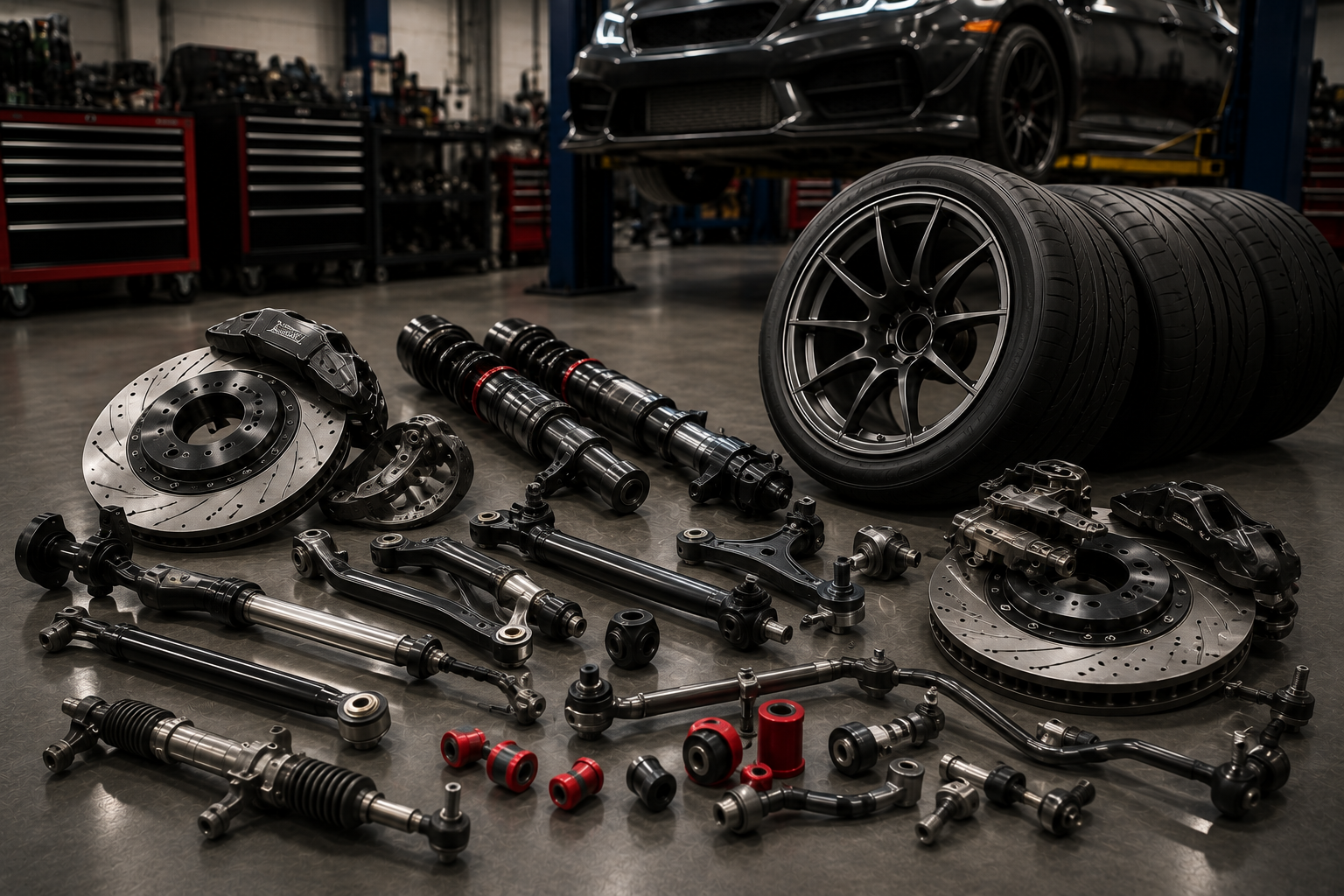
Horsepower doesn’t mean much if the chassis can’t control body roll, keep the tires planted, and transfer weight predictably under acceleration, braking, and cornering. Performance suspension upgrades — springs, shocks, sway bars, bushings — are what turn raw power into a car that actually handles the way it accelerates. This is especially true for restomod and street-performance builds, where a modern powertrain is often paired with a chassis that was never designed to handle that much torque.
Tires are part of this equation too. Even the best suspension setup can’t put power down safely on tires that aren’t rated for the load, heat, or grip a modified vehicle now demands. Tire choice should be matched to how the car is actually driven, whether that’s daily commuting, spirited street driving, or track days.
Don’t Forget the Drivetrain
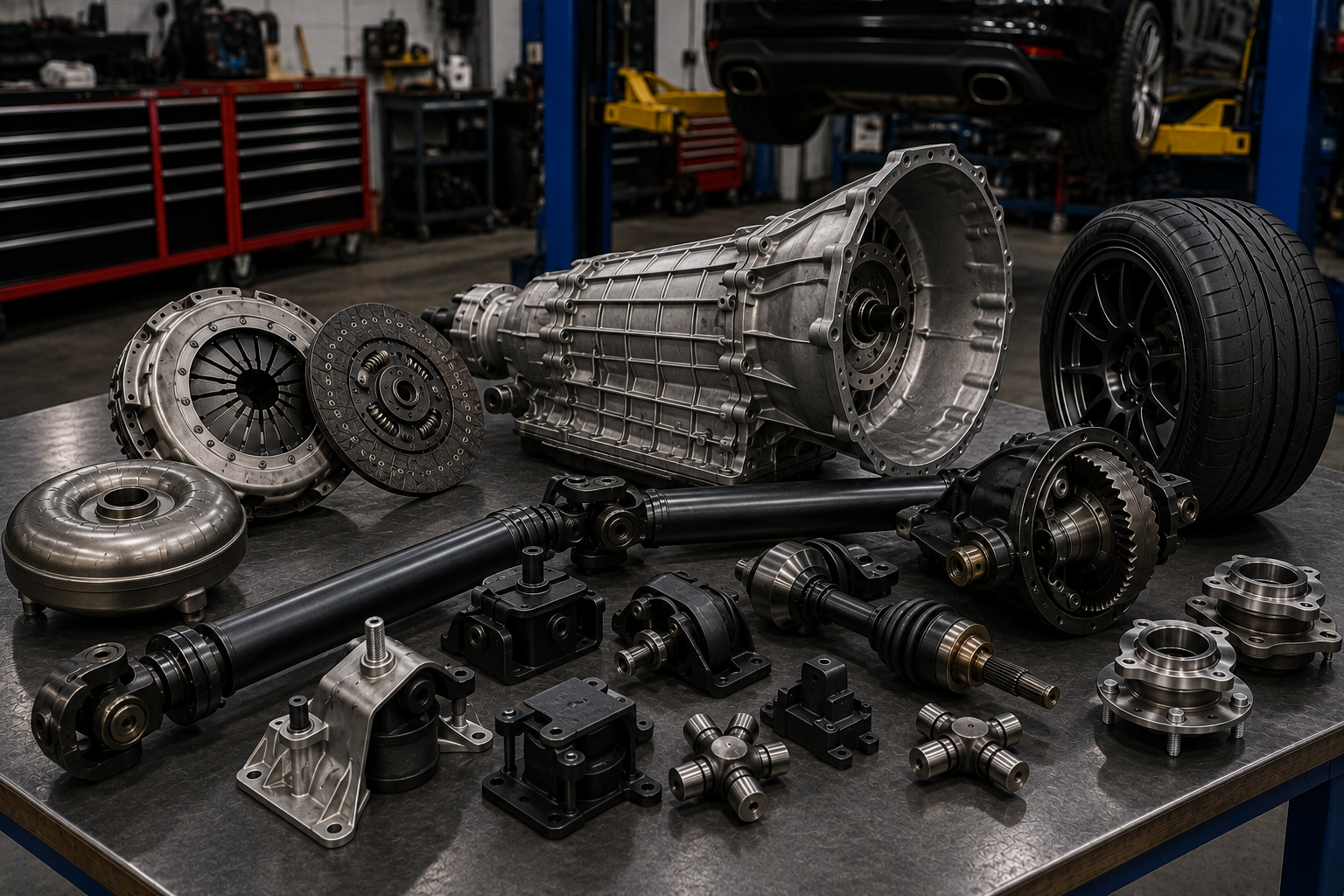
Brakes and suspension get most of the attention, but the drivetrain has to hold up too. Upgraded power puts additional load on transmissions, driveshafts, differentials, and axles. A differential or axle that was perfectly adequate for a stock engine can become a weak point once power goes up significantly — and it’s a far more expensive failure than catching it ahead of time with an inspection.
Building It as a System, Not a List of Parts
The mistake we see most often is treating engine work, brakes, suspension, and drivetrain as separate, unrelated decisions. They’re not — they’re one system. A build plan that accounts for how much power you’re adding, how the vehicle will actually be driven, and what the brakes, suspension, and drivetrain need to safely support that power is what separates a genuinely well-built performance car from one that’s fast in a straight line and unpredictable everywhere else.
Plan Your Chassis Upgrades With Us
Whether you’re adding a tune, a forced induction system, or a full engine build, it’s worth having a conversation about what your brakes, suspension, and drivetrain need to keep up. Contact Big South Performance in Winston-Salem to plan a build that handles as well as it accelerates.