“Flash programming” and “ECU tuning” get used almost interchangeably, but they’re not the same thing. Both involve writing new software to your vehicle’s computer, but the purpose, source, and outcome are different — and knowing which one your vehicle actually needs can save you time and money.
What Flash Programming & Updates Actually Covers
Flash programming refers to installing or updating the software on a vehicle’s control modules — not just the engine ECU, but often transmission, body, and other onboard modules as well. This typically means installing manufacturer-issued updates: software revisions that address known issues, improve drivability, update emissions calibrations, or resolve a specific diagnostic trouble code the manufacturer has since fixed in software.
Common Reasons a Vehicle Needs Flash Programming
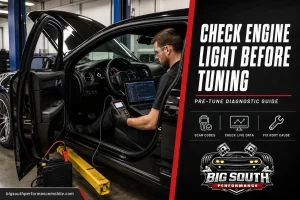
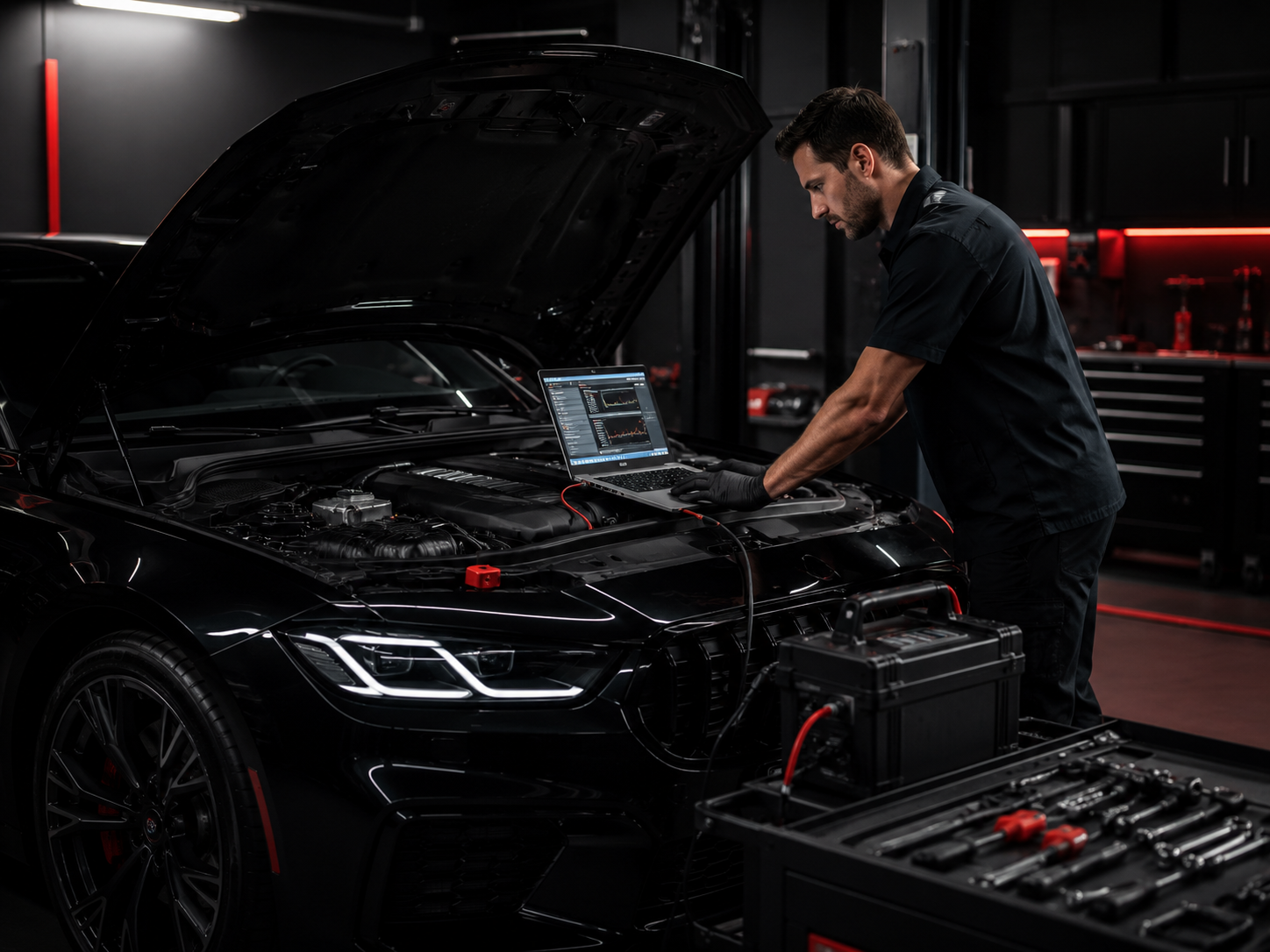
A vehicle might need flash programming for reasons that have nothing to do with performance: a persistent check engine light tied to a known software issue, a new module or component that needs to be programmed to communicate with the rest of the vehicle, a transmission shifting oddly due to an outdated calibration, or a manufacturer service bulletin calling for an update. In these cases, the goal is to get the vehicle back to correct, as-designed factory behavior.
How That’s Different From Performance Tuning
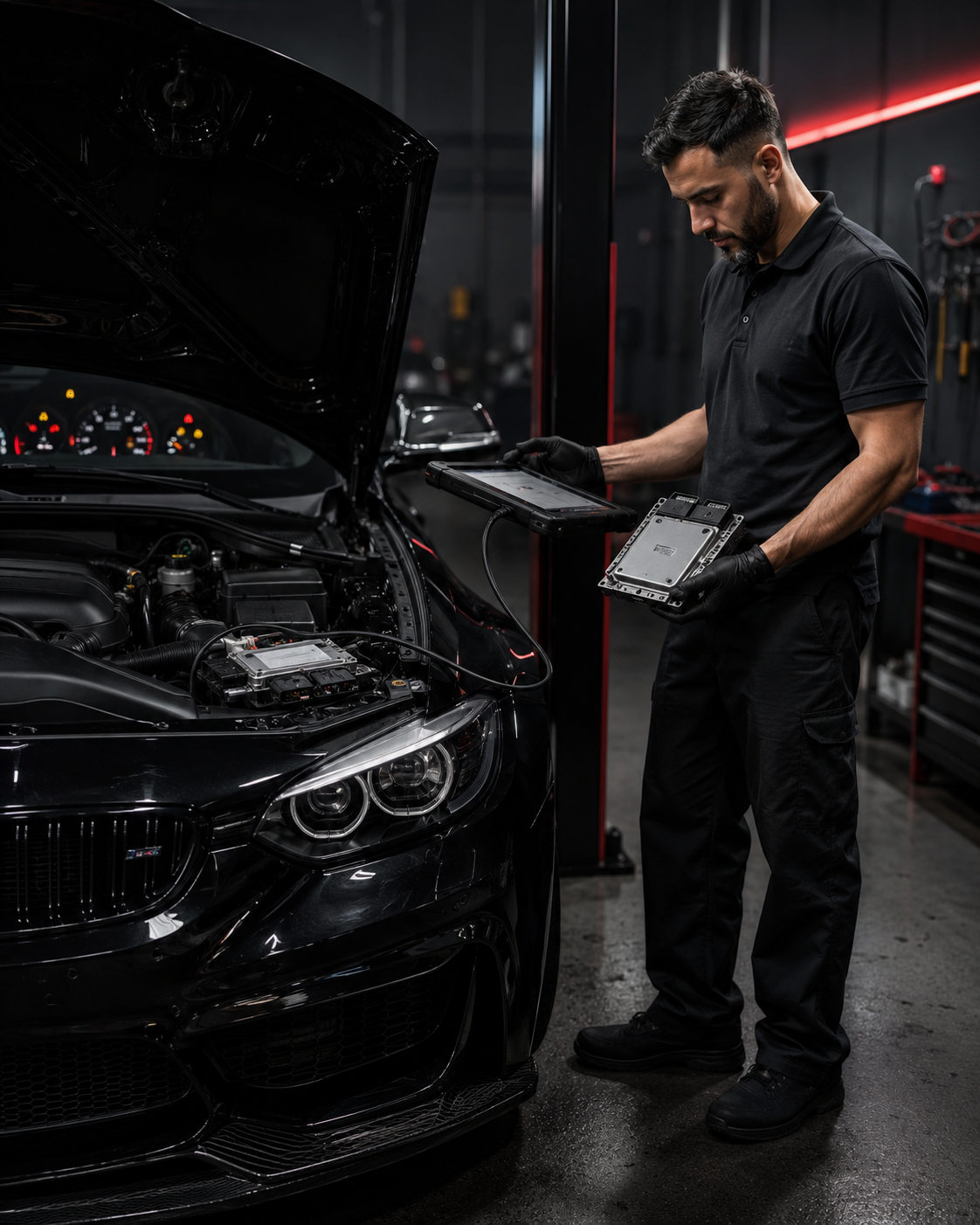
Performance tuning starts from that same factory baseline and intentionally moves away from it — adjusting fuel, timing, boost, and other parameters to increase power, sharpen response, or support aftermarket parts. It’s a custom calibration built around your specific goals and modifications, not a manufacturer-issued fix.
Put simply: flash programming restores or updates factory-intended behavior. Performance tuning deliberately changes that behavior to do something the factory calibration wasn’t designed to do.
When You Might Need Both
It’s common for a vehicle to need a flash update before it’s tuned — resolving an outdated or faulty factory calibration is part of getting an accurate baseline before custom tuning work begins. Likewise, a vehicle that’s already been performance tuned may occasionally need diagnostic work using proper flash programming tools and software to correctly read and interpret what’s happening on a modified ECU.
What the Process Involves
Proper flash programming requires manufacturer-level or manufacturer-approved software and a stable, correctly powered connection to the vehicle throughout the update — an interrupted flash can leave a module unresponsive and turn a routine visit into a much bigger repair. Before anything is written to a module, it’s worth confirming exactly which software version is currently installed and which update actually applies, rather than assuming every check engine light needs the same fix.
Not Sure Which One You Need?
If your vehicle has a lingering check engine light, a software-related recall, or drivability issues that don’t seem to match a mechanical problem, it may simply need a proper flash update rather than a performance tune. Reach out to Big South Performance in Winston-Salem and we’ll diagnose it correctly before recommending either path.