Forced induction is one of the most effective ways to add real power to an engine, but the two most common paths to get there — turbocharging and supercharging — work in fundamentally different ways, and the right choice depends on what you actually want out of your vehicle.
How They’re Powered
A turbocharger is driven by exhaust energy. Spent exhaust gases spin a turbine, which drives a compressor that pushes more air into the engine. Because it’s using energy that would otherwise be wasted out the tailpipe, a turbo can offer strong efficiency and serious high-power potential — but boost builds progressively as exhaust flow increases, which is part of what people mean when they talk about “turbo lag.”
A supercharger, by contrast, is mechanically driven directly off the engine, typically by a belt and pulley system. Because it’s tied directly to engine speed rather than exhaust flow, a supercharger often produces boost earlier in the RPM range, giving a more immediate, linear feel to throttle response.
Installation and Integration Differences
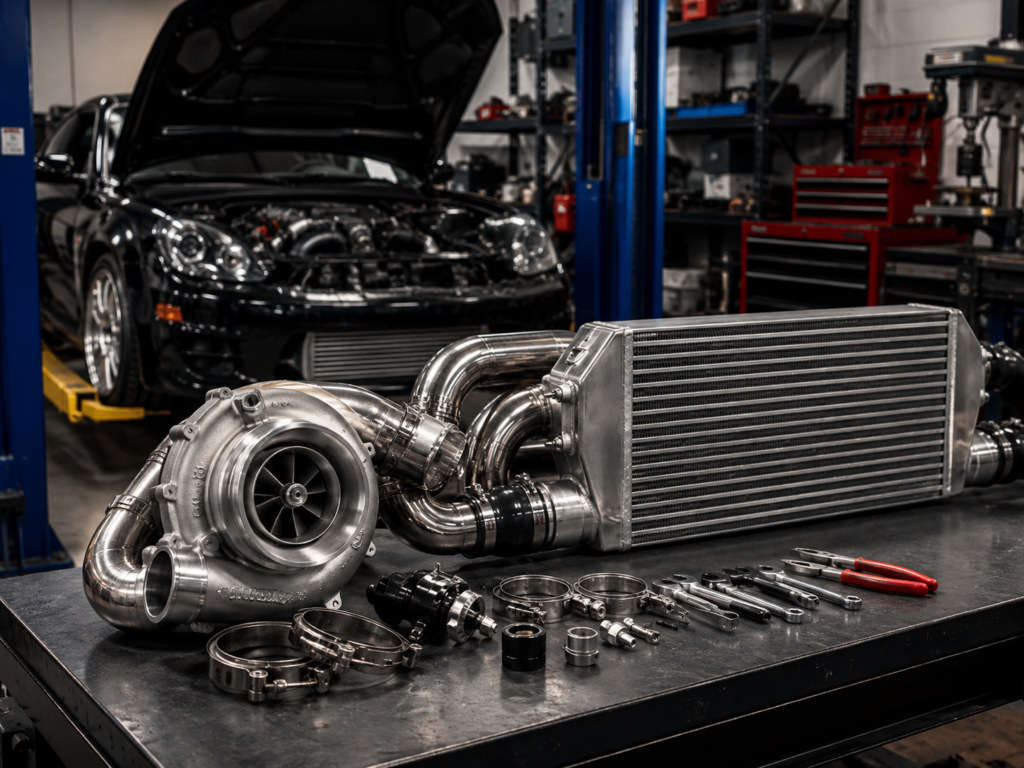
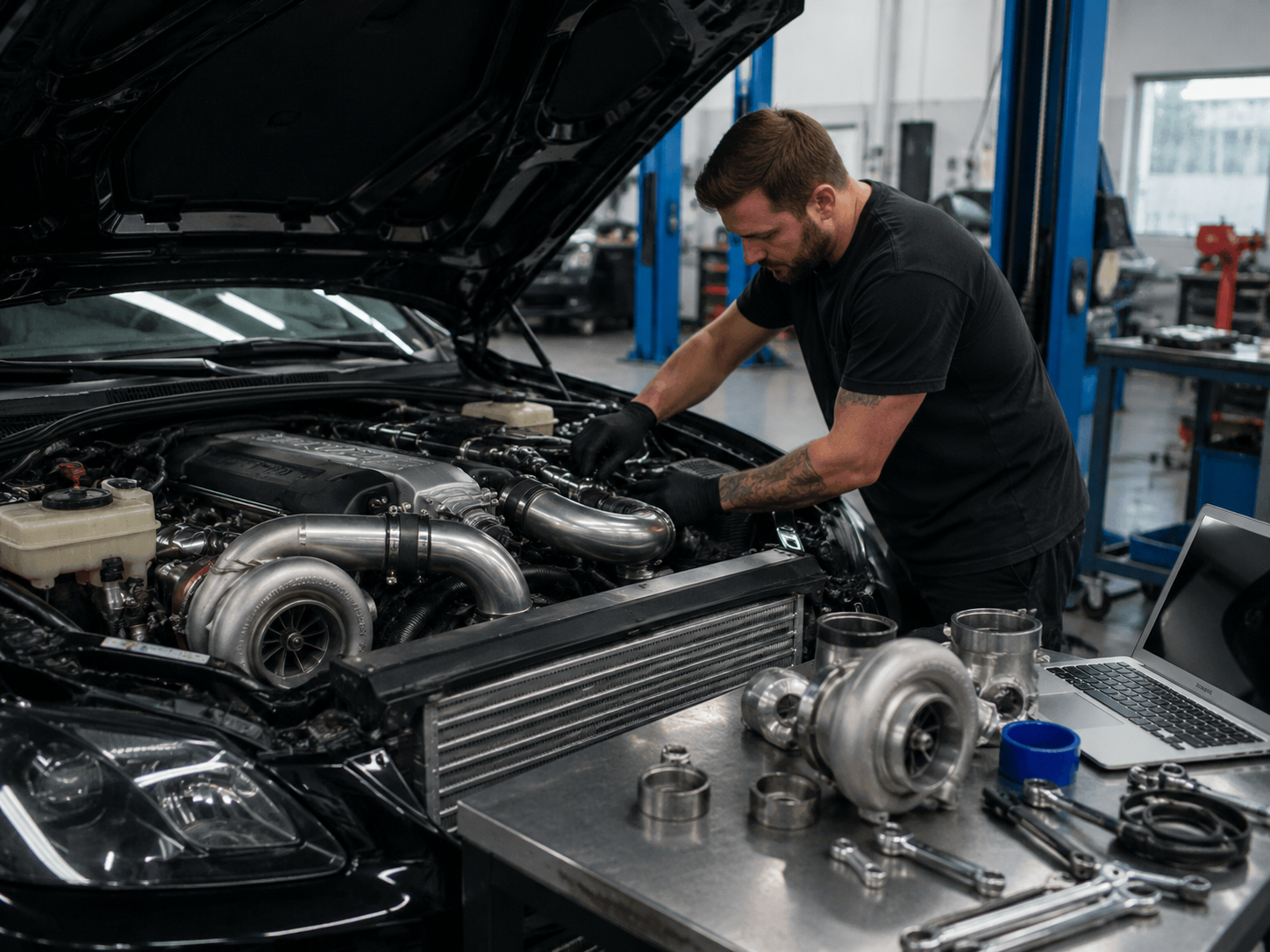
The two setups also demand different supporting hardware. A turbo installation requires exhaust-side integration, charge piping, and wastegate control, and often needs oil and sometimes coolant routing to keep the turbo itself running at safe temperatures. It also generates significant exhaust heat that has to be managed.
A supercharger installation instead requires belt, pulley, and bracket integration, and depending on the design, may need separate lubrication or use an integrated or separate bypass system. Rather than exhaust heat, the main consideration is the mechanical load it adds directly to the engine.
Which One Fits Your Goals?
There’s no universally “better” option — it comes down to how you drive and what you’re building toward. If you want immediate, predictable throttle response and don’t mind the added mechanical load and belt maintenance, a supercharger is often the more straightforward path. If you’re chasing high-end power potential and strong efficiency, and you’re comfortable with some amount of lag and more complex exhaust-side plumbing, a turbo setup usually offers more headroom.
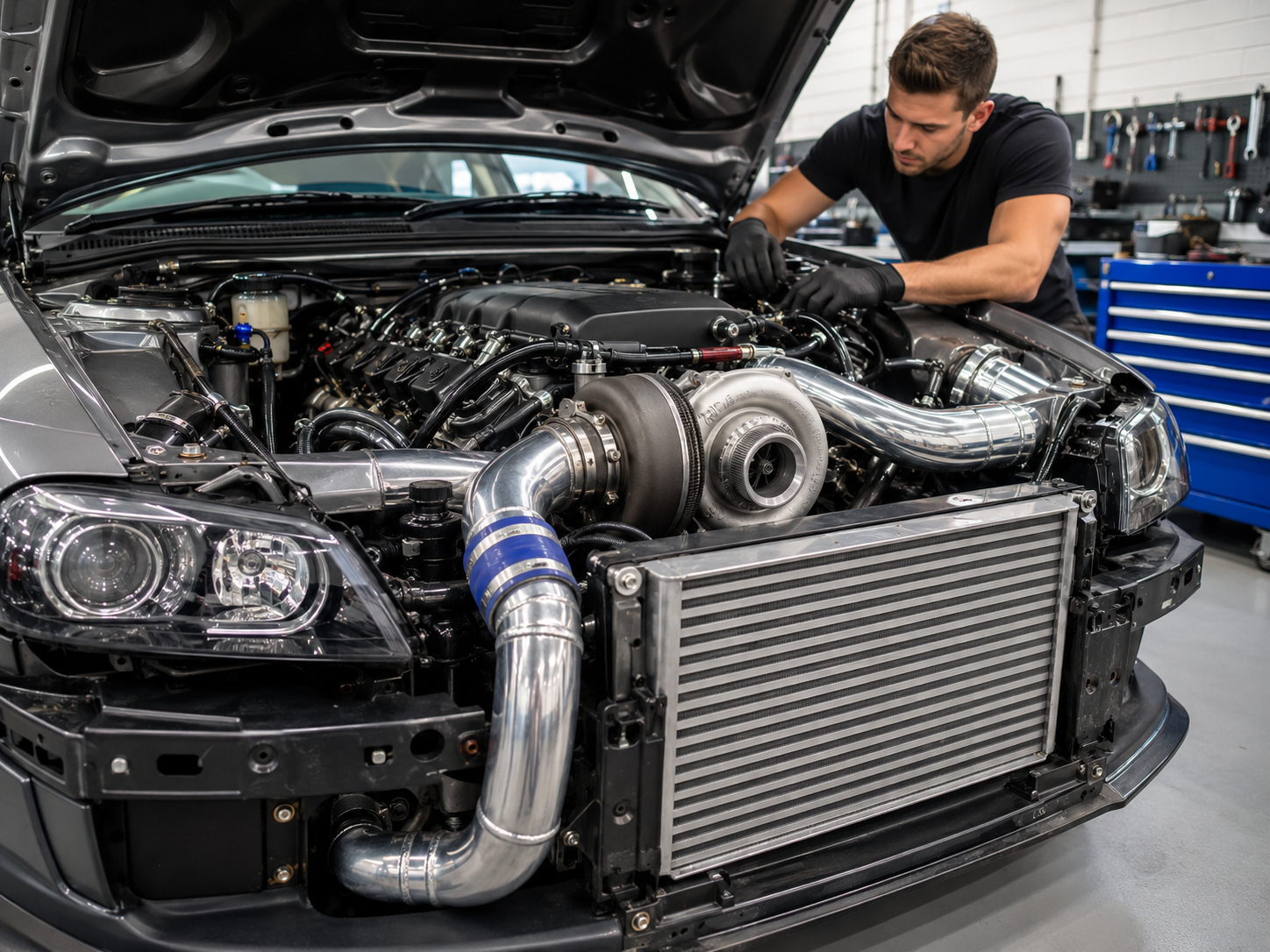
Either path also changes what your engine needs to support it safely — fuel system capacity, cooling, and ECU tuning all have to be matched to the new airflow, which is why forced induction installs should never be treated as a standalone bolt-on.
Talk Through Your Build With Us
Whether you’re leaning turbo, supercharger, or just aren’t sure yet, it helps to talk through your goals, your budget, and your vehicle’s current condition before committing to a direction. If you’re in Winston-Salem or across the Piedmont Triad, reach out to Big South Performance and we’ll help you figure out which setup actually makes sense for how you drive.