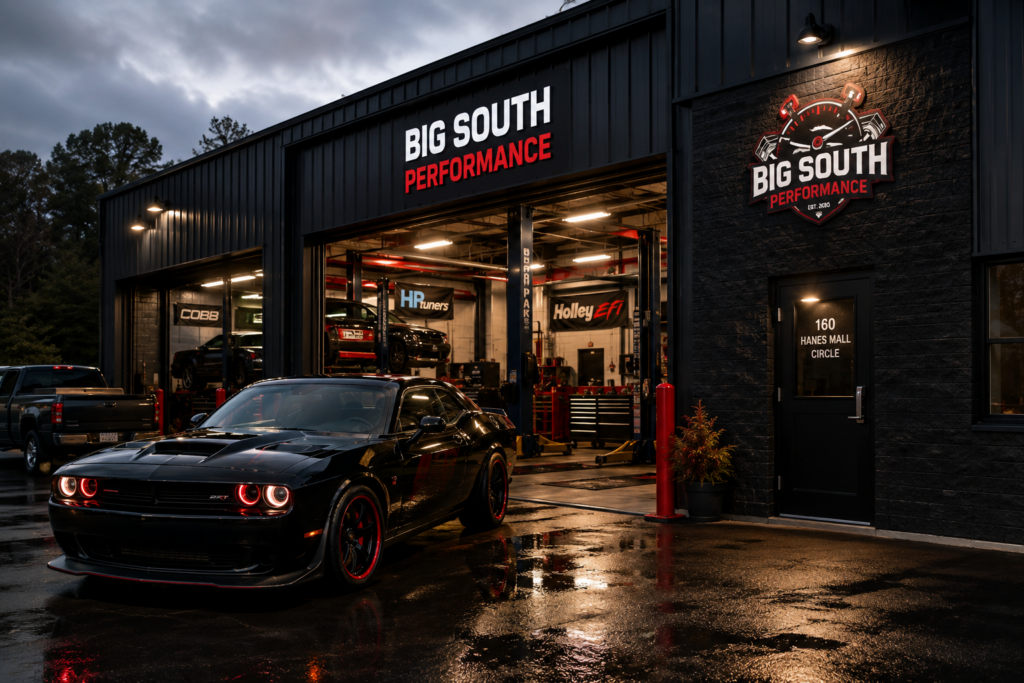
Big South Performance is a performance auto shop serving Winston-Salem, Forsyth County, and automotive enthusiasts throughout the Piedmont Triad. We specialize in developing performance vehicles through ECU tuning, carefully selected modifications, restomod engineering, powertrain integration, and motorsport-focused solutions.
Our work is built around one principle: every part of a performance vehicle must work together.
Adding horsepower without evaluating fuel delivery, engine management, cooling, drivetrain capacity, suspension, brakes, and traction can create an unbalanced vehicle. Big South Performance takes a complete-system approach to help owners build vehicles that are powerful, responsive, properly integrated, and suited to how they will actually be driven.
Whether you are improving a street car, developing a restomod, correcting problems with an existing build, or planning a more advanced performance project, our team can help establish a clear path forward.
Big South Performance provides performance-focused automotive services for drivers who want more than factory-level power, response, handling, or character.
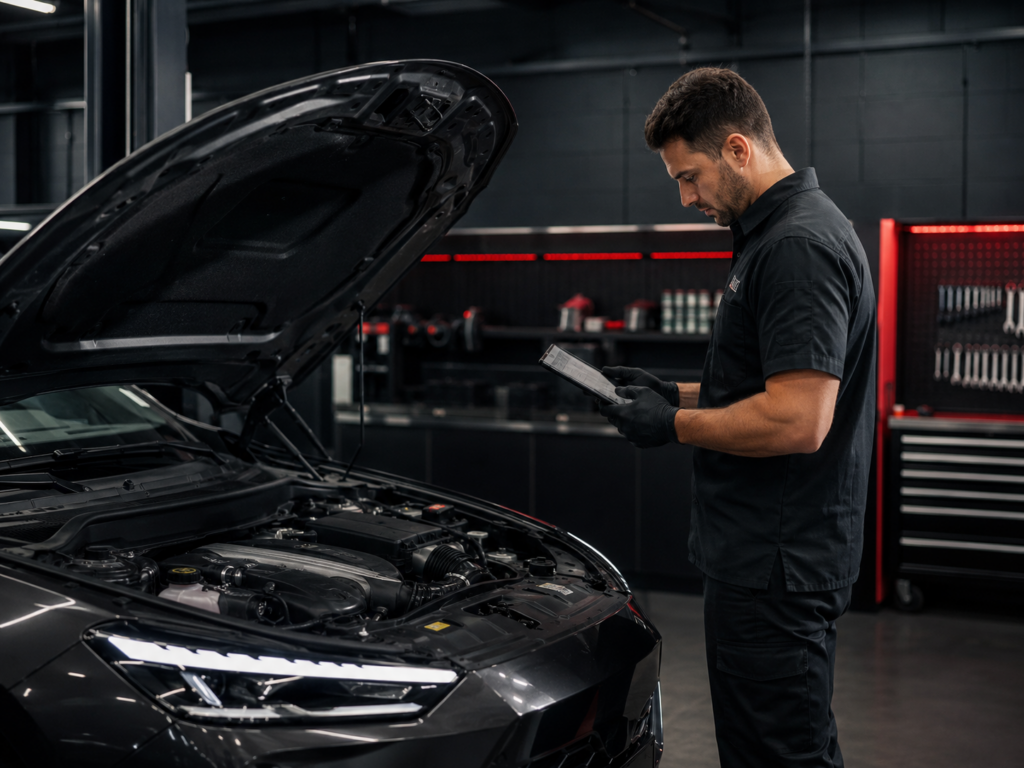
Our performance capabilities are centered around:
Every project begins with the vehicle, its current condition, its existing modifications, and the owner’s intended use.
There is no universal performance package that is right for every car. A daily-driven street vehicle, weekend cruiser, drag-oriented build, road-course vehicle, and classic restomod all require different priorities.
A performance auto shop modifies, calibrates, and develops vehicles to improve measurable or driver-focused characteristics such as:
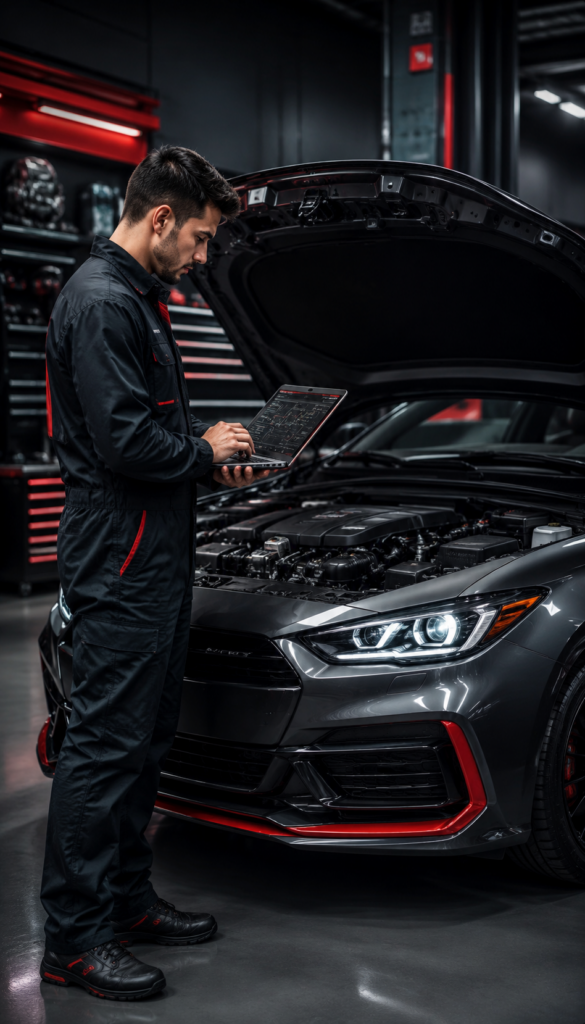
A conventional repair shop typically restores a vehicle to factory operating condition. A performance shop goes further by changing how the vehicle operates and how its mechanical and electronic systems work together.
Performance automotive work may involve the engine, ECU, fuel system, intake, exhaust, transmission, differential, axles, suspension, brakes, cooling system, tires, and chassis. Because these systems interact, successful modification requires planning rather than a collection of unrelated parts.
Before recommending modifications, Big South Performance considers what the owner wants the vehicle to do.
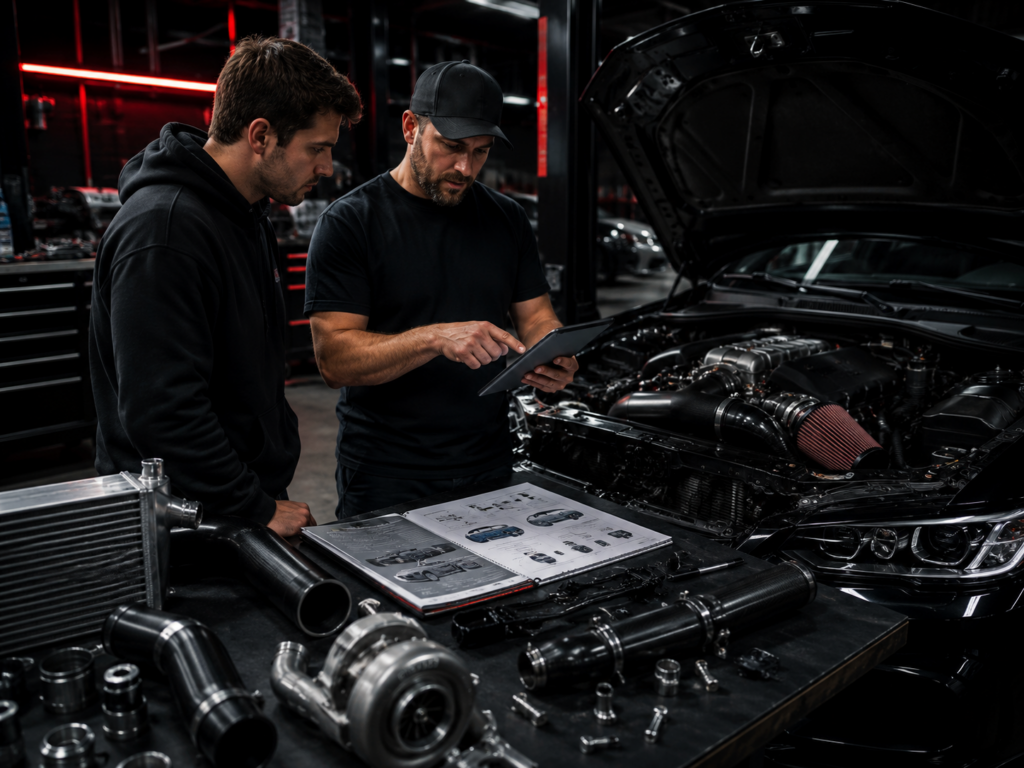
A well-developed plan may account for:
This approach helps prevent common problems such as incompatible components, unnecessary upgrades, poor drivability, excessive heat, insufficient fuel delivery, transmission failure, or modifications that do not support the vehicle’s intended use.
Modern performance vehicles rely on electronic control systems to manage engine and drivetrain operation.
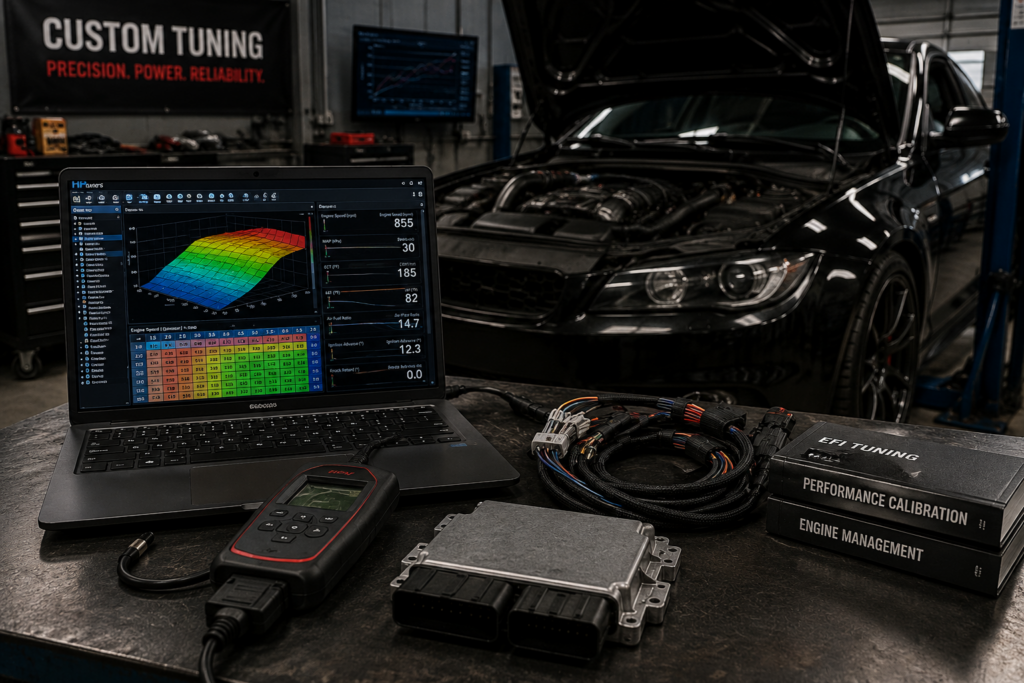
The engine control unit may regulate:
When compatible performance modifications change engine airflow, fuel requirements, boost, or power output, the original factory calibration may no longer be appropriate for the new combination.
Performance tuning can help coordinate supported modifications and refine how the vehicle responds under different operating conditions.
Depending on the vehicle and supported platform, calibration work may address:
A calibration cannot correct a worn engine, weak fuel pump, ignition failure, cooling problem, vacuum leak, damaged sensor, wiring fault, or improperly installed component.
Before tuning, the vehicle must be mechanically capable of supporting the requested calibration. Existing problems should be identified and corrected so the tuning process is based on a sound mechanical foundation.
A restomod combines the character of a classic vehicle with carefully selected modern improvements.
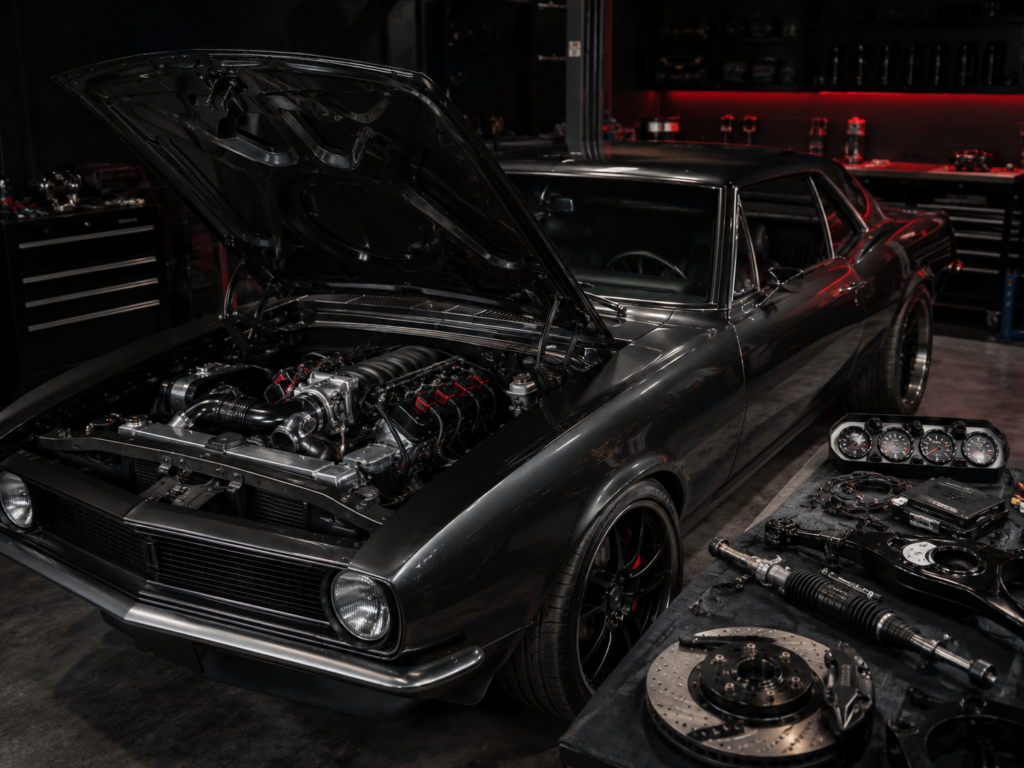
The purpose is not simply to replace old parts. A successful restomod should create a more usable, enjoyable, and capable vehicle while preserving the qualities that made the original car or truck desirable.
Restomod projects may involve:
Some owners want a classic vehicle that starts easily, remains cool in traffic, stops confidently, and can be driven regularly. Others want a more aggressive Pro Touring, street-performance, or motorsport-inspired build.
Big South Performance develops the project around the owner’s goals instead of forcing every restomod into the same formula.
Engine and powertrain changes affect far more than the engine bay.
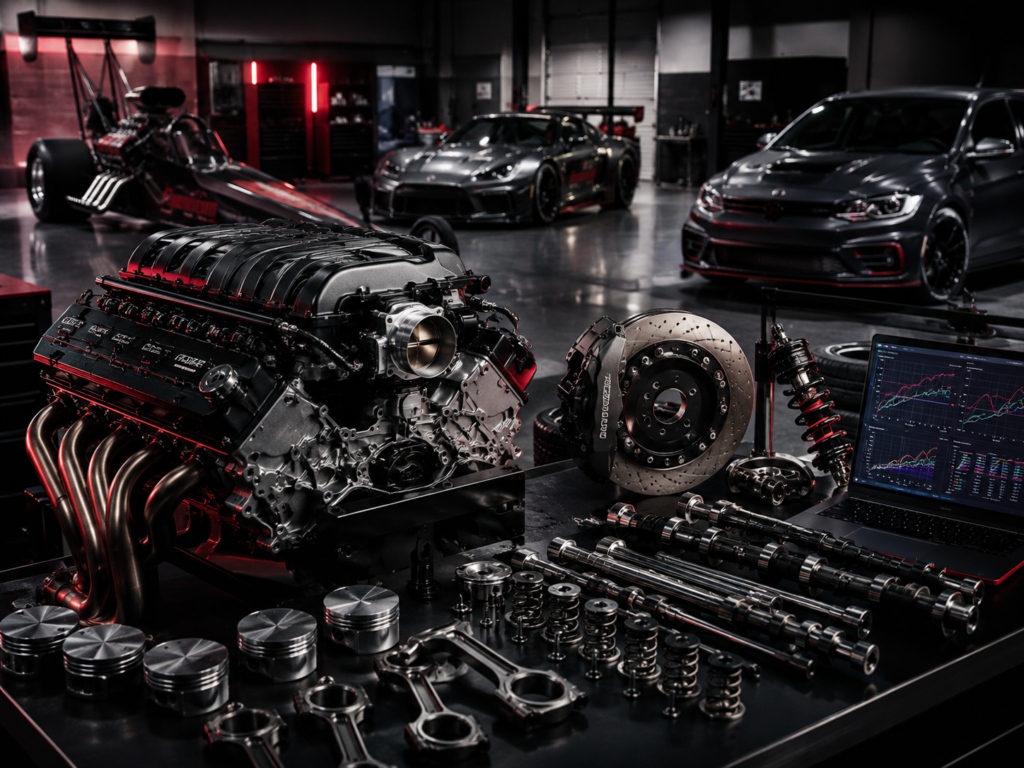
A properly planned conversion may require careful coordination of:
Ignoring these supporting systems can lead to fitment problems, electrical issues, cooling failures, drivetrain vibration, poor service access, or a vehicle that is difficult to operate.
Big South Performance approaches powertrain integration as a complete vehicle project rather than an isolated engine installation.
Not every project requires a full engine build or comprehensive vehicle transformation.
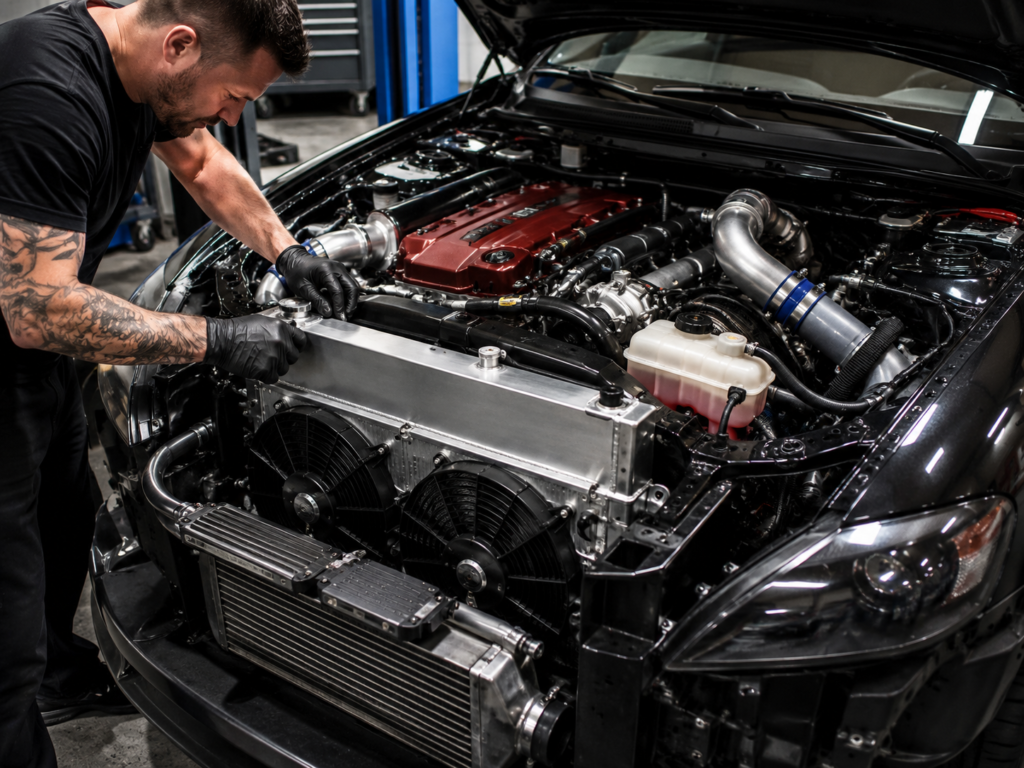
Many drivers begin with selected modifications intended to improve response, sound, airflow, acceleration, handling, or braking.
Depending on the application and compatibility, a performance plan may include:
The order in which these components are installed matters.
For example, an owner planning future forced induction may need a different upgrade path than someone building a naturally aspirated street car. A vehicle intended for track use may need brakes, cooling, tires, and fluid-control improvements before additional engine output becomes the priority.
Big South Performance helps owners choose modifications that support both their current objectives and future plans.
Turbochargers and superchargers can substantially change engine output, heat production, fuel demand, and drivetrain load.
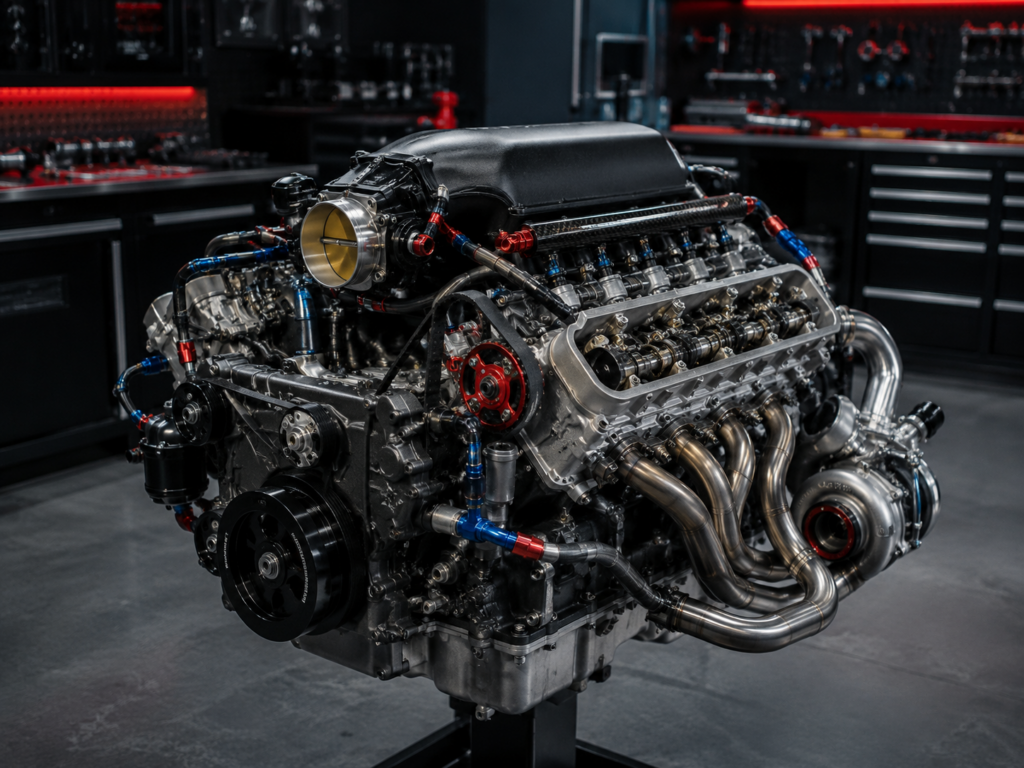
A forced-induction project may require supporting improvements to:
The correct combination depends on the engine platform, current engine condition, compression ratio, desired power, fuel, intended use, and drivetrain capacity.
A street-driven vehicle may prioritize responsive power delivery, heat control, and predictable drivability. A motorsport application may require different boost behavior, powerband characteristics, safety margins, and supporting systems.
The goal should be usable performance—not simply the highest possible number.
Intake and exhaust changes influence airflow, sound, heat, engine response, and tuning requirements.
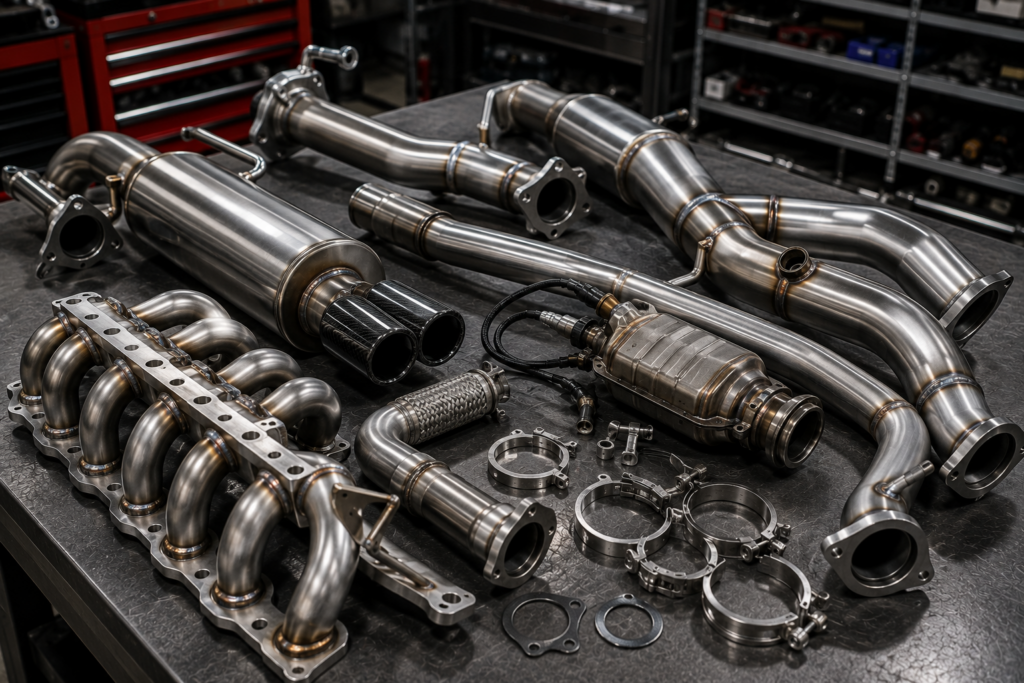
An effective exhaust system must account for more than pipe diameter. Important considerations can include:
Engine swaps and restomod projects may also create routing or fitment challenges that cannot be solved with a basic off-the-shelf system.
Airflow modifications should be selected as part of the overall engine combination rather than based on size or appearance alone.
An engine cannot safely support additional airflow and power without adequate fuel delivery.
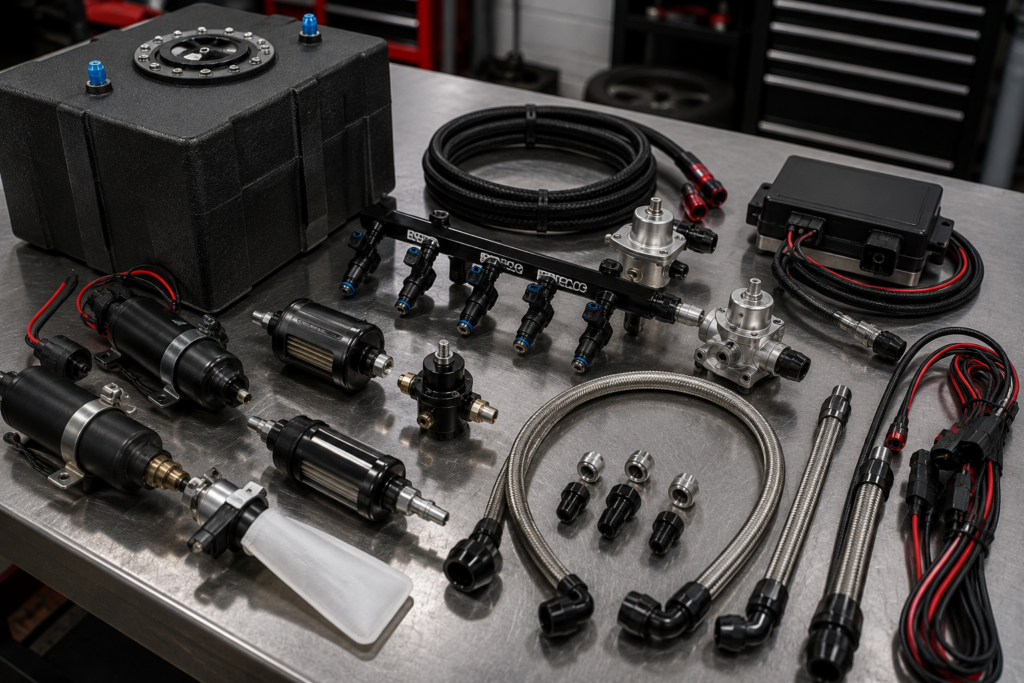
Depending on the platform and power objective, fuel-system planning may involve:
Insufficient fuel supply can create serious engine risk under load. Components must be selected according to the engine, fuel type, expected power, pressure requirements, and duty cycle.
Fuel-system capacity should be evaluated before aggressive engine modifications or calibration changes are completed.
Higher output generally creates greater heat.
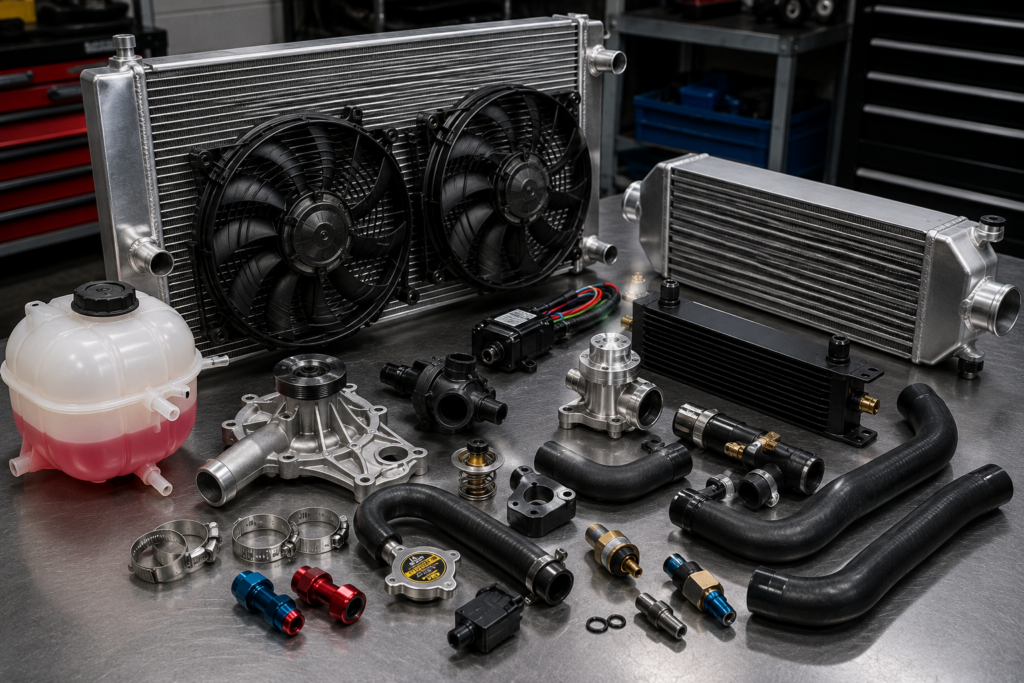
Street-performance vehicles must remain stable in traffic, during warm North Carolina weather, and under repeated acceleration. Motorsport vehicles may experience sustained loads that place even greater demands on the cooling system.
A performance build may require evaluation of:
Heat management should be planned early. It should not be treated as an afterthought after the vehicle begins overheating.
Additional engine torque must travel through the transmission, clutch or converter, driveshaft, differential, axles, hubs, and tires.
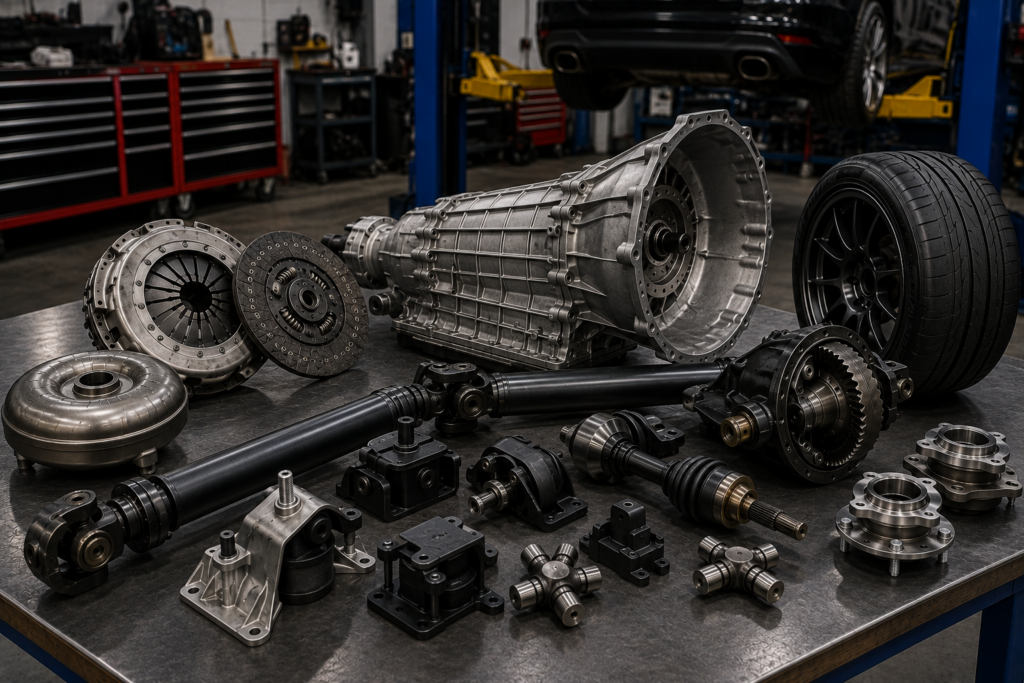
A power increase may expose limitations that were not apparent at factory output levels.
Drivetrain planning may need to consider:
A vehicle that produces substantial engine power but cannot deliver it reliably to the pavement is not a complete performance build.
Power is only one measure of performance.
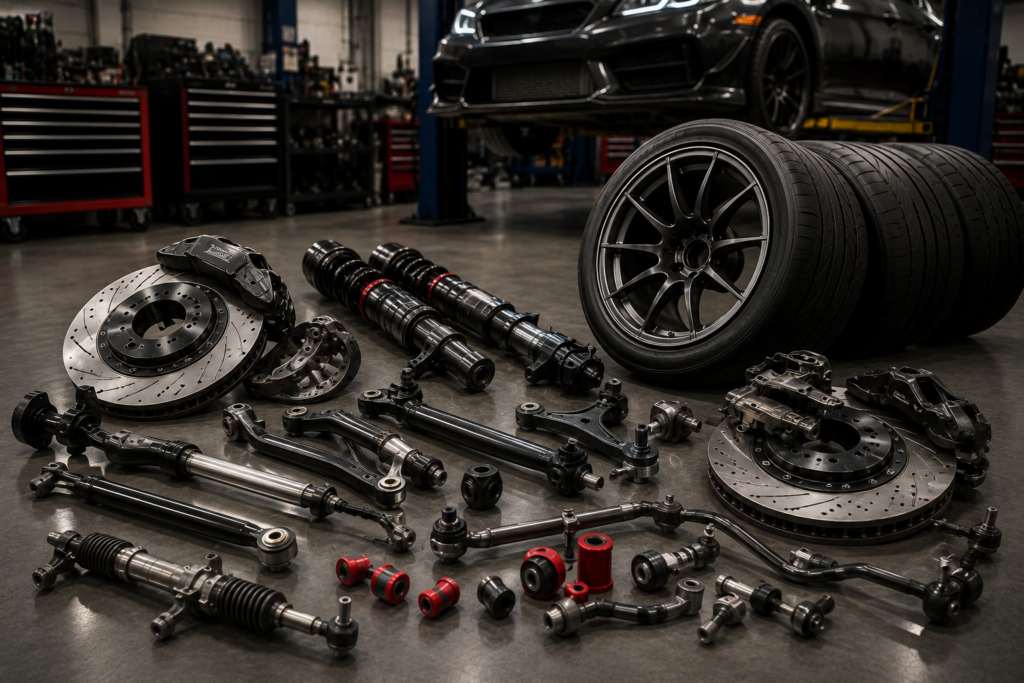
Suspension and chassis development can improve:
Potential upgrades may include:
The correct setup depends on how the vehicle will be used.
A daily-driven street car should not automatically receive the same spring rates, alignment, ride height, or damping as a dedicated competition vehicle. The best result balances performance with the driver’s expectations for comfort, noise, road conditions, and usability.
As speed, power, vehicle weight, and tire grip increase, braking capability becomes increasingly important.
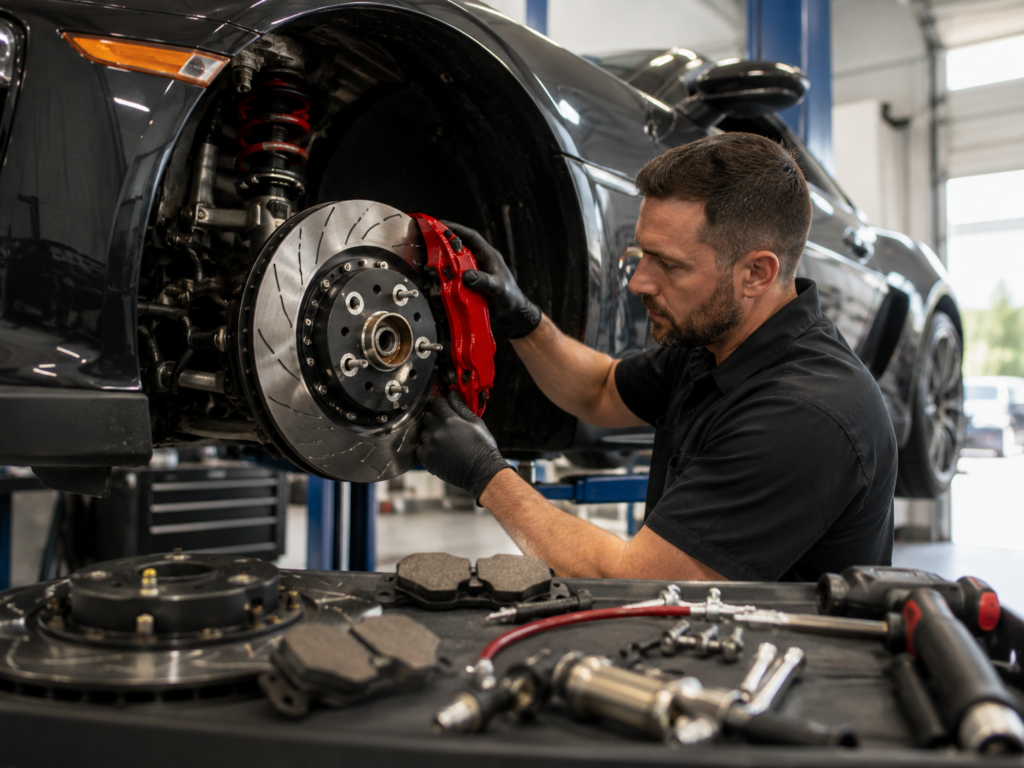
Performance brake planning may involve:
A street vehicle may need confident cold braking, low noise, and predictable pedal feel. A track vehicle may require greater heat capacity and resistance to repeated high-speed stops.
Brake components should be selected for the actual application rather than appearance alone.
Street and motorsport vehicles may use similar components, but they are developed around different priorities.
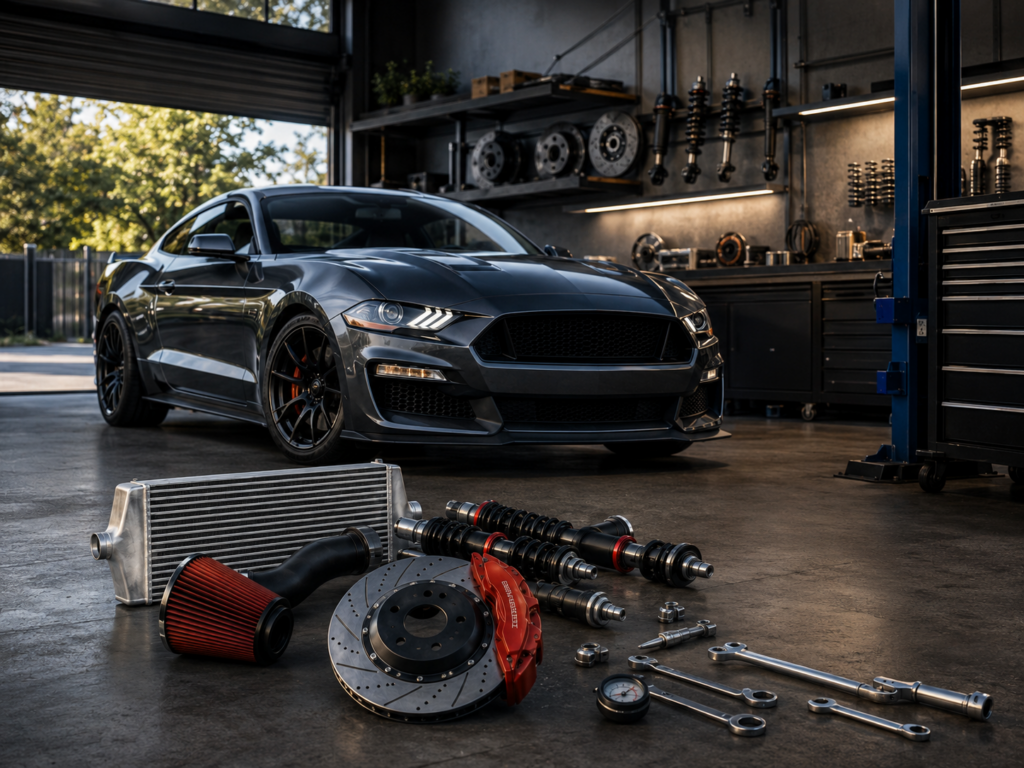
A street-driven vehicle may need:
A competition-focused vehicle may require:
Big South Performance evaluates the intended use before recommending a build direction. A vehicle should be engineered for the environment in which it will operate.
Some performance projects begin with a stock vehicle. Others arrive with a history of modifications completed by previous owners or multiple shops.
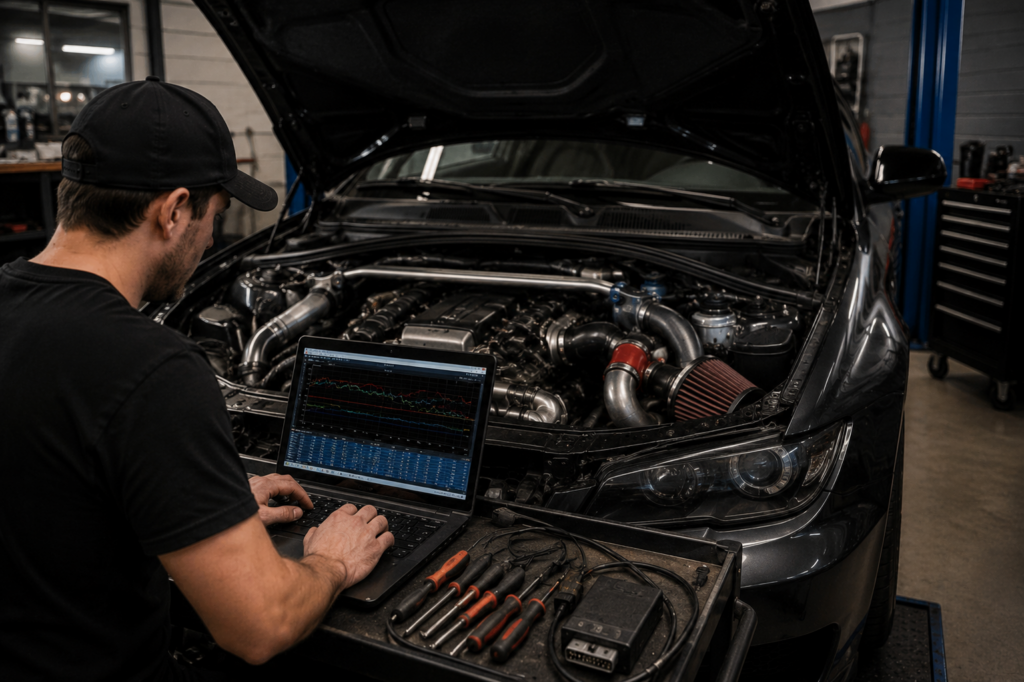
An existing modified vehicle may contain:
Before adding more power, the current configuration must be understood.
Big South Performance can evaluate the direction of an existing build and help identify whether the vehicle requires correction, supporting modifications, recalibration, or a revised development plan.
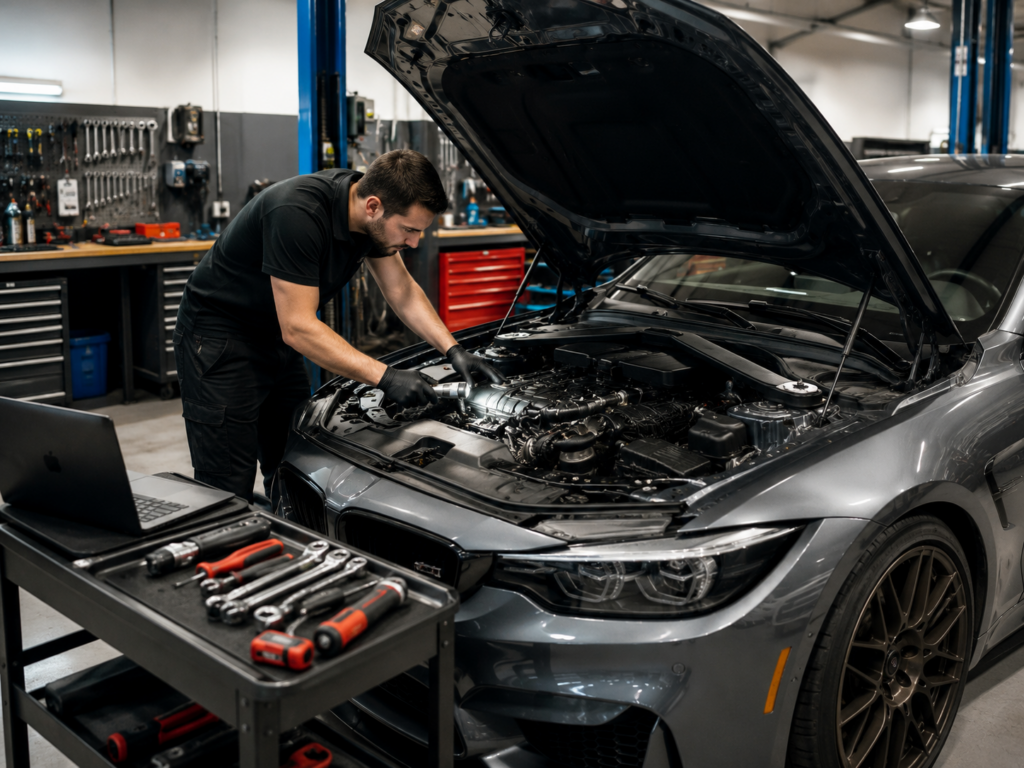
The owner should identify the desired result as clearly as possible.
Examples include:
The vehicle’s mechanical condition, existing modifications, electronics, cooling, fuel delivery, drivetrain, brakes, suspension, and tires should be reviewed.
Components should be selected according to how they work together—not simply according to advertised power claims.
The plan should determine what the engine, fuel system, drivetrain, cooling system, suspension, brakes, and tires will need to support the target outcome.
A staged plan may make a larger project more manageable while reducing duplicated labor and incompatible purchases.
Correct installation must address fitment, wiring, routing, heat, clearances, fluid systems, electronics, and serviceability.
When calibration is required and supported, it should be based on the completed mechanical configuration.
The finished vehicle should also be evaluated for proper operation, drivability, and system compatibility.
Drivability, cooling, predictable power, comfort and reliability
Power, response, sound, handling and balanced usability
Modern drivability, cooling, braking, steering, wiring and powertrain integration
Launch traction, drivetrain strength, power delivery and heat control
Brakes, cooling, suspension balance, tires and repeatability
Response, steering, balance, traction and usable torque
Integration, craftsmanship, fitment, presentation and drivability
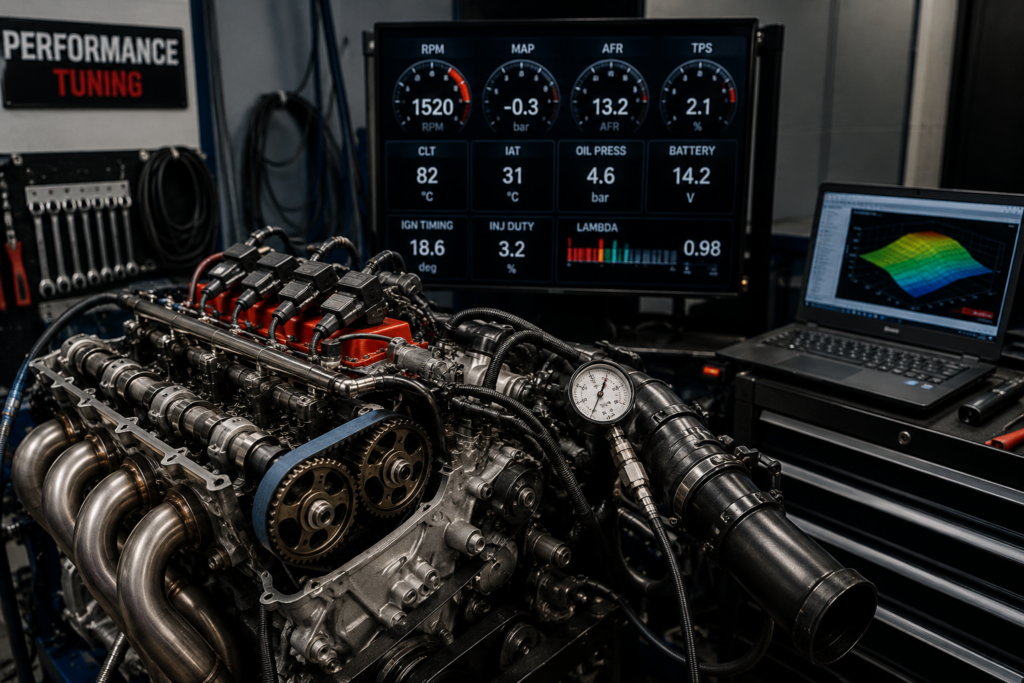
Intake, ECU calibration and current mechanical condition
Airflow, fuel delivery, exhaust and engine management
Fuel, cooling, ignition, intercooling, engine strength and calibration
Transmission, clutch, driveshaft, differential, axles and tires
Wiring, ECU, fuel, cooling, exhaust, drivetrain and instrumentation
Powertrain, wiring, cooling, brakes, steering, suspension and comfort systems
Brakes, tires, cooling, fluids, suspension and safety equipment
Tires, alignment, dampers, springs, bushings and chassis balance
Not every vehicle requires every supporting modification. The purpose of planning is to determine which systems matter for the specific build.
A collection of individually popular components does not guarantee a compatible combination.
Peak output does not describe throttle response, powerband, heat control, traction, drivability, or durability.
Performance upgrades should not be installed over unresolved mechanical, electrical, fuel, or cooling problems.
The transmission and driveline must be capable of transferring the added torque.
The vehicle must be able to stop, turn, and maintain traction as performance increases.
Aggressive components may reduce comfort, low-speed drivability, ground clearance, noise control, or routine usability.
An upgrade that works today may need to be replaced later if it does not support the long-term build direction.

Big South Performance is not positioned as a conventional repair facility that occasionally installs aftermarket parts. Our work centers on performance vehicles, ECU tuning, restomods, motorsport engineering, and integrated automotive development.
We consider how changes to one system affect the rest of the vehicle.
A clear plan can help owners avoid incompatible components, repeated labor, and upgrades that do not support the desired outcome.
A vehicle must be developed around how it will actually be used.
Large builds can often be divided into logical stages that create a stronger foundation for future work.
Performance depends on more than the primary power-producing component. Wiring, calibration, cooling, fuel delivery, drivetrain strength, braking, suspension, and serviceability all matter.
Winston-Salem has a long connection to motorsports and performance driving.
Bowman Gray Stadium—widely known as “The Madhouse”—has hosted automobile racing since the twentieth century and remains one of the city’s most recognizable motorsport landmarks. The area’s racing culture has helped create a strong community of drivers, builders, collectors, and enthusiasts throughout Winston-Salem and Forsyth County.
Big South Performance serves this community with a performance-first approach suited to modern street cars, imports, domestic performance vehicles, classics, restomods, and motorsport projects.
Big South Performance serves customers from Winston-Salem and surrounding communities, including:
Vehicle owners may travel beyond their immediate community when they need a shop that understands modified vehicles, electronic calibration, powertrain integration, and performance-focused development.
Providing detailed information helps us better understand the project.
Include:
If the vehicle has been previously tuned or modified, provide any available invoices, component lists, calibration details, build sheets, or previous test results.
Big South Performance works with owners of:
The availability of a specific service depends on the vehicle, engine, transmission, ECU, existing configuration, requested work, and available technical support.
Contact Big South Performance before purchasing major components so we can discuss compatibility and the overall direction of the project.
A performance auto shop develops vehicles to improve power, torque, throttle response, handling, braking, cooling, traction, or motorsport capability. Work may include ECU tuning, performance modifications, restomods, powertrain integration, fuel-system upgrades, cooling improvements, suspension changes, brake upgrades, and drivetrain support.
Big South Performance focuses on ECU tuning, restomods, motorsport engineering, performance modifications, and integrated vehicle development. The process considers how the engine, electronics, fuel system, cooling, drivetrain, suspension, brakes, and tires work together.
No. The need for tuning depends on the vehicle, ECU, and modification. Changes that significantly affect airflow, fuel demand, boost, camshaft operation, or engine behavior are more likely to require calibration.
Yes. Discussing the project before purchasing major components can help identify compatibility issues, supporting requirements, and the most effective order of upgrades.
Yes. A daily-driven vehicle can be modified, but the build should prioritize drivability, cooling, reasonable noise, predictable power delivery, fuel availability, maintenance, and reliability.
Modified vehicles can be evaluated, but the existing configuration must first be understood. Previous wiring, software, fuel-system changes, component fitment, and mechanical condition may affect the next step.
Supporting needs may include fuel-system upgrades, cooling, ignition, ECU calibration, transmission or clutch changes, driveshaft improvements, differential or axle upgrades, tires, suspension, and brakes.
That depends on the vehicle and intended use. A performance plan should consider stopping, handling, cooling, traction, and drivetrain capacity alongside engine output.
A staged build divides a larger project into logical phases. Foundational maintenance, cooling, fuel delivery, brakes, suspension, drivetrain support, power modifications, and calibration can be completed in an order that supports the final goal.
A restomod is a classic vehicle updated with selected modern systems. A restomod may combine original styling with a modern engine, transmission, fuel injection, cooling, wiring, brakes, suspension, steering, air conditioning, and electronic controls.
Yes. Powertrain changes may affect wiring, ECU control, fuel delivery, cooling, exhaust routing, driveshaft configuration, gauges, steering clearance, suspension, brakes, and drivetrain strength.
No. The right output depends on the vehicle, intended use, supporting systems, traction, fuel, drivability expectations, budget, and maintenance requirements. A balanced vehicle with usable power may provide a better result than a vehicle designed only around peak output.
Big South Performance evaluates domestic, import, classic, restomod, street-performance, and motorsport projects. Service availability depends on the specific platform, engine, ECU, modifications, and requested work.
Gather the vehicle year, make, model, engine, transmission, existing modifications, known problems, intended use, desired outcome, budget, photos, and any records from previous work.
Yes. Big South Performance serves enthusiasts from Winston-Salem, Forsyth County, and surrounding Piedmont Triad communities. Customers with specialized builds may travel from Clemmons, Lewisville, Kernersville, Lexington, High Point, Greensboro, and other nearby areas.
A successful build begins with a clear goal, an honest evaluation of the vehicle, and a plan that accounts for every supporting system.
Contact Big South Performance to begin planning your performance build.
Big South Performance helps Winston-Salem-area automotive enthusiasts develop street cars, restomods, imports, domestic performance vehicles, and motorsport projects through ECU tuning, performance modification planning, integrated engineering, and complete-system thinking.
Tell us what you drive, what has already been modified, how you use the vehicle, and what you want to accomplish.