
Big South Performance specializes in high-performance restomod builds for classic cars and trucks in Winston-Salem, Forsyth County, and communities throughout the Piedmont Triad.
A restomod preserves the character and visual identity of a classic vehicle while improving the systems that affect how it starts, drives, handles, stops, and performs. Depending on the owner’s goals, a project may combine classic styling with modern fuel injection, electronic engine management, an upgraded powertrain, improved cooling, stronger brakes, revised suspension, modern steering, updated wiring, air conditioning, and contemporary instrumentation.
Big South Performance approaches each restomod as a complete vehicle rather than a collection of unrelated upgrades.
The engine, transmission, fuel system, cooling system, wiring, ECU, exhaust, drivetrain, suspension, steering, brakes, wheels, tires, interior, and comfort systems must support the same vision. Every recommendation should reflect how the owner plans to use the vehicle, what characteristics should be preserved, and what limitations need to be corrected.
Whether you want a comfortable weekend cruiser, a modernized classic truck, a high-performance street car, a Pro Touring-inspired build, or a vehicle capable of occasional motorsport use, the project should begin with a clear and realistic plan.
A restomod project can range from targeted modernization to a comprehensive vehicle transformation.
Depending on the platform, condition, and project scope, a restomod may involve:
Not every vehicle needs every modification. The purpose of planning is to identify which upgrades will create the greatest improvement without compromising the qualities the owner values most.
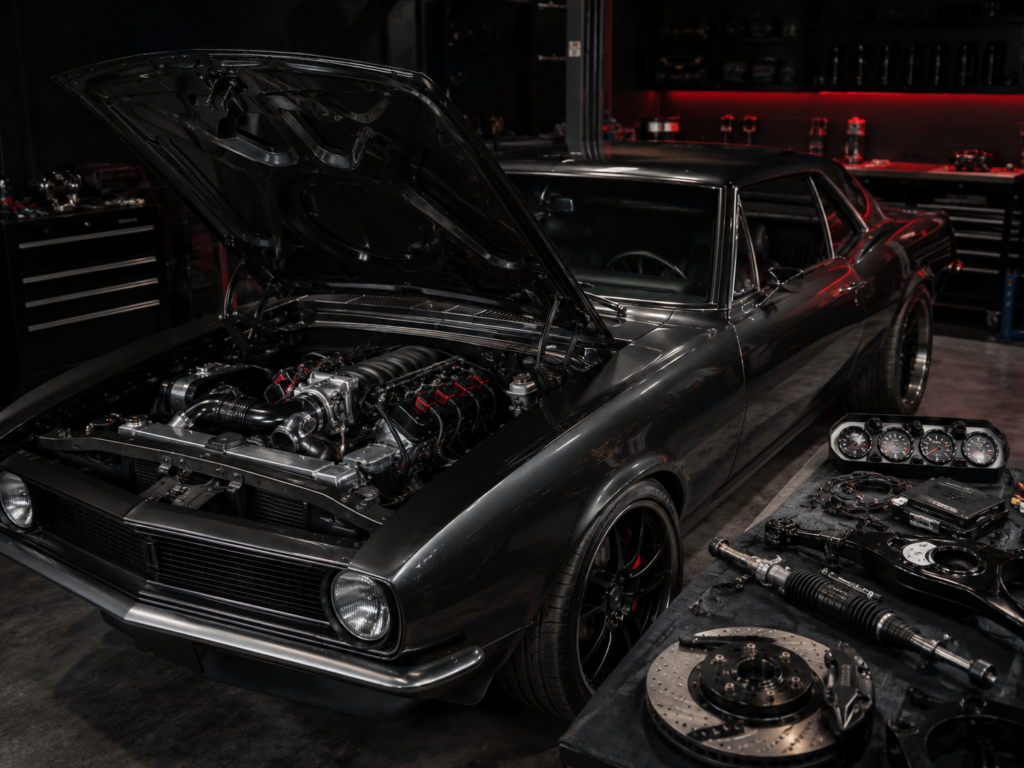
A restomod is a classic vehicle that has been restored, modified, or both to incorporate selected modern improvements.
The word combines restoration and modification.
A traditional restoration generally attempts to return a vehicle to its original or historically accurate condition. A restomod allows greater flexibility. The vehicle may retain its classic appearance while receiving modern mechanical, electrical, safety, comfort, and performance systems.
Common restomod improvements include:
The result should still feel intentional.
A successful restomod should not look or operate like a random collection of modern parts installed in an older body. The mechanical systems, design, stance, interior, and driving experience should support a unified vision.
Restoration and restomod projects can overlap, but they serve different goals.
Neither approach is universally better.
A historically significant or rare vehicle may be best suited to a careful restoration. A vehicle intended for regular driving may benefit from modernization that improves safety, comfort, parts availability, and reliability.
The correct direction depends on:
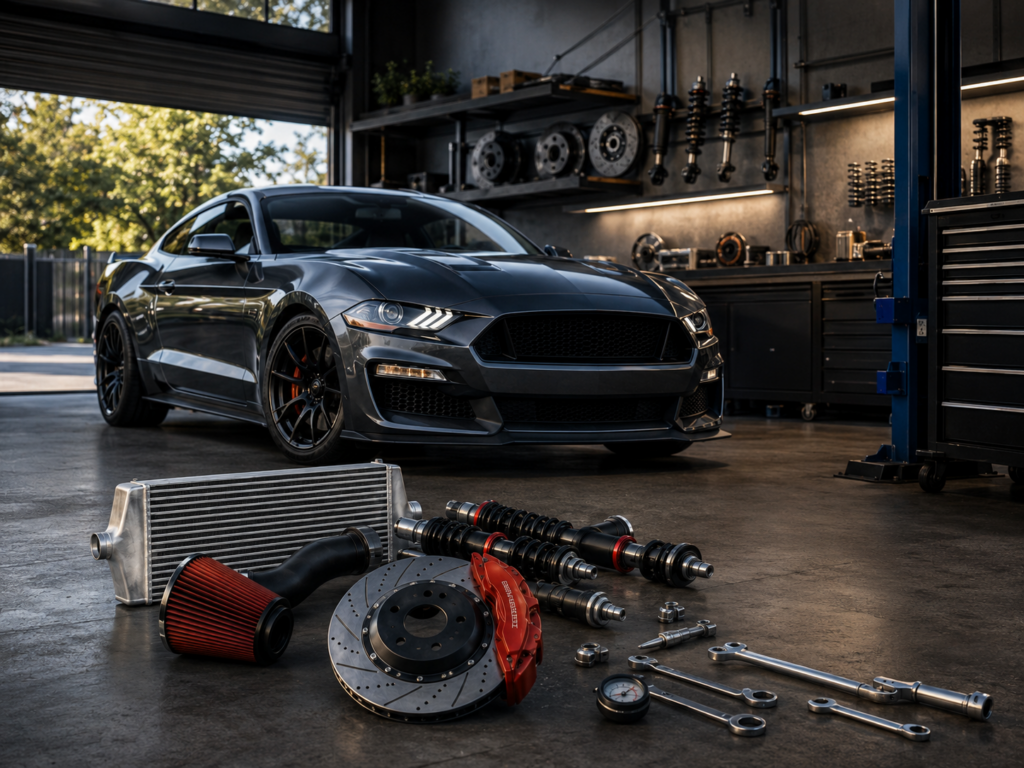
Restomod is a broad term. Pro Touring generally describes a more performance-oriented form of classic-vehicle development.
A Pro Touring-inspired build may emphasize:
A restomod may be more comfort-oriented and prioritize:
A vehicle can include elements of both.
Big South Performance develops the project around the owner’s actual priorities rather than forcing every classic vehicle into the same category.
Modern fuel delivery and electronic engine control can improve cold starts, idle quality, throttle response, and operation in changing weather.
An overdrive transmission, appropriate gearing, better cooling, and improved steering can make longer trips more comfortable.
A modern or upgraded powertrain may provide greater horsepower, torque, and tuning flexibility.
Modern brake components can improve stopping confidence and heat capacity.
Updated suspension, steering, chassis, wheels, and tires can improve control and predictability.
Air conditioning, sound control, better seats, improved gauges, and updated electrical systems can make the vehicle easier to use regularly.
Modern components may offer stronger parts availability and diagnostic support than obsolete original systems.
Before parts are selected, the owner should define what the completed vehicle should be.
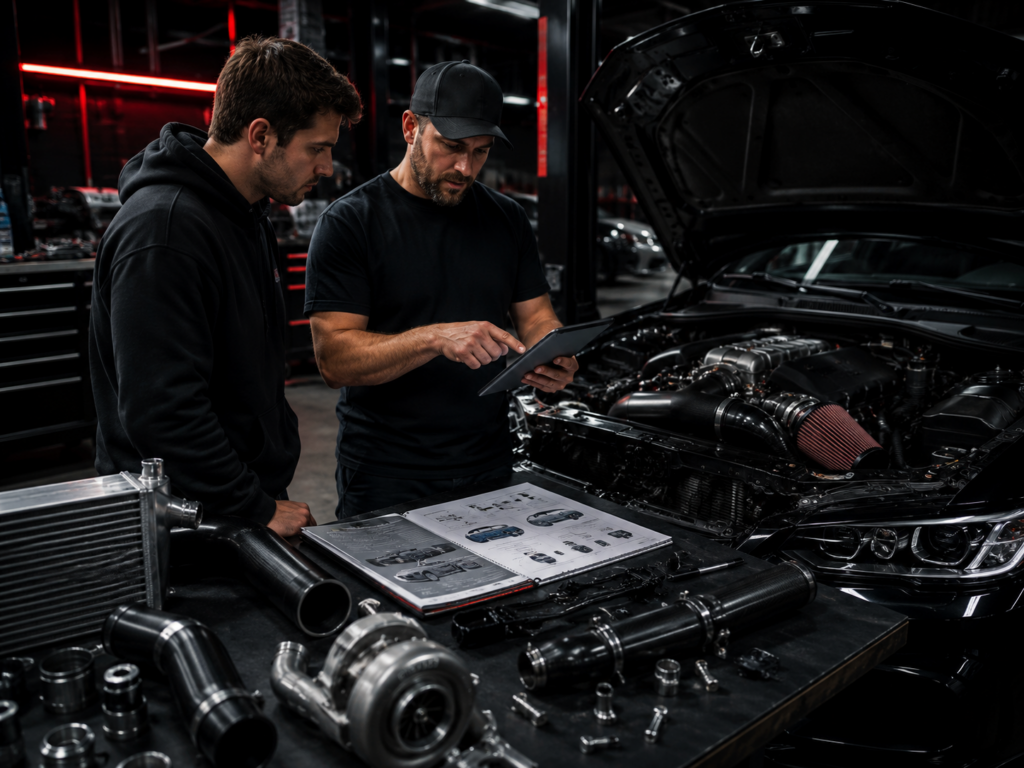
Important questions include:
These decisions affect nearly every system in the build.
A vehicle intended for relaxed cruising should not automatically receive the same suspension, brakes, tires, gearing, engine, or seating as a track-oriented build.
A restomod should not begin with parts selection alone.
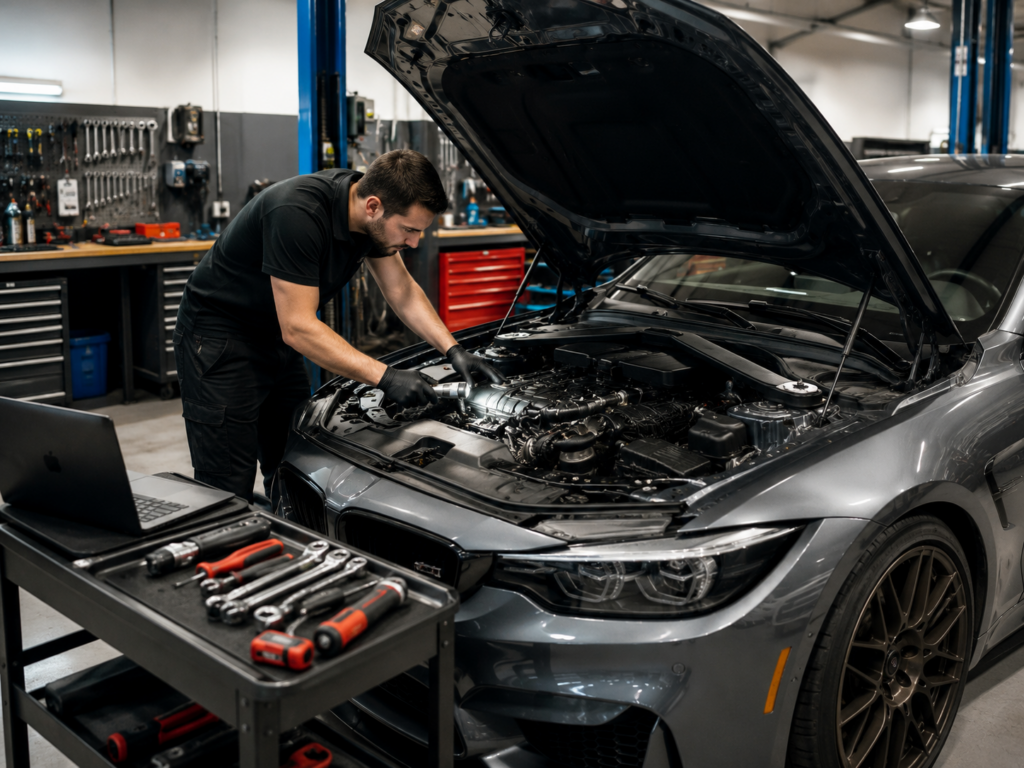
The vehicle’s current condition must first be understood.
Evaluation may include:
Hidden corrosion or poor previous repairs can significantly change the project scope.
A vehicle that appears complete may still require structural, electrical, or mechanical correction before performance upgrades are appropriate.
Restomod projects vary considerably in complexity.
| Build Level | Typical Scope |
|---|---|
| Driver modernization | Fuel delivery, cooling, brakes, steering, wiring, and comfort improvements |
| Street-performance restomod | Powertrain upgrades, suspension, brakes, wheels, tires, and ECU integration |
| Comprehensive restomod | Coordinated powertrain, chassis, electrical, interior, comfort, and appearance work |
| Pro Touring-inspired build | Performance suspension, large brakes, chassis support, modern power, and driver-focused setup |
| Motorsport-capable restomod | Cooling, oil control, braking, safety, suspension, drivetrain, and repeatability upgrades |
| Classic truck restomod | Modern powertrain, brakes, steering, suspension, driveline, and comfort improvements |
Powertrain selection is one of the largest decisions in a restomod.
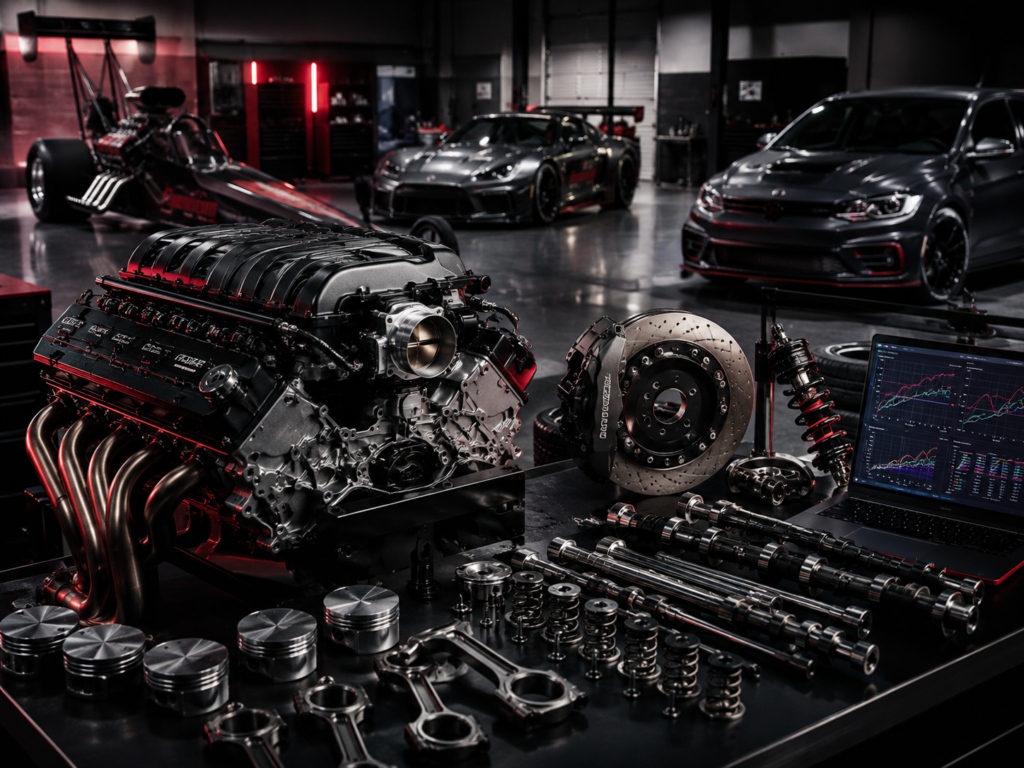
Possible directions may include:
The powertrain should be selected according to:
The most powerful available engine is not necessarily the best choice.
A responsive, well-cooled engine with a broad torque curve may create a more enjoyable street vehicle than an aggressive combination that requires specialized fuel, frequent maintenance, or major drivability compromises.
A restomod does not automatically require an engine swap.
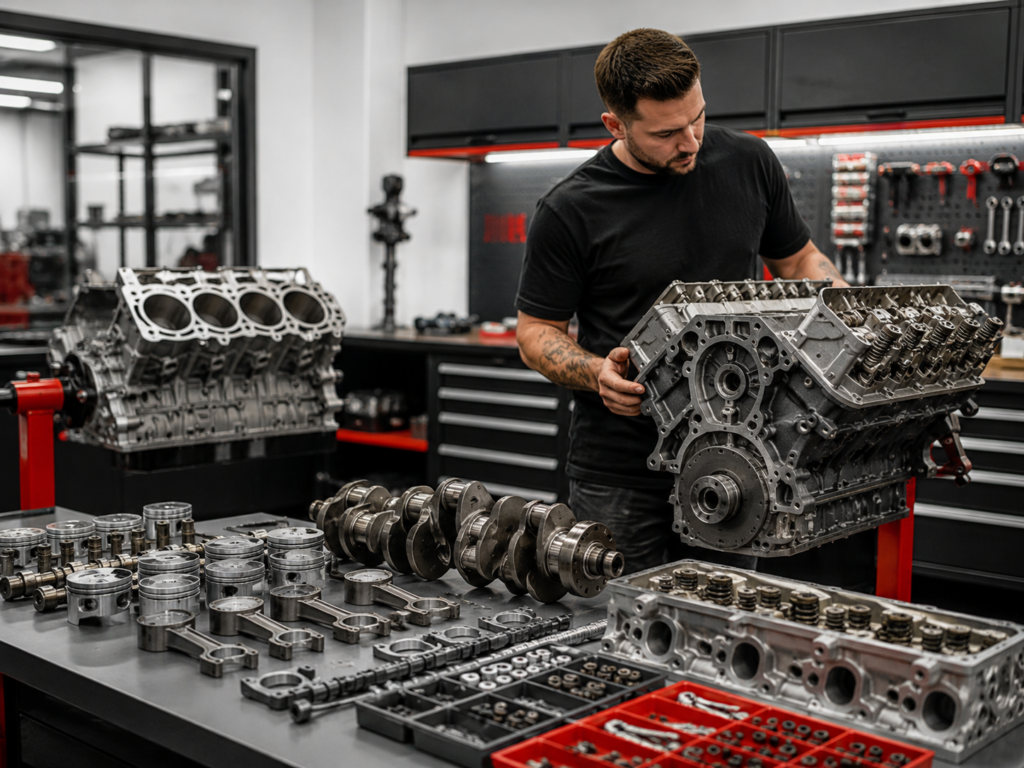
The original engine may be rebuilt or upgraded when:
Potential improvements may include:
The decision should be based on engine condition, project goals, cost, parts availability, and desired character.
A modern engine conversion can provide:
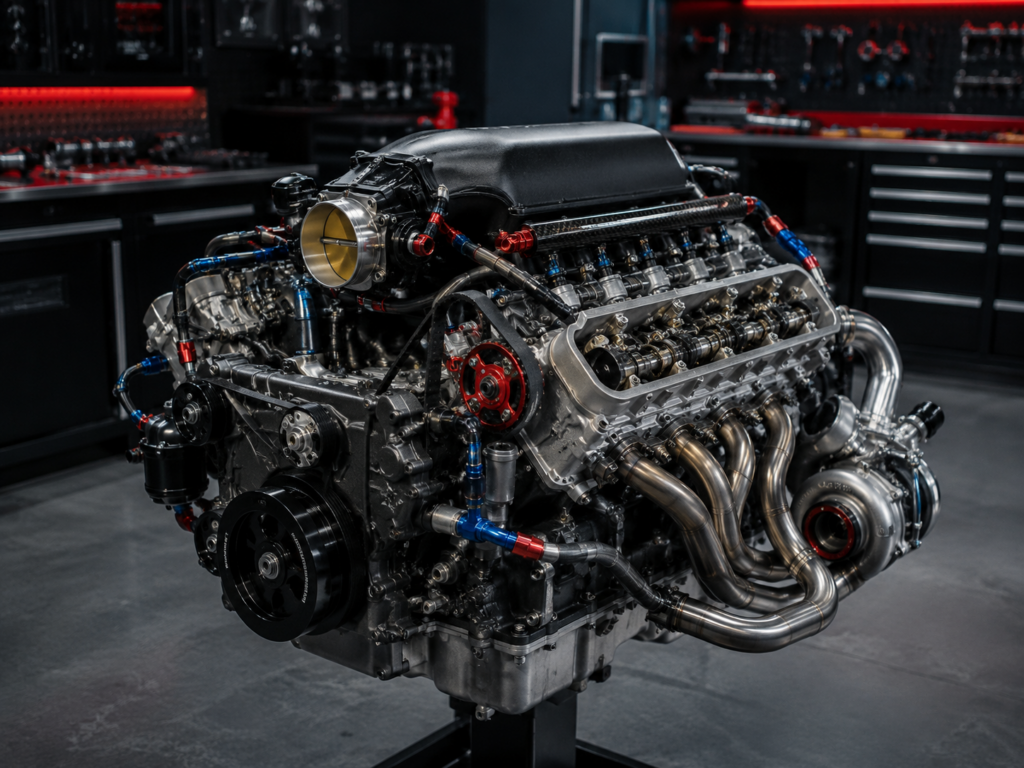
The conversion may also require:
A modern engine does not automatically create a modern driving experience. The supporting systems must be developed with it.
Transmission selection strongly affects how the vehicle feels.
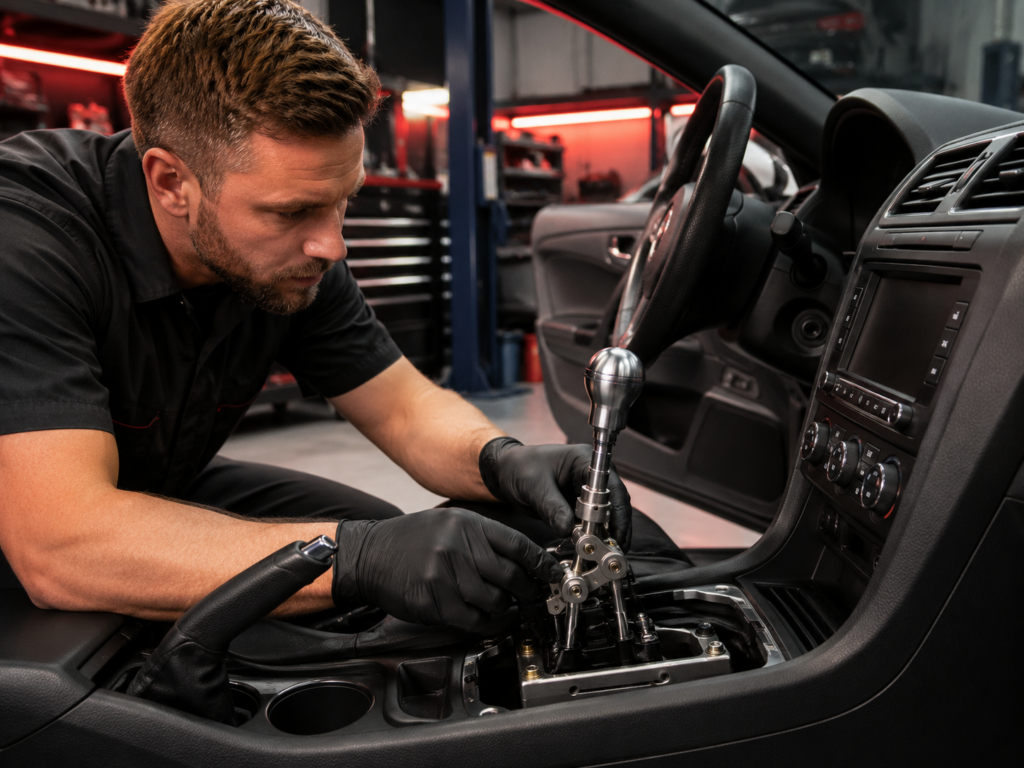
Important considerations include:
An overdrive transmission can reduce highway engine speed and improve cruising comfort.
However, the transmission, differential ratio, and tire diameter must work together. An excessively tall overall ratio can reduce responsiveness, while an aggressive ratio may create unnecessary engine speed during highway driving.
The complete gearing combination should support the vehicle’s powerband and intended use.
Electronic fuel injection can improve:
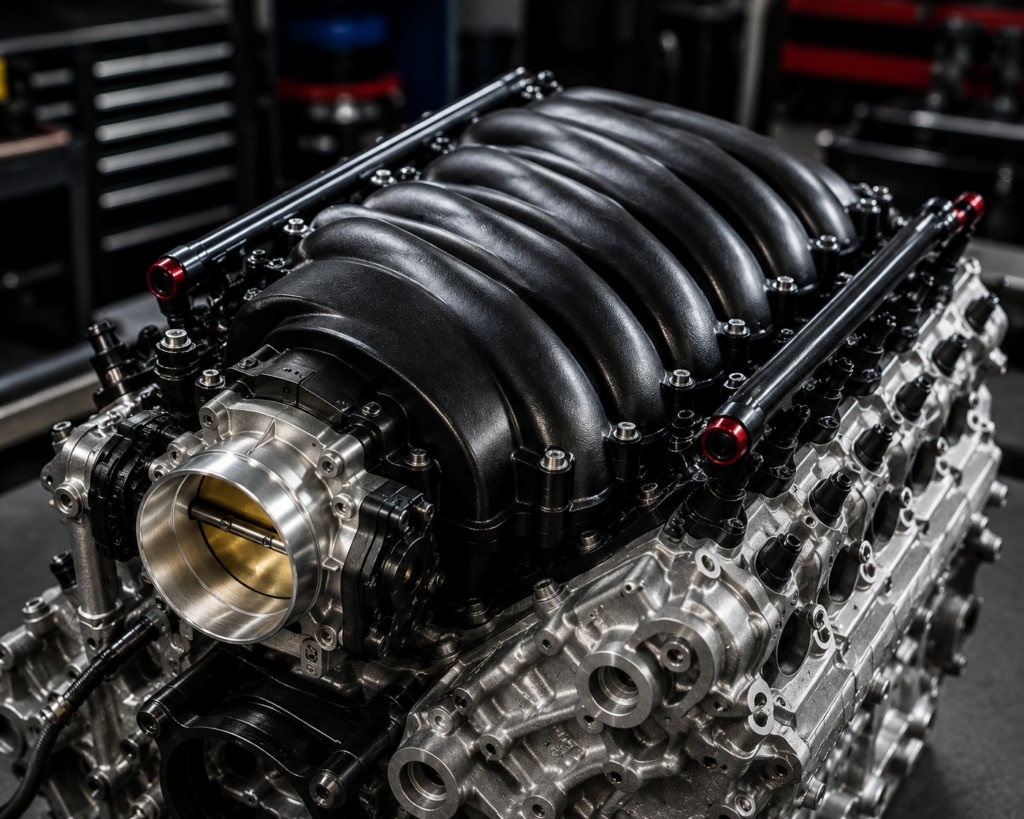
EFI systems may use:
The appropriate system depends on:
EFI still requires a properly designed fuel system, accurate sensor data, compatible ignition control, and correct calibration.
It cannot repair a worn engine, vacuum leak, fuel-pressure problem, or cooling issue.
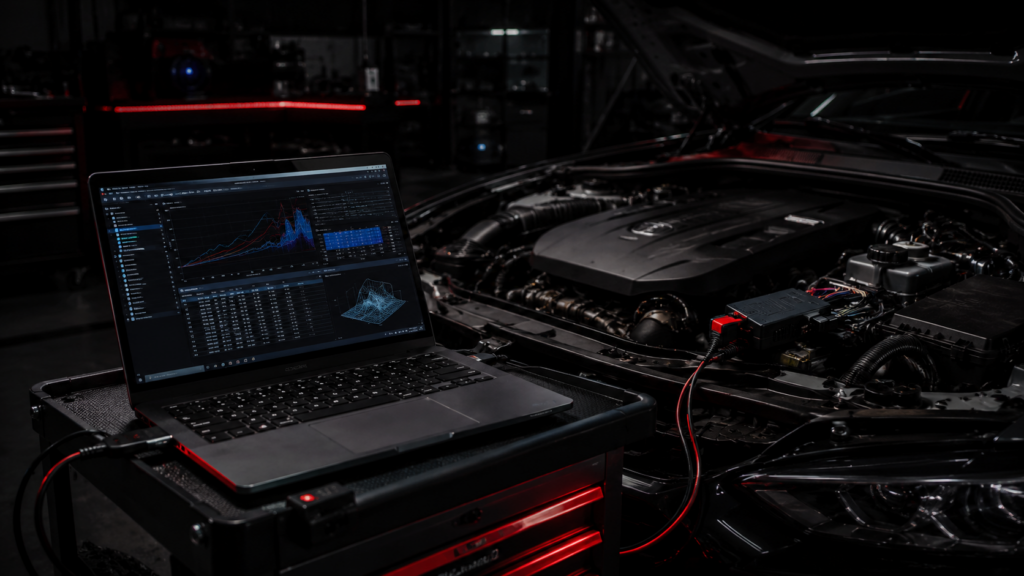
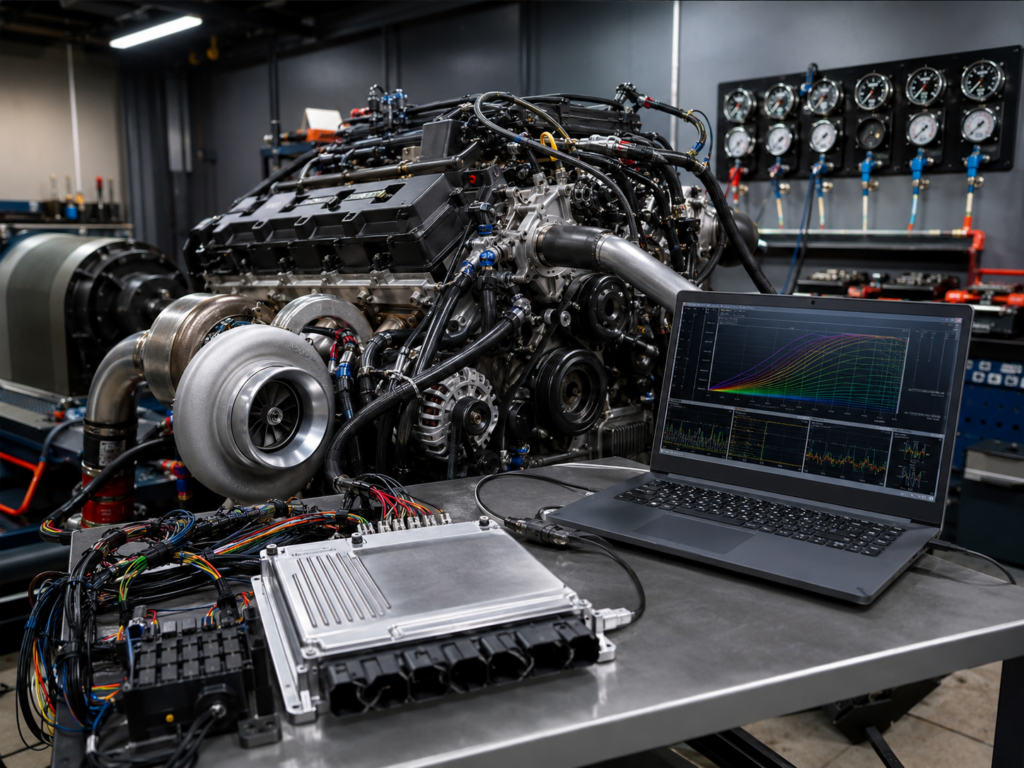
Modern restomod powertrains often depend on electronic engine and transmission control.
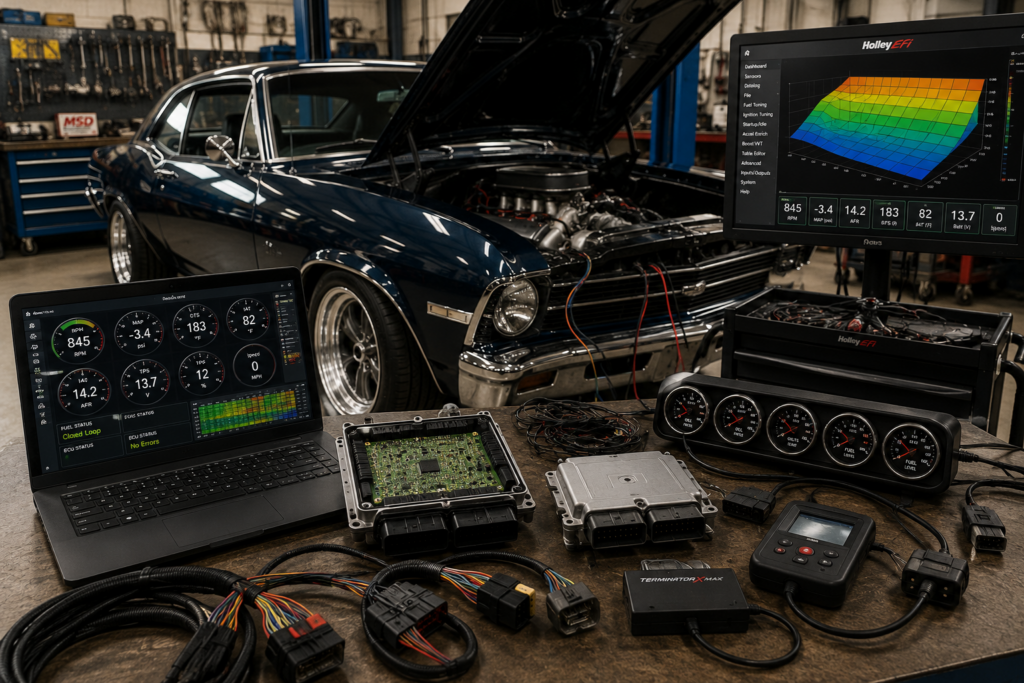
ECU integration may involve:
Big South Performance’s publicly stated specialties include ECU tuning and motorsport engineering.
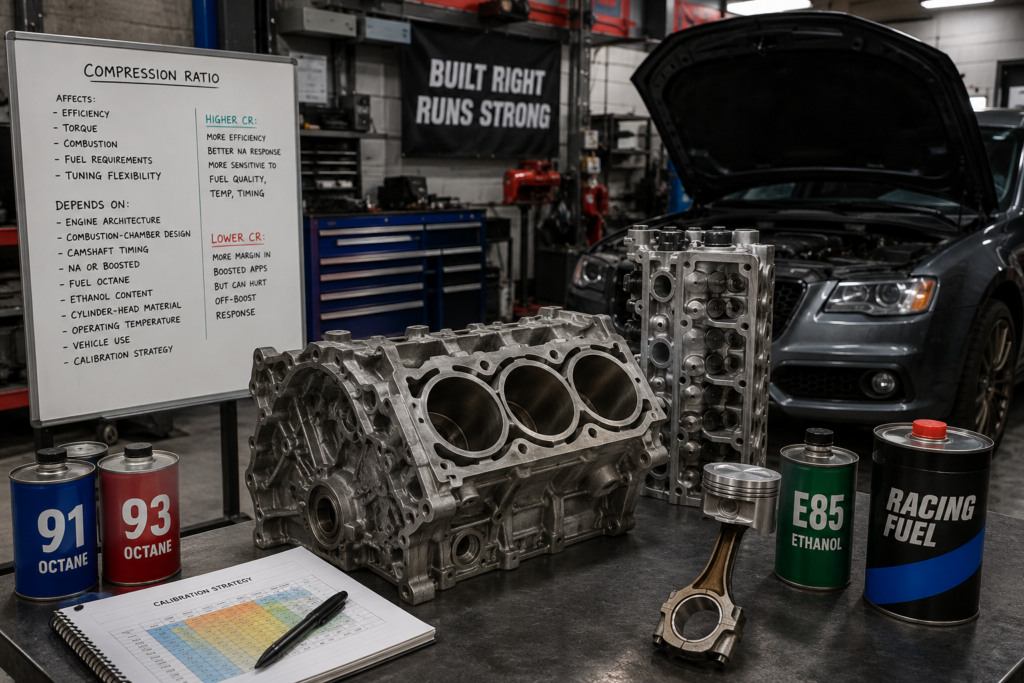
Calibration should match the completed mechanical combination, including:
Tuning should not be used to conceal a mechanical or electrical fault.
Aging wiring can be one of the greatest reliability and safety concerns in a classic vehicle.
Original wiring may have:
A modernized electrical system may need to support:
Wiring should be:
Electrical modernization should improve reliability without creating an engine bay or interior filled with visible, poorly routed wiring.
A classic fuel system may not support modern fuel injection, increased horsepower, ethanol-blended fuel, or forced induction.
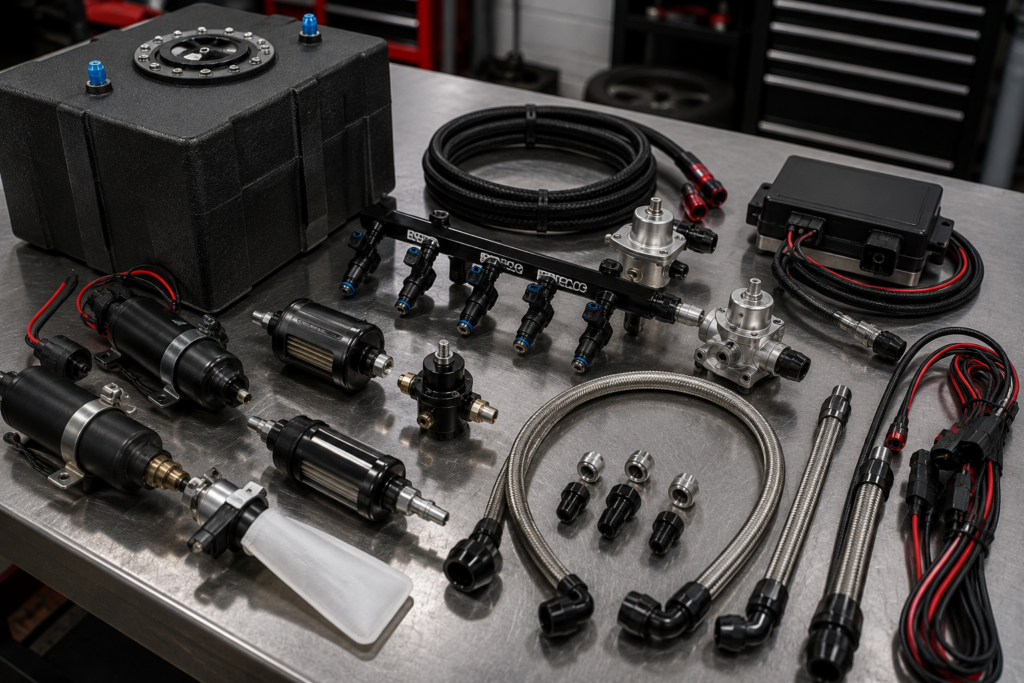
Fuel-system planning may involve:
The system must provide the required:
Fuel lines should be routed away from:
Fuel-system work must prioritize safety as well as performance.
Classic vehicles often experience cooling problems after power increases, engine swaps, air-conditioning installation, or changes to the engine bay.
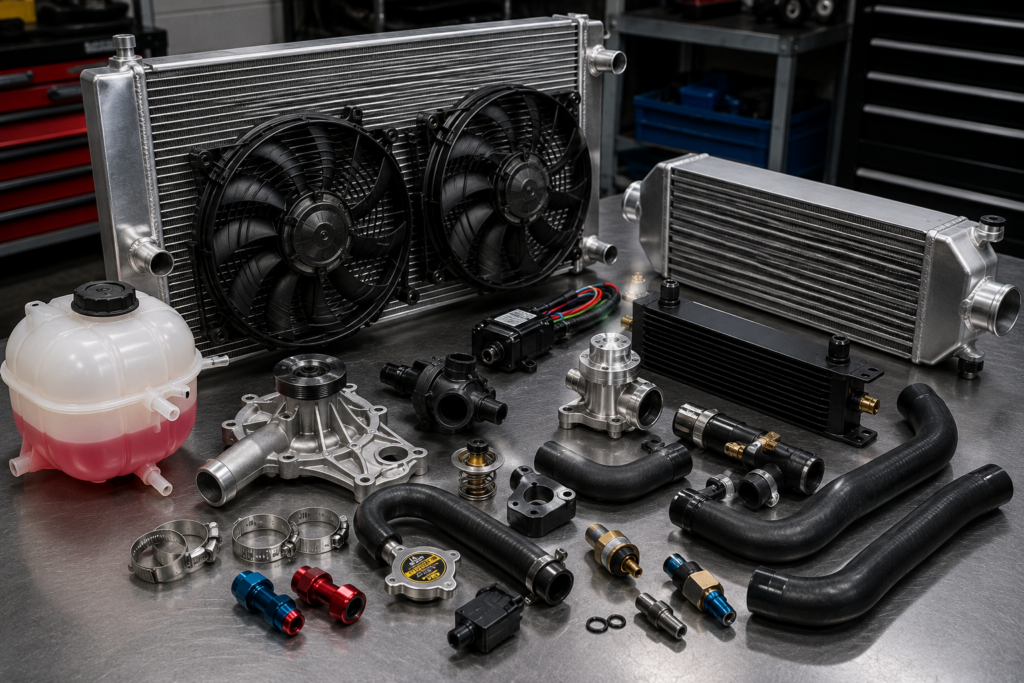
A complete cooling strategy may consider:
A larger radiator cannot compensate for:
A street-driven restomod should remain stable during:
Cooling must be designed around real vehicle use rather than only short periods of operation.
Many classic vehicles were designed with braking systems that do not match modern traffic, tires, or power levels.
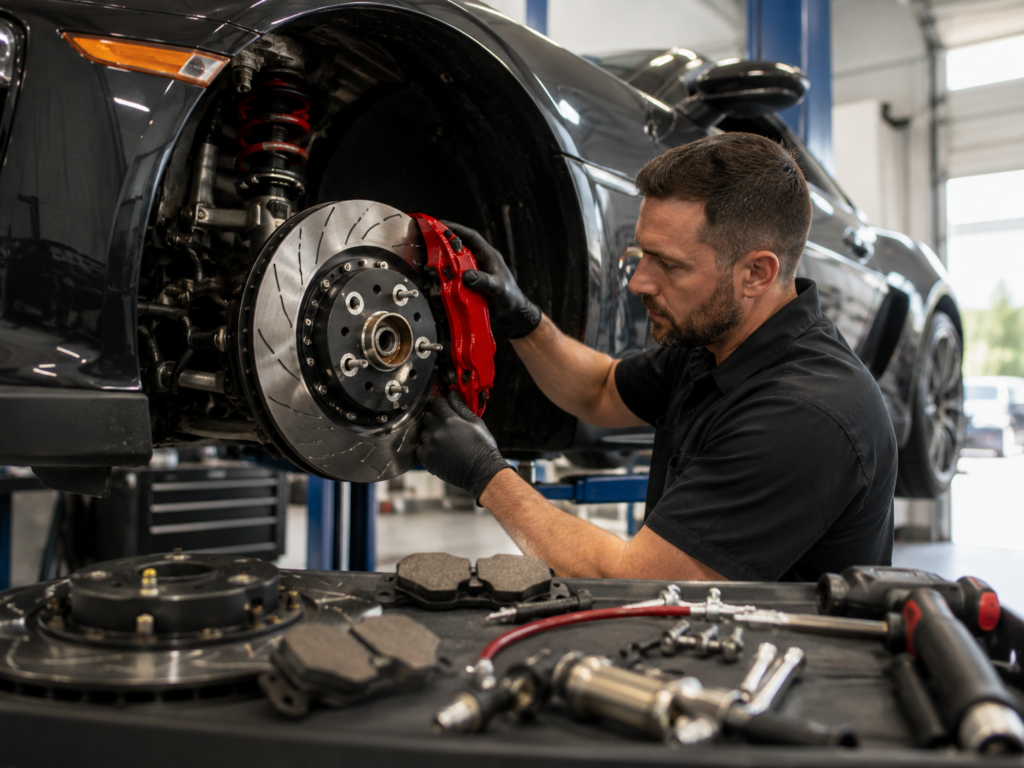
Restomod brake planning may involve:
The system must maintain appropriate:
Larger brakes are not automatically better if the master cylinder, pedal ratio, booster, tires, or wheel clearance are not compatible.
A street-focused restomod needs predictable braking when cold and during everyday driving. A track-capable vehicle may require greater heat capacity and repeatability.
Suspension upgrades can improve:
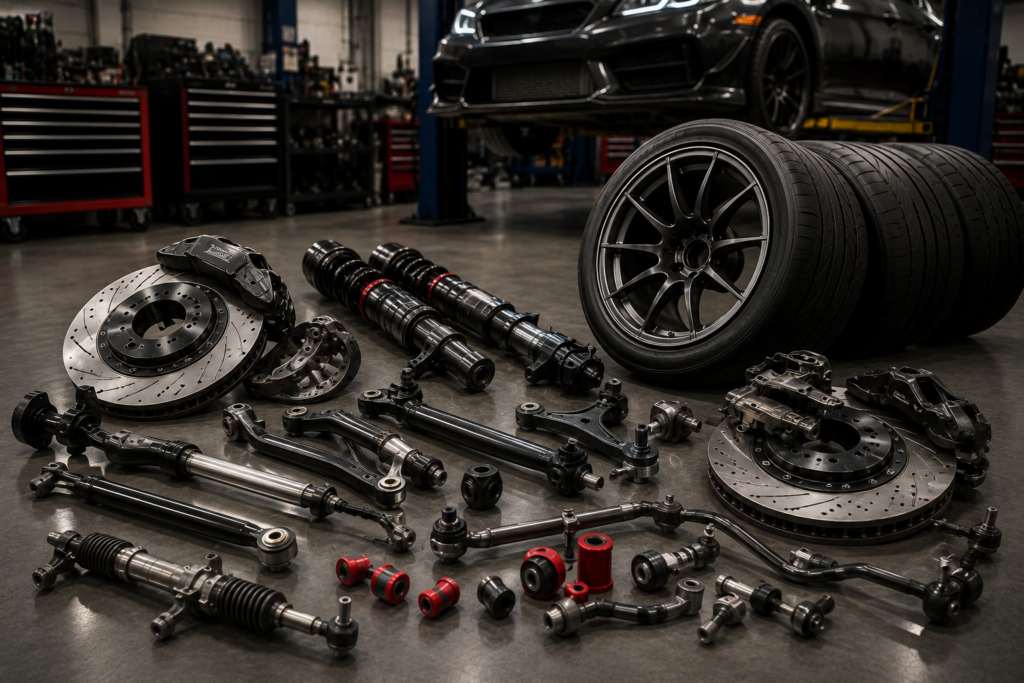
Potential changes may include:
The correct setup depends on:
An overly stiff suspension may reduce traction and make a street vehicle unpleasant to drive.
The goal should be controlled, predictable behavior—not the harshest possible setup.
Classic steering systems may have excessive play, slow ratios, poor feedback, or high effort.
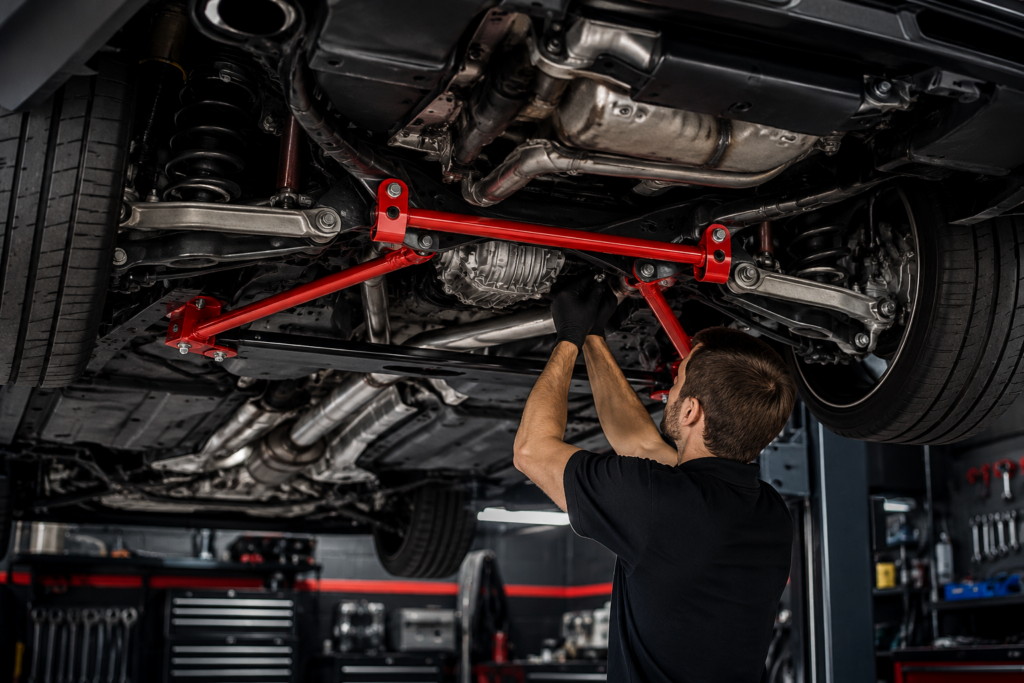
Modernization options may include:
Steering changes must account for:
A steering conversion should improve control without introducing binding, interference, or poor geometry.
Additional grip, braking, and engine output can place greater load on an older chassis.
Chassis planning may involve:
Structural work should be based on the vehicle’s condition and intended use.
Adding stiffness in one area without understanding how loads travel through the chassis can create stress elsewhere.
Rust, previous damage, and poor repairs should be addressed before high-load performance components are installed.
The original rear axle may not be suitable for increased torque, modern tires, or aggressive use.
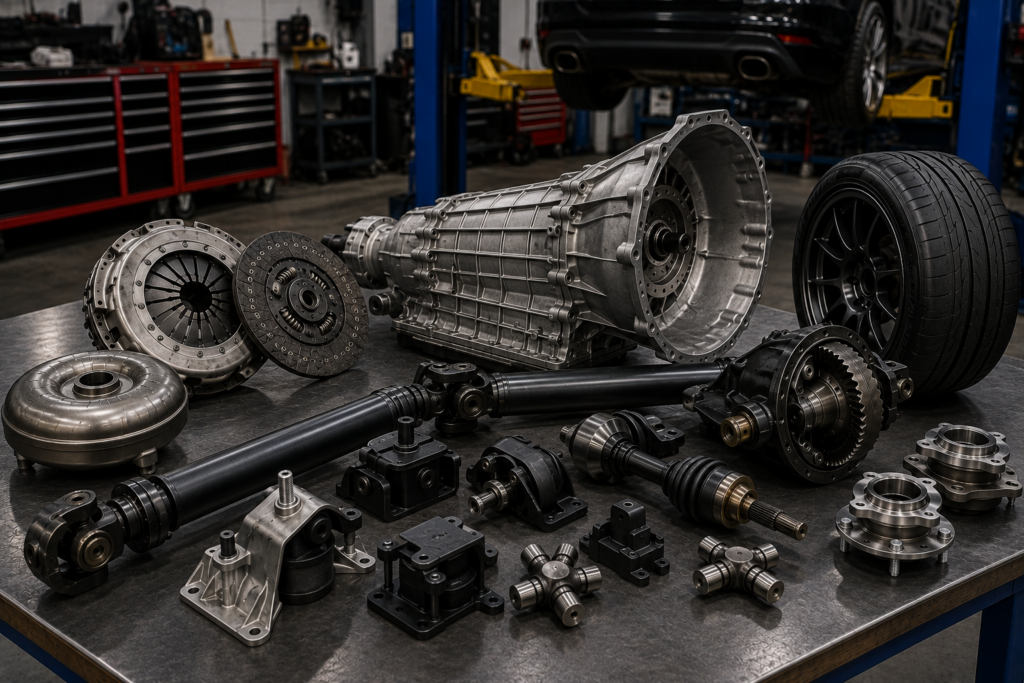
The driveline may require evaluation of:
Gear ratio should be selected according to:
An aggressive gear ratio may improve acceleration but create unnecessary engine speed during highway driving. A tall ratio may improve cruising but reduce response.
Wheels and tires have a major effect on:
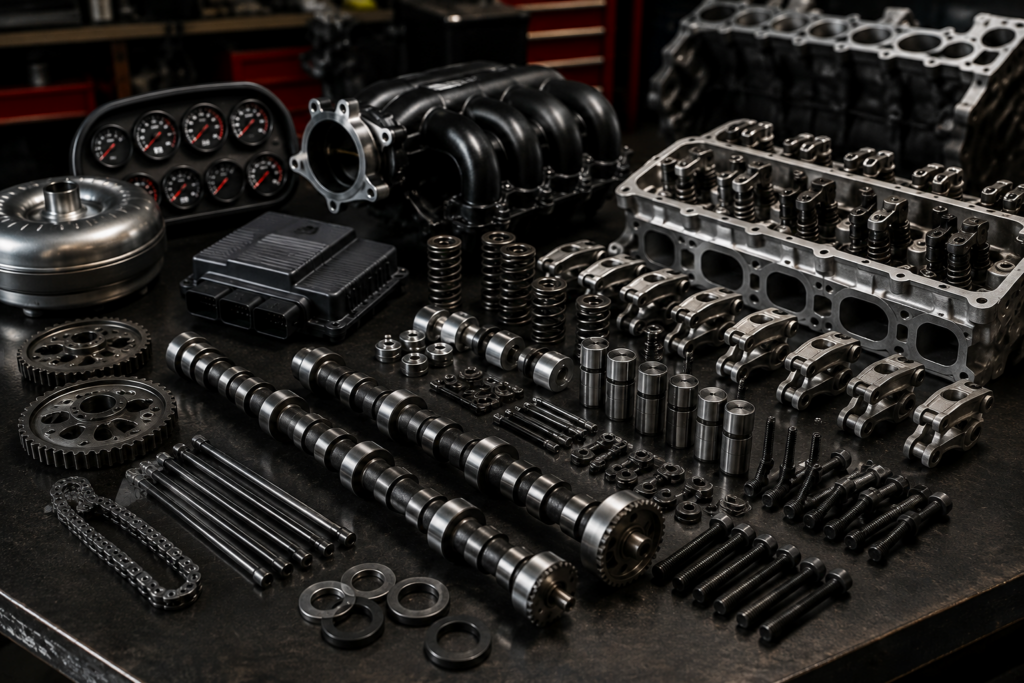
Wheel selection should account for:
Oversized wheels with very short tire sidewalls may reduce ride comfort and increase the risk of damage on real roads.
The wheel and tire package should support both the vehicle’s visual design and its intended performance.
A restomod exhaust system influences:
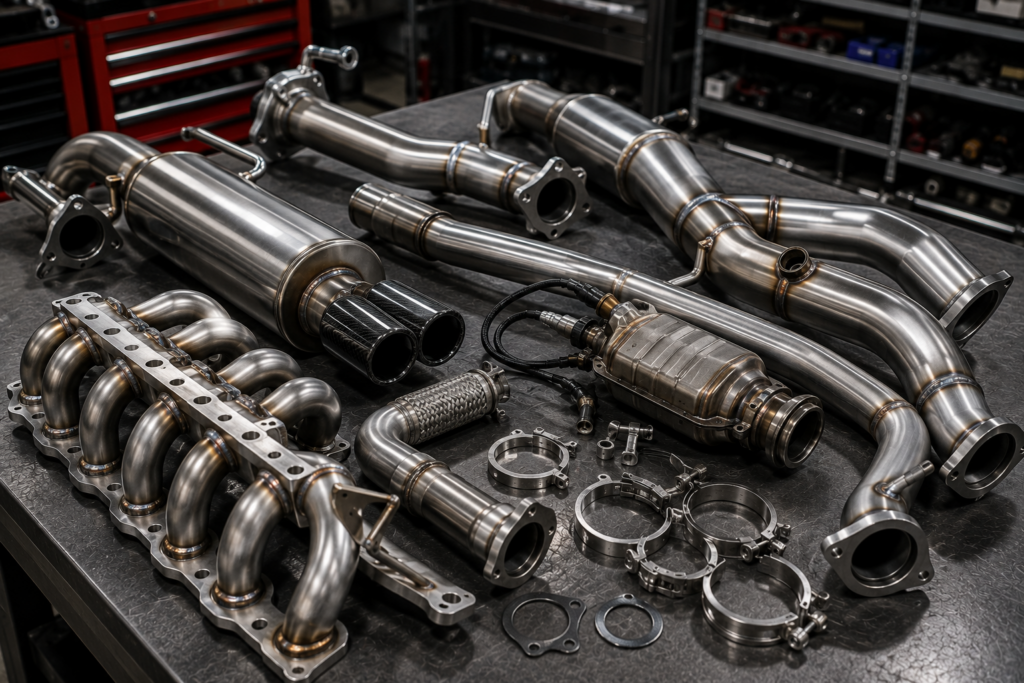
Planning may involve:
The loudest exhaust is not automatically the best.
A street-driven vehicle may need a system that provides an appropriate tone without excessive cabin drone, heat, or ground-clearance problems.
The exhaust must also account for brake lines, fuel lines, wiring, floor temperature, and suspension movement.
Air conditioning is one of the most valuable improvements for a regularly driven classic vehicle in North Carolina.
Integration may require:
The cooling system and electrical system must support the additional load.
Cabin comfort may also benefit from:
A powerful restomod is difficult to enjoy if the cabin is excessively hot, noisy, or uncomfortable.
The driver should be able to monitor critical vehicle information.
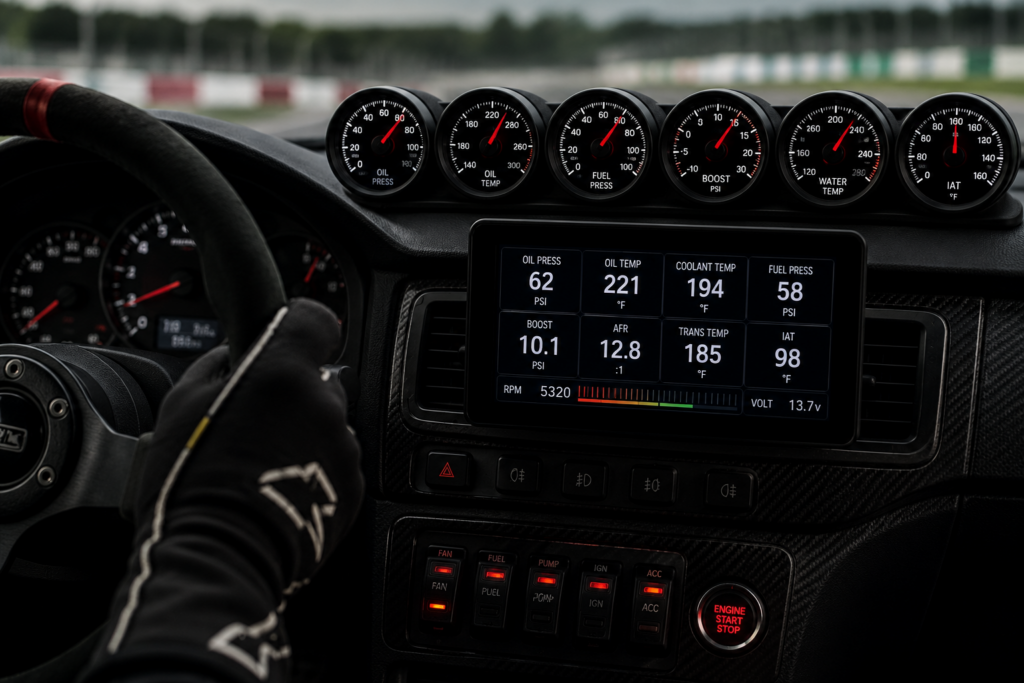
Instrumentation may include:
Possible solutions include:
The gauges should be accurate, readable, and consistent with the vehicle’s design.
A restomod interior may preserve the vehicle’s period character while improving comfort, control, and safety.
Potential changes may include:
The interior should reflect how the vehicle will be used.
A long-distance cruiser may need different seating, insulation, and storage from a track-oriented vehicle.
Modern elements should be integrated thoughtfully so the interior does not lose its classic identity unless that is the owner’s intended design.
Classic lighting may be inadequate for regular nighttime driving.
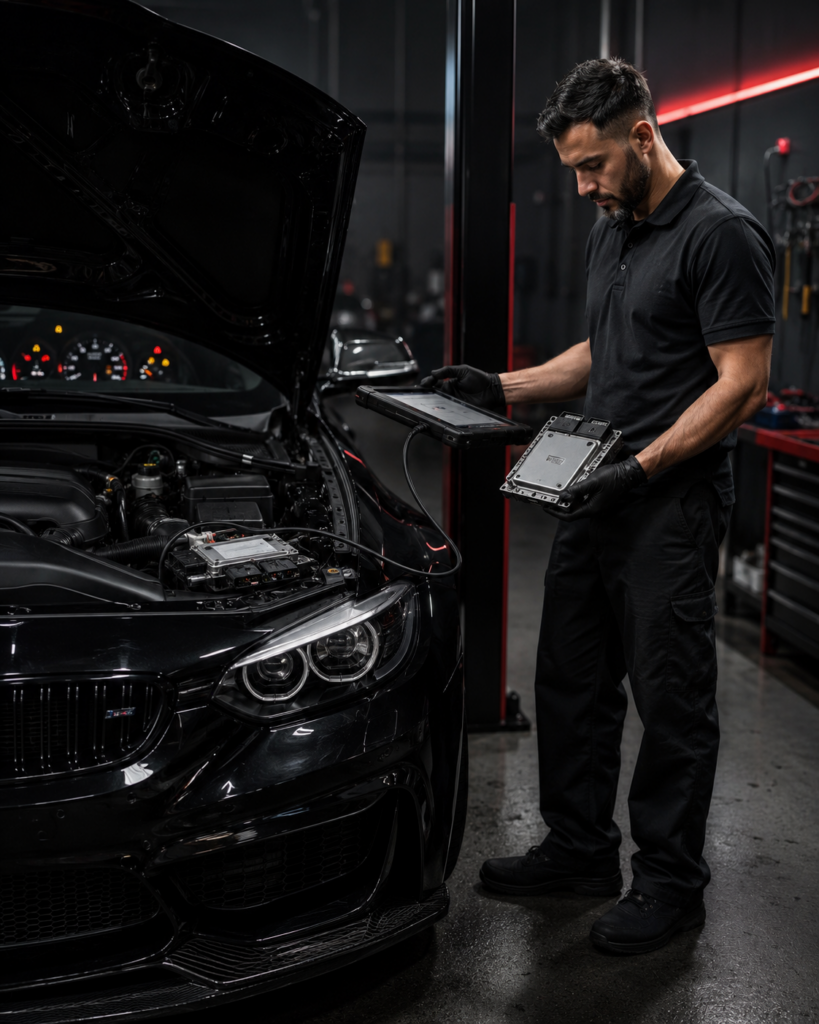
Potential improvements may include:
Lighting changes should maintain appropriate beam control and road legality.
Brighter bulbs alone may overload old switches or wiring. Electrical capacity, relays, connectors, and grounds should be evaluated together.
Depending on the vehicle and intended use, safety planning may include:
No modification can make an older vehicle identical to a modern vehicle in crash protection.
However, thoughtful improvements can address specific limitations and reduce avoidable risks.
Competition equipment should be selected according to the sanctioning organization and intended activity.
A street-oriented restomod should account for:
The most enjoyable street restomod often combines:
Peak horsepower should not overshadow the characteristics the driver will experience every time the vehicle is used.
A classic vehicle intended for autocross, drag racing, or road-course events may require additional planning.
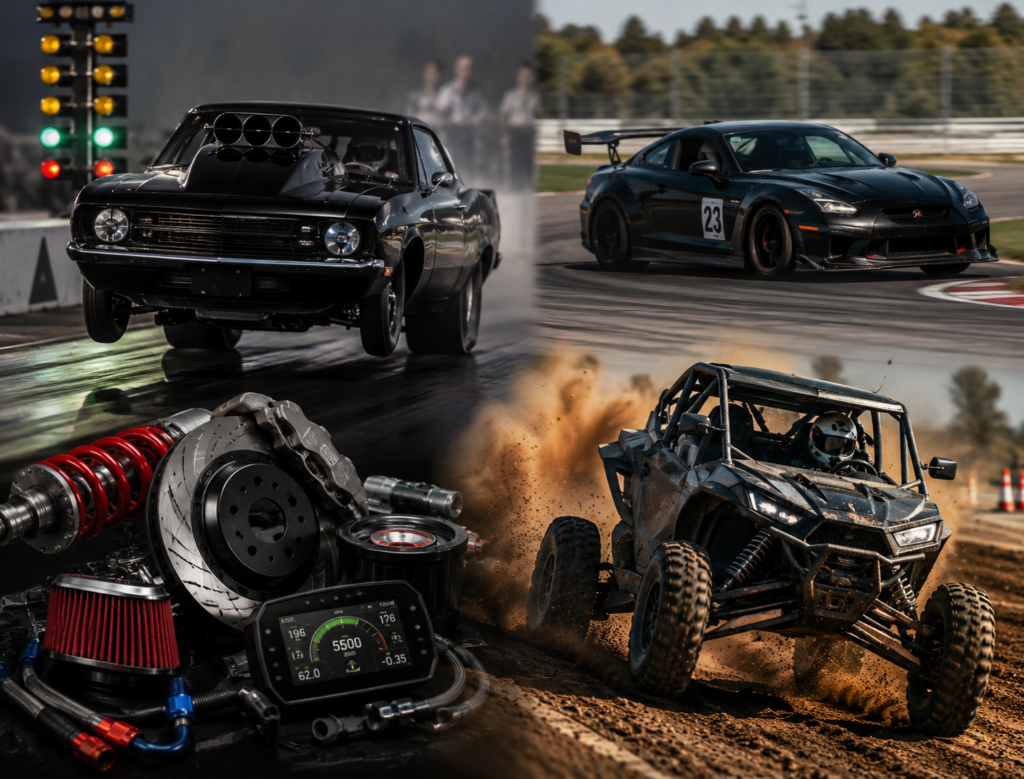
Potential priorities include:
A dual-purpose vehicle requires compromise.
A track-capable suspension may reduce street comfort. Aggressive brake pads may create noise and reduced cold performance. Motorsport tires may be unsuitable in rain or cold weather.
The build should reflect how often the vehicle will participate in competition and how it must behave the rest of the time.
Classic-car restomod projects may focus on:
The design should preserve the visual character that made the car desirable.
Body modifications, wheel size, stance, trim, lighting, and interior materials should support the same design language.
Classic trucks present different requirements from classic cars.
Planning may need to consider:
A classic truck used for cruising may need a different setup from one intended for hauling, drag racing, or aggressive street performance.
The powertrain, suspension, gearing, wheels, and brakes should reflect how the truck will actually be used.
Modernization should not automatically erase the qualities that make the vehicle special.
Classic character may be preserved through:
The correct balance is personal.
Some owners want a nearly stock appearance with modern systems hidden underneath. Others want the performance modifications to be visually obvious.
Big South Performance begins with the owner’s vision rather than assuming one design approach.
Uncoordinated parts purchases can create compatibility problems, repeated labor, and unnecessary expense.
The engine, transmission, gearing, suspension, brakes, wheels, and tires must support the same intended use.
Rust, frame damage, and poor previous repairs can affect the safety and feasibility of the project.
A restomod must be able to stop, steer, and maintain traction as well as accelerate.
Modern power, air conditioning, tight engine bays, and warm weather can overwhelm an inadequate cooling system.
Old or poorly modified wiring may not support modern fuel pumps, fans, ECUs, lighting, and comfort systems.
An excessively low or stiff setup can reduce travel, traction, comfort, and ground clearance.
Wheel diameter, width, offset, backspacing, brakes, suspension, and body clearance must be evaluated together.
Spark plugs, filters, belts, fuses, sensors, fluids, and diagnostic connections should remain accessible.
Uncontrolled additions can affect cost, schedule, parts compatibility, and the original design vision.
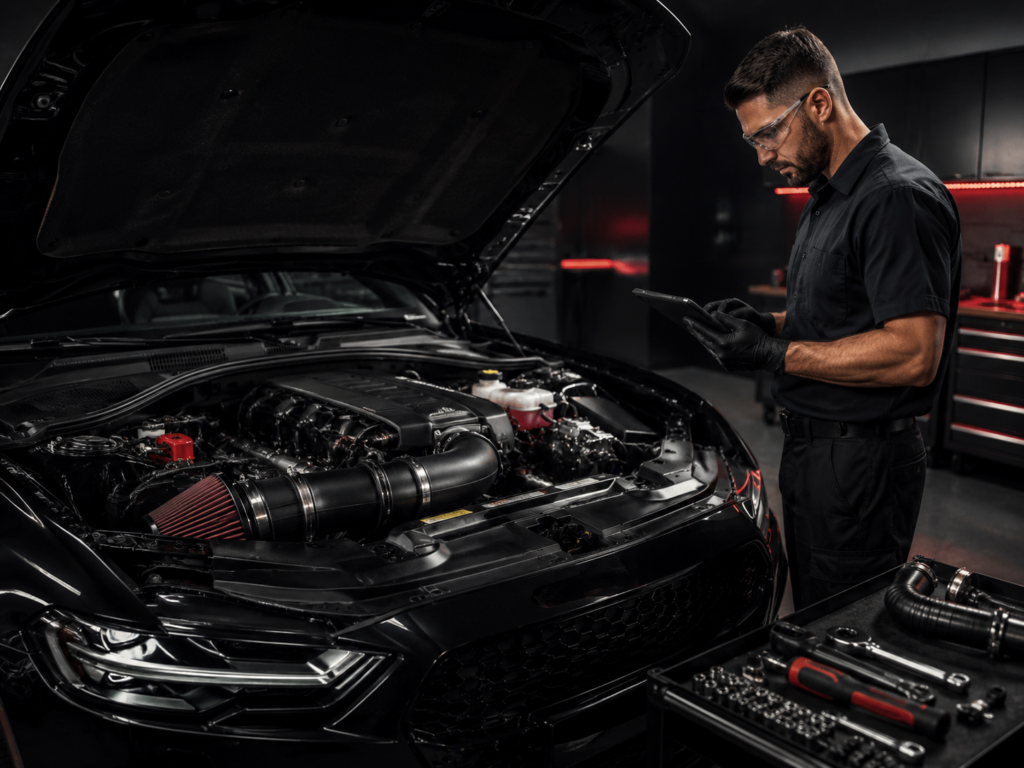
The project begins with the owner’s priorities:
The current vehicle is reviewed for:
The project is divided into systems and stages.
The scope may identify:
The engine, transmission, rear axle, gearing, fuel system, cooling, exhaust, and ECU strategy are planned together.
The handling and braking systems are selected according to vehicle weight, tire package, intended use, and comfort expectations.
Wiring, gauges, lighting, air conditioning, power accessories, and interior controls are integrated into the overall design.
Wheel size, offset, backspacing, brake clearance, suspension clearance, body clearance, and tire availability are verified.
Components are installed with attention to:
Applicable engine, transmission, fan, fuel-pump, gauge, and diagnostic functions are configured for the completed vehicle.
The vehicle is evaluated for:
A street-focused restomod should be reviewed for:
The owner should understand:
A comprehensive restomod may be completed in phases.
A logical staged build could include:
The correct sequence depends on the vehicle and scope.
Stages should be planned together from the beginning so earlier work does not need to be removed or repeated later.
Restomod costs vary widely because the term can describe anything from targeted upgrades to a complete vehicle rebuild.
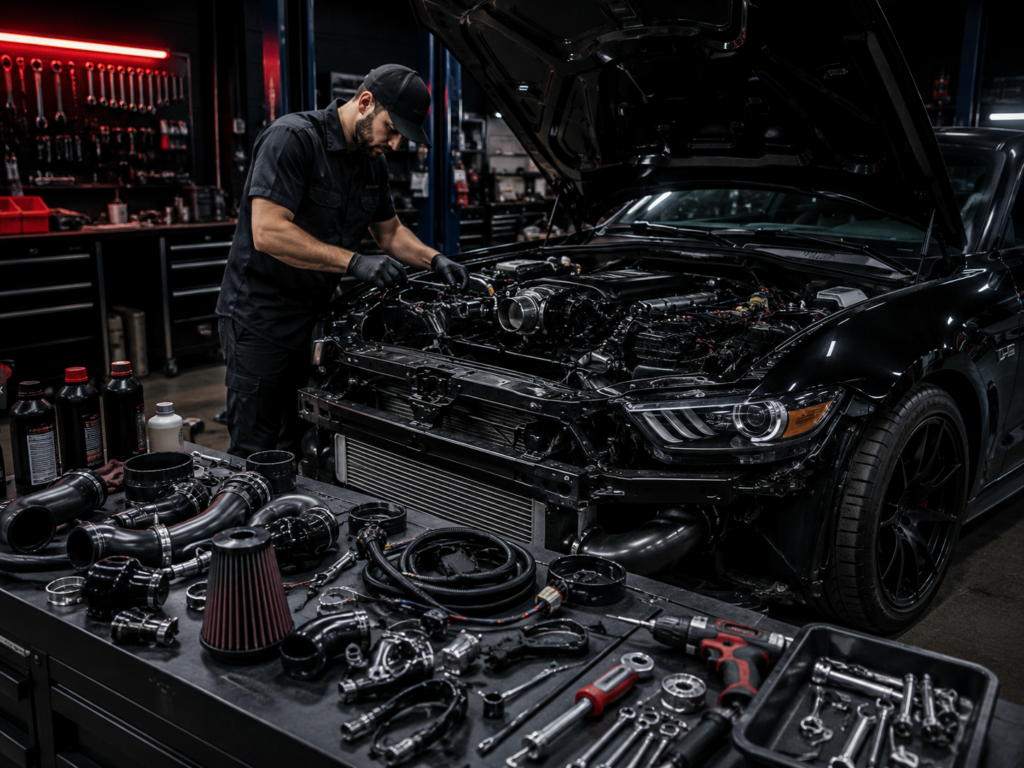
Major cost factors include:
A less expensive donor vehicle may require more structural, body, electrical, and mechanical correction than a higher-quality starting point.
The most accurate estimate requires a physical evaluation and a clearly documented scope.
Customer-supplied parts may be evaluated, but compatibility, condition, quality, and completeness must be confirmed.
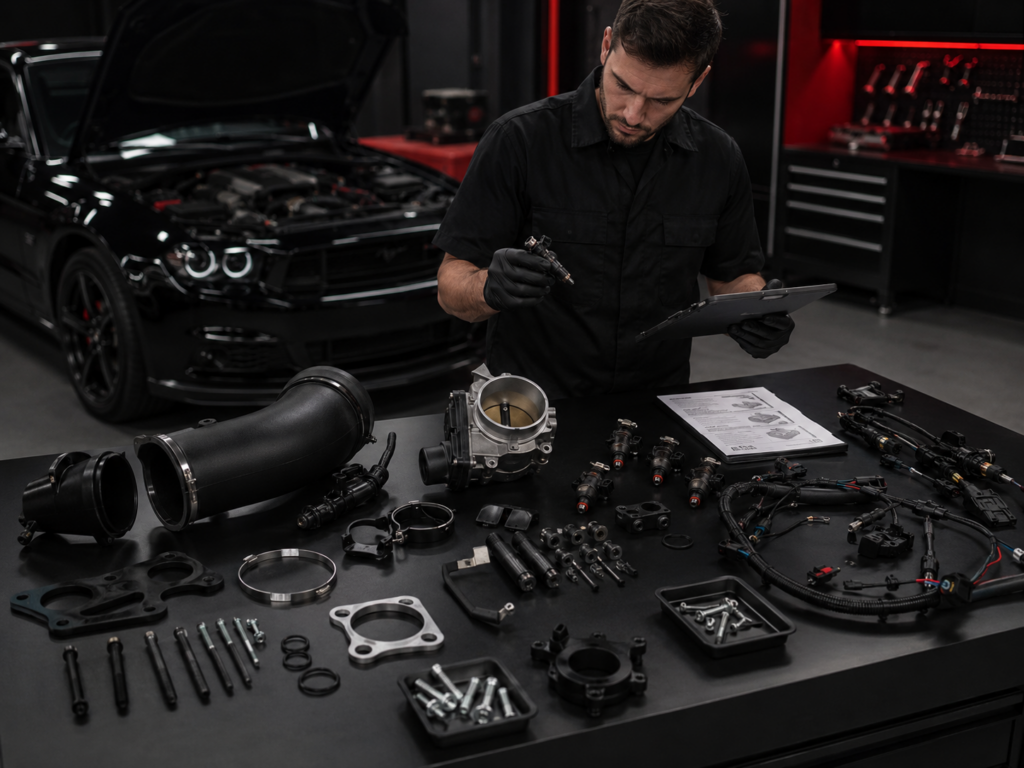
Common concerns include:
Before purchasing major components, confirm:
A complete build plan can reduce unnecessary purchases and duplicated labor.
A restomod can provide dependable operation when the mechanical and electronic systems are properly selected and integrated.
Reliability depends on:
Modern parts alone do not guarantee modern reliability.
A modern engine installed with poor wiring, inadequate cooling, weak fuel delivery, incorrect gearing, or an incompatible calibration may remain difficult to operate.
The vehicle must be developed as a complete system.
A restomod may combine components from several manufacturers, model years, and systems.
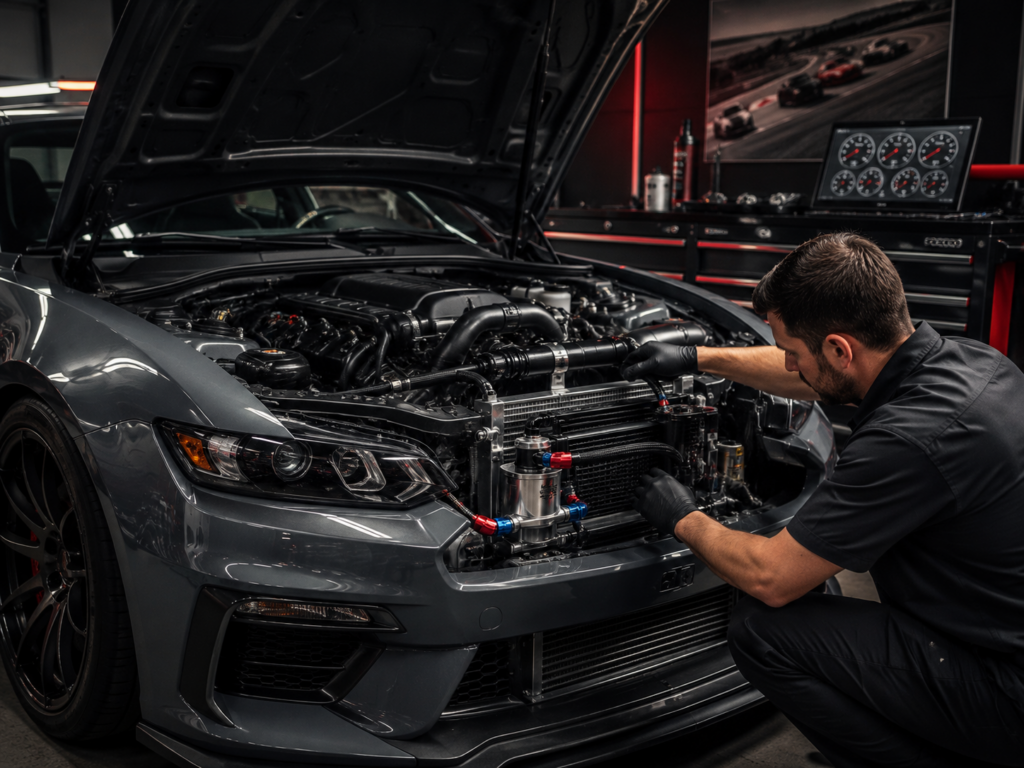
Accurate documentation is important.
Maintenance information should identify:
A maintenance plan may include:
Motorsport use may require more frequent inspection.
Street-driven restomods must comply with applicable federal, state, and local requirements.
The U.S. Environmental Protection Agency’s vehicle and engine tampering policy addresses modifications that remove, bypass, defeat, or render required emissions-control systems inoperative. Review the current EPA vehicle and engine tampering policy.
North Carolina requires eligible vehicles to complete annual safety inspections. Eligible vehicles registered in designated counties may also be subject to emissions inspections:
Vehicle owners should consider how modifications may affect:
Big South Performance does not recommend using software or hardware to conceal faults or defeat legally required emissions systems.
Requirements can change. Current regulations should be verified before modifying a street-driven vehicle.

Big South Performance publicly identifies high-performance restomod builds as one of its primary specialties.
The powertrain, wiring, fuel system, cooling, drivetrain, suspension, steering, brakes, wheels, tires, interior, and comfort systems are considered together.
Modern restomods often depend on correct engine-management, transmission, cooling-fan, fuel-pump, gauge, and diagnostic integration.
The project is planned around how the vehicle should accelerate, handle, stop, cool, and respond—not only how it should look.
Modernization can be subtle or visible depending on the owner’s vision. The goal is to preserve what makes the vehicle meaningful while correcting the limitations that affect its use.
A weekend cruiser and a motorsport-capable restomod require different powertrains, suspension settings, brakes, tires, cooling systems, and safety equipment.
Large projects can be divided into logical phases while preserving a unified long-term plan.
A responsible project accounts for the vehicle’s condition, parts availability, legal requirements, budget, maintenance, and intended use.
Big South Performance serves classic-vehicle owners from Winston-Salem and surrounding communities, including:
Owners may travel beyond their immediate community to work with a performance shop that understands restomod powertrains, ECU integration, classic-vehicle systems, and complete vehicle development.
Provide:
Detailed information helps Big South Performance determine whether the proposed scope and vehicle are compatible with its current capabilities.
A restomod is a classic vehicle that combines restored or preserved styling with selected modern performance, safety, electrical, comfort, and drivability improvements.
A restoration generally aims to return a vehicle to factory-original or historically accurate condition. A restomod allows modern engines, transmissions, brakes, suspension, wiring, air conditioning, and other upgrades.
No. The original engine may be retained and upgraded when it supports the owner’s goals. A modern engine swap is only one possible approach.
Yes. Modern systems can often be integrated while preserving original body lines, trim, colors, gauges, upholstery, and overall character.
Priorities commonly include structural condition, brakes, steering, tires, cooling, wiring, fuel delivery, reliable engine management, and comfortable highway gearing.
Not every vehicle needs overdrive, but it can reduce highway engine speed and improve cruising comfort. Transmission ratios, differential gearing, tire size, and engine powerband must be evaluated together.
Potentially. The compressor, accessory drive, condenser, evaporator, hoses, electrical system, cooling system, and cabin controls must be integrated correctly.
A modern engine may improve starting, diagnostics, and parts support, but overall reliability also depends on wiring, cooling, fuel delivery, transmission, drivetrain, brakes, and installation quality.
Braking, tires, steering, suspension, and chassis condition should be evaluated alongside power upgrades. A balanced vehicle must be able to stop and maintain control.
A Pro Touring build is generally a performance-focused classic vehicle with modern suspension, brakes, steering, wheels, tires, powertrain, and chassis improvements intended to deliver contemporary handling and control.
Yes, when it is planned around cooling, traffic, fuel availability, ride quality, noise, weather protection, air conditioning, serviceability, and routine maintenance.
Potentially. Track use may require additional brakes, cooling, oil control, suspension development, tires, safety equipment, and inspection.
Cost depends on vehicle condition, corrosion, body and paint needs, powertrain, wiring, fuel, cooling, suspension, brakes, steering, interior, wheels, tires, comfort systems, and project scope.
The timeline depends on the vehicle’s condition, project scope, parts availability, specialist services, body work, integration requirements, and changes made during the project.
It is usually better to establish the complete project plan first. Individually compatible parts may conflict with the powertrain, suspension, brakes, wheels, wiring, or long-term design.
A partially completed or previously modified project may be evaluated. Existing workmanship, wiring, parts, structural condition, powertrain, fuel, cooling, brakes, and suspension must first be understood.
Potentially. Original gauges may require compatible sending units, signal converters, electronic interfaces, or internal modernization.
No. Wheel design should reflect the desired appearance, brake clearance, suspension, tire availability, ride quality, and intended use.
A street-driven restomod must comply with applicable federal emissions law and North Carolina safety, registration, and emissions-inspection requirements.
Provide the vehicle year, make, model, condition, current powertrain, intended use, desired style, performance goals, comfort requirements, parts already purchased, budget, timeline, and detailed photographs.
A successful restomod begins with a clear vision and a plan that treats the vehicle as one complete system.
Contact Big South Performance to discuss your classic car or truck, current condition, desired appearance, powertrain preferences, driving goals, comfort requirements, budget, and long-term plans.
Big South Performance serves Winston-Salem, Forsyth County, and the surrounding Piedmont Triad with high-performance restomod builds, ECU tuning, powertrain integration, and motorsport-focused vehicle development.
Tell us what you drive, what you want to preserve, and how you want the completed vehicle to perform.