Big South Performance helps automotive enthusiasts plan and develop compatible engine-swap and powertrain-conversion projects in Winston-Salem, Forsyth County, and the surrounding Piedmont Triad.
A successful engine swap involves much more than placing a different engine in the vehicle. The engine, transmission, wiring, ECU, fuel system, cooling system, exhaust, driveshaft, differential, suspension, brakes, gauges, and supporting electronics must function together.
Big South Performance approaches engine swaps as complete vehicle-integration projects.
Before recommending a conversion strategy, we consider the vehicle platform, proposed engine, transmission, intended use, desired performance, legal requirements, supporting systems, budget, and long-term build direction.
Whether you are modernizing a classic car, developing a restomod, replacing an outdated powertrain, or planning a performance-focused conversion, the project should begin with a complete plan.
Contact Big South Performance to discuss your vehicle, proposed powertrain, current condition, intended use, and performance goals.
An engine swap replaces the vehicle’s original engine with a different engine configuration.
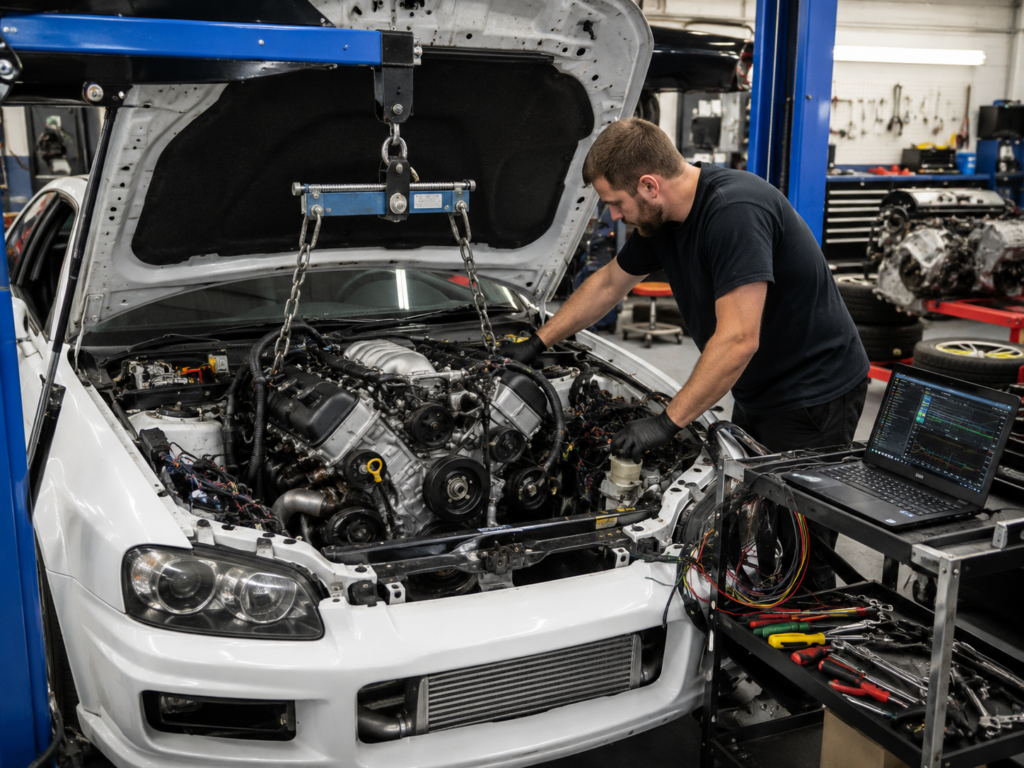
Some projects use a newer engine from the same manufacturer. Others combine engines, transmissions, electronics, and vehicle platforms that were never originally designed to work together.
Depending on the vehicle and project scope, an engine conversion may require planning and integration involving:
Not every project requires every item. However, each system should be evaluated before parts are purchased or fabrication begins.
An engine swap is the installation and integration of a different engine into a vehicle.
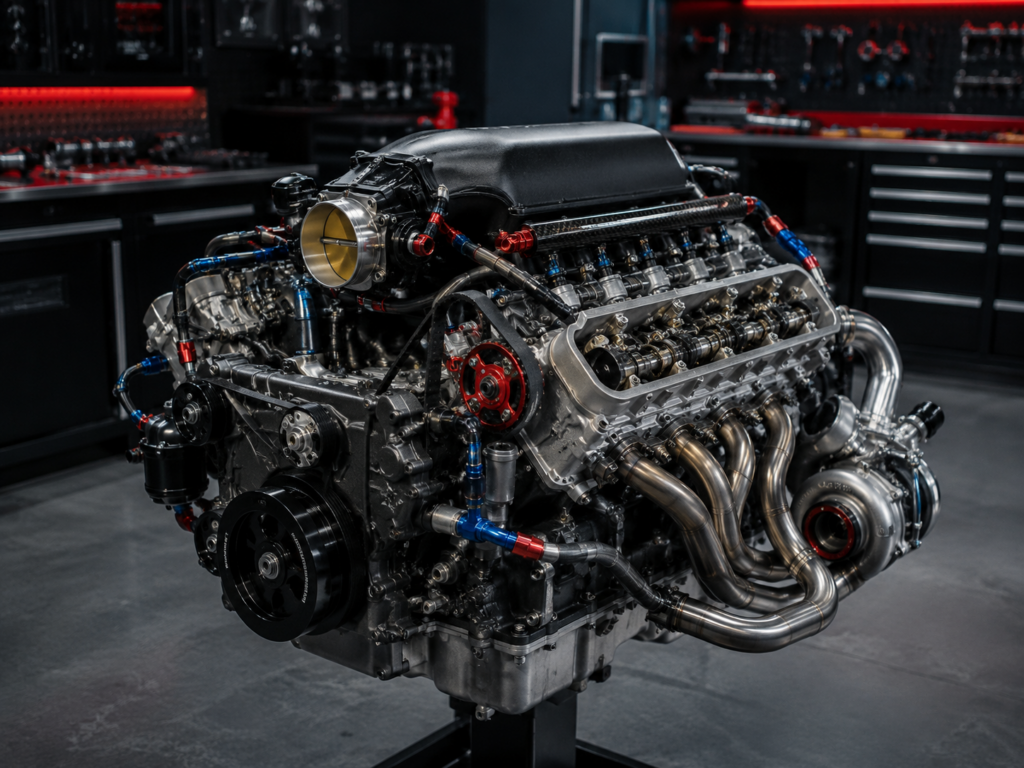
The replacement engine may be:
A complete engine swap must address more than physical fitment.
The engine must receive:
The transmission and drivetrain must also be capable of transferring the engine’s torque to the wheels.
A vehicle that starts and moves is not necessarily a completed or properly integrated engine swap.
An engine replacement generally installs the same engine type or a direct-compatible replacement.
| Engine Replacement | Engine Swap |
|---|---|
| Uses the same or directly compatible engine | Uses a different engine configuration |
| Usually retains original wiring and ECU | May require custom wiring and ECU integration |
| Often retains the original transmission | May require a different transmission |
| Usually uses factory mounts and accessories | May require mounts, clearance changes, and fabrication |
| Generally retains factory fuel and cooling systems | May require upgraded fuel and cooling systems |
| Usually follows an established repair procedure | Requires custom planning and system integration |
An engine swap is normally more complex because the vehicle’s original systems may not be compatible with the new powertrain.
An owner may consider an engine swap for several reasons.

A newer or larger engine may offer more horsepower, torque, aftermarket support, or tuning potential.
A modern engine can provide benefits such as:
Classic vehicles often retain their original appearance while receiving modern powertrain, cooling, braking, steering, wiring, and comfort improvements.
A conversion may be considered when the original engine is difficult to repair, poorly supported, or unsuitable for the owner’s intended use.
Some owners choose a different powertrain to support a specific drag-racing, autocross, road-course, or other motorsport objective.
A new engine platform may provide a stronger foundation for future naturally aspirated or forced-induction upgrades.
The best reason for an engine swap is not simply that a particular engine is popular. The powertrain must make sense for the vehicle, intended use, budget, and complete build plan.
Choosing an engine is one of the most important decisions in the project.
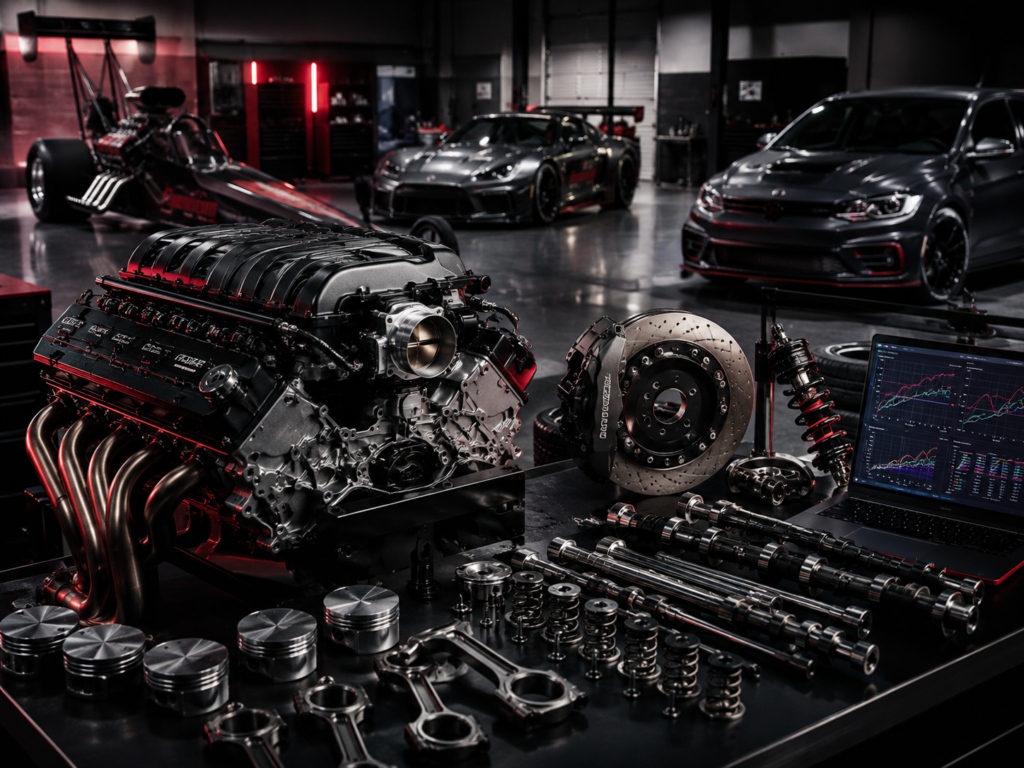
Important factors include:
The engine with the highest advertised output is not automatically the best choice.
A heavy engine may change the vehicle’s handling. A wide or tall engine may create clearance problems. An aggressive engine may require fuel that is inconvenient for street use. A high-torque engine may exceed the capability of the existing transmission, differential, or axles.
The selected engine should support the vehicle’s intended function.
The engine and transmission must be planned together.
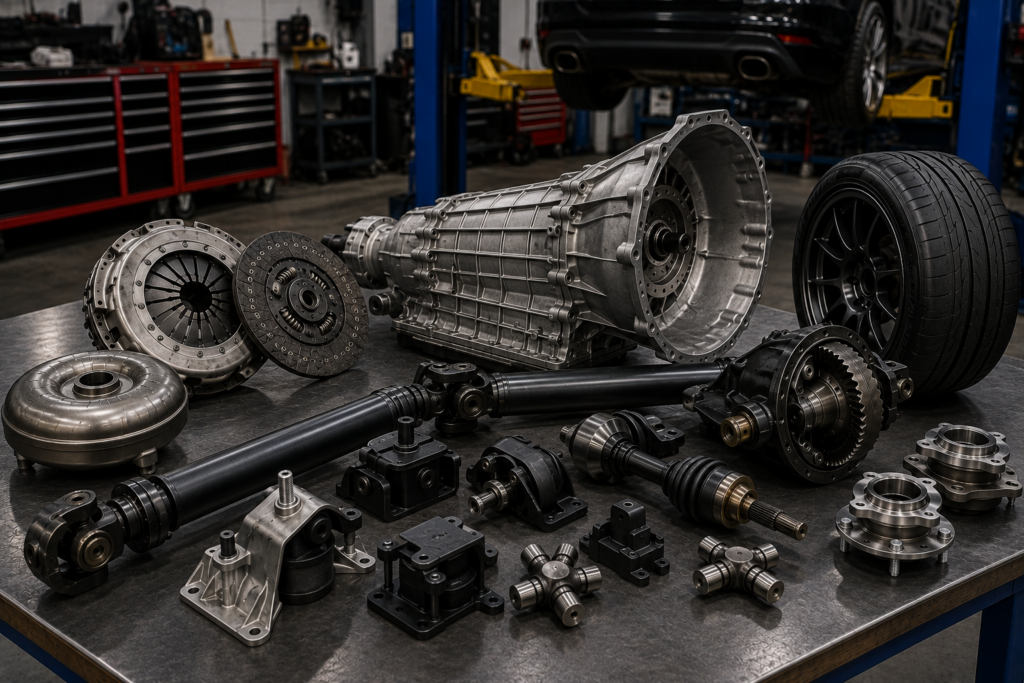
A transmission must be compatible with:
A manual transmission conversion may also require:
An electronically controlled automatic transmission may require a compatible ECU, standalone controller, wiring, calibration, and vehicle-speed information.
Transmission choice should be based on more than whether it physically bolts to the engine.
The engine and transmission must be positioned accurately.
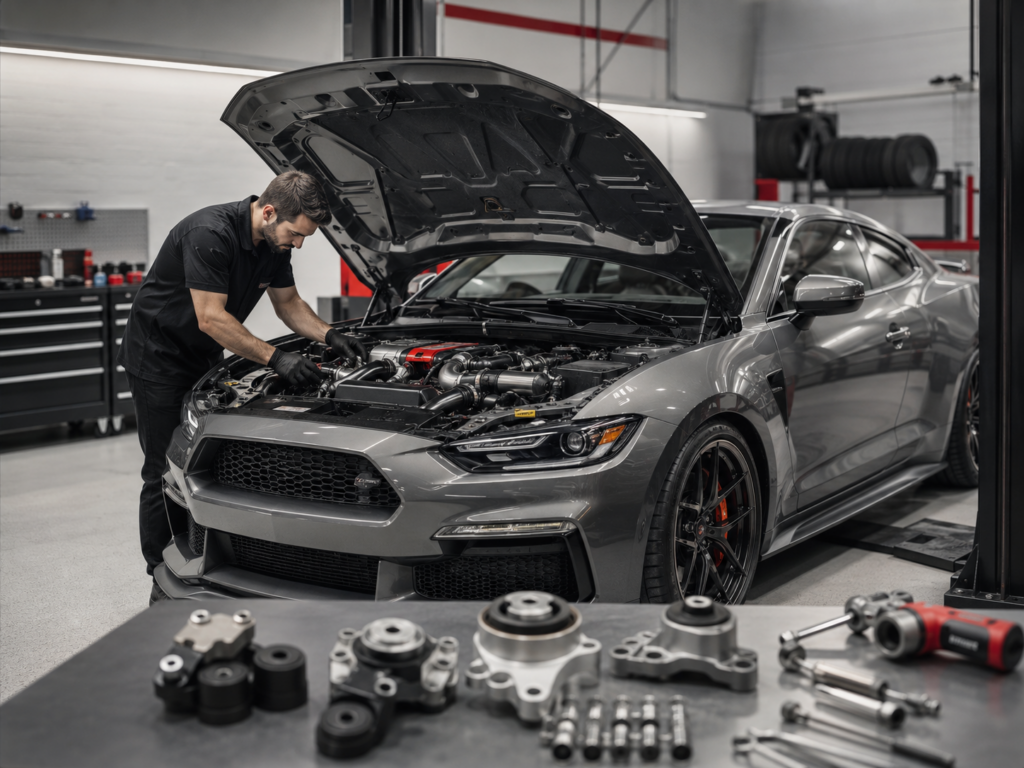
Mounting decisions affect:
Incorrect placement may create:
Mounts must also be appropriate for the engine torque, vehicle use, and desired level of vibration isolation.
A street-driven vehicle may benefit from a different mount strategy than a dedicated competition car.
The bottom of the engine often creates some of the most difficult fitment challenges.
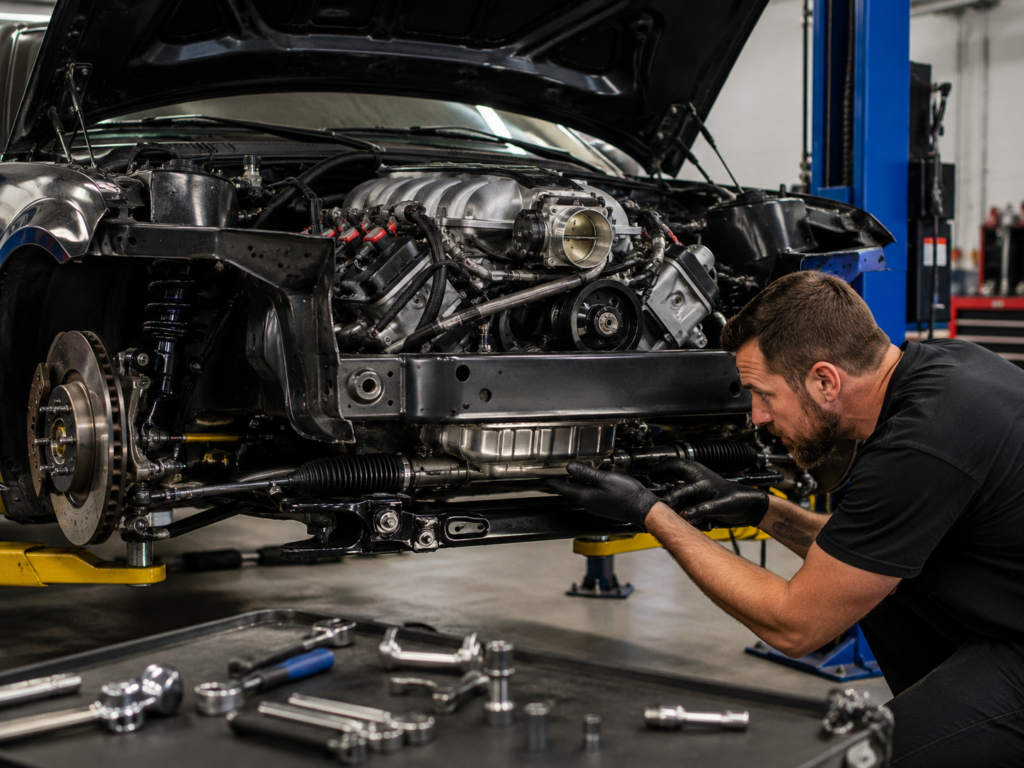
The oil pan may interfere with:
Changing the oil pan is not simply a matter of creating physical space.
The oiling system must maintain:
A motorsport vehicle may need improved baffling, windage control, an accumulator, or another application-specific oil-control strategy.
Steering and suspension components must retain safe movement throughout their full range of travel.
Wiring is one of the most important parts of a modern engine swap.
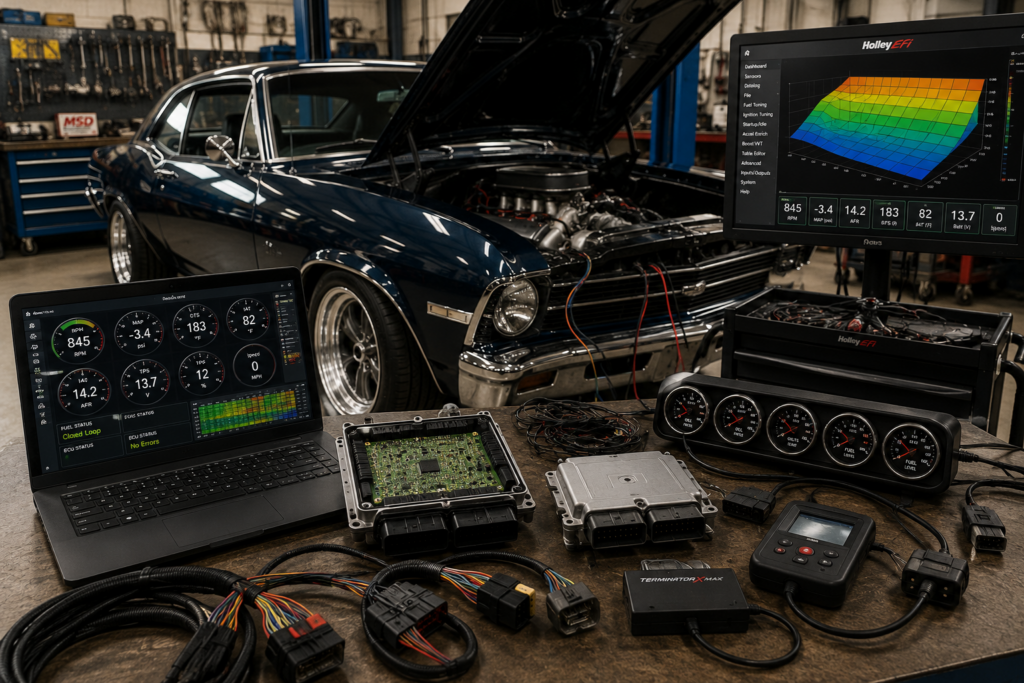
The new engine may require communication between:
A poorly integrated harness may cause:
Wiring should be properly routed, protected, fused, grounded, labeled, and secured.
Temporary wiring shortcuts can create long-term reliability and serviceability problems.
The engine control unit must be compatible with the engine, sensors, injectors, throttle system, ignition, transmission, and vehicle application.
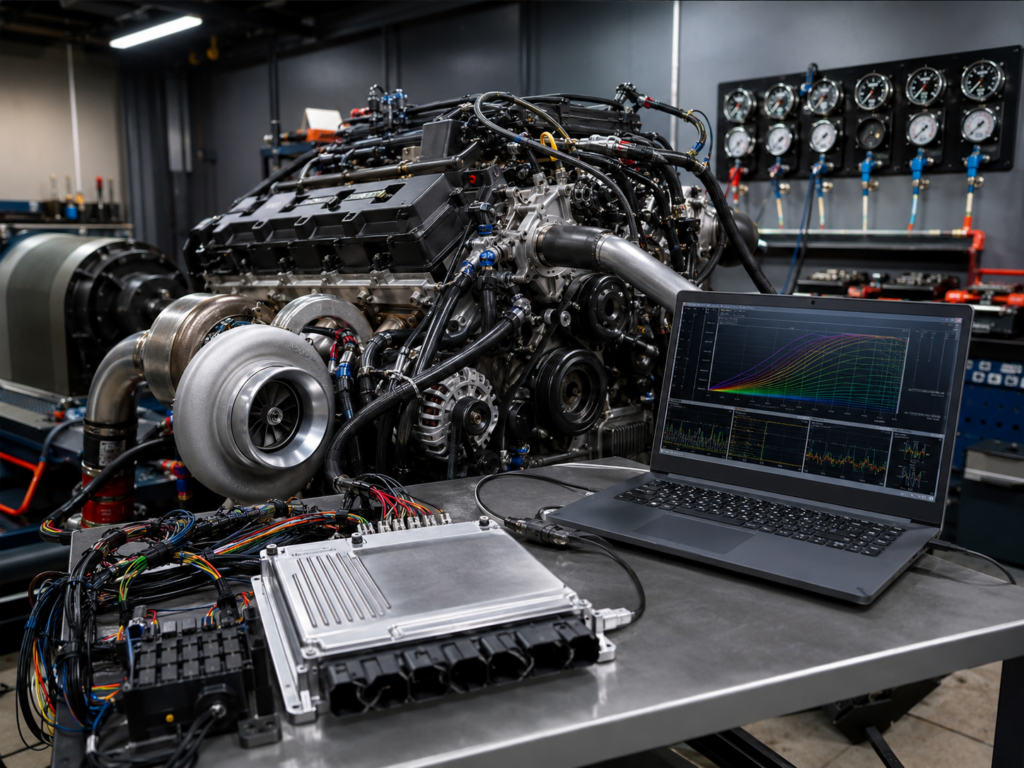
An engine swap may use:
The correct choice depends on:
Engine-management planning may also involve:
Big South Performance’s publicly stated capabilities include ECU tuning and motorsport engineering, making electronic integration an important part of evaluating a compatible engine-swap project.
The new engine may require a different fuel pressure, fuel volume, regulator arrangement, injector capacity, or return configuration than the original vehicle.
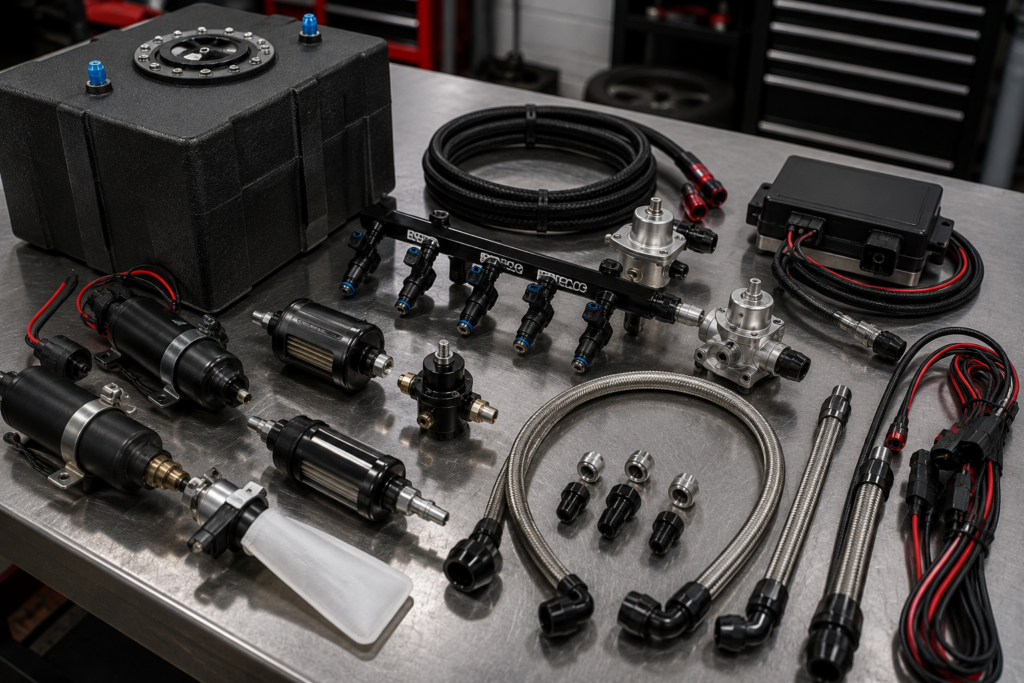
Fuel-system planning may involve:
The system must support:
A fuel pump advertised for a certain power level may deliver less fuel when operating at higher pressure, elevated temperature, or reduced voltage.
Electrical supply, wire size, relays, grounds, and pump control are part of fuel-system performance.
A modern or higher-output engine may produce more heat than the original cooling system can manage.
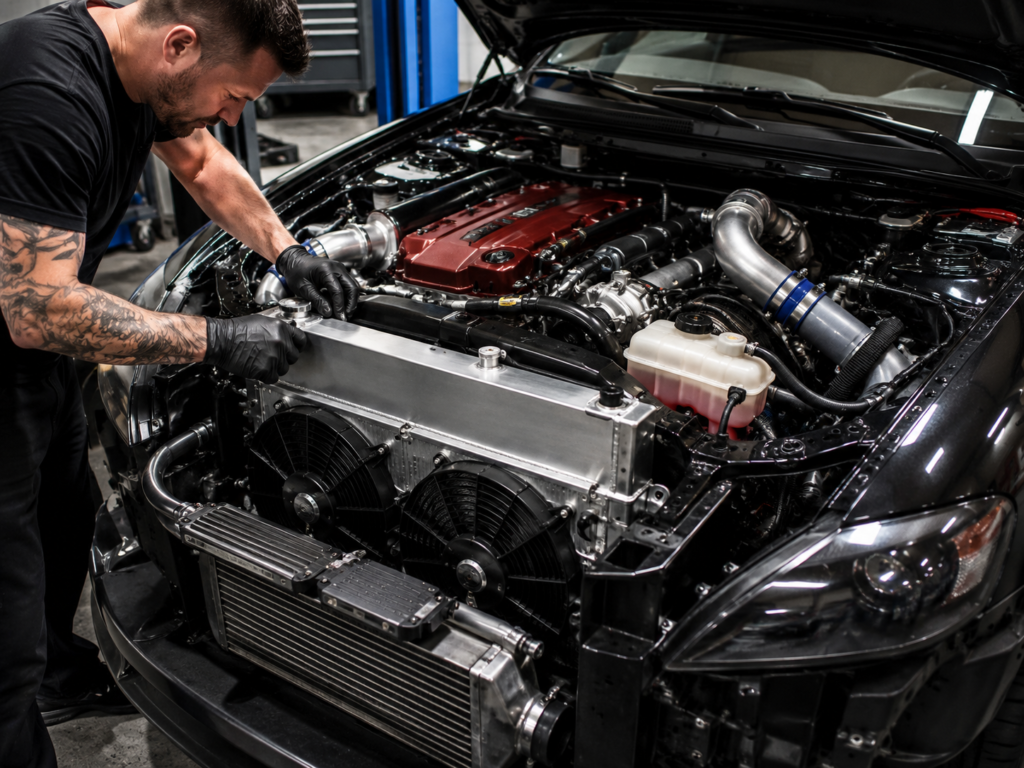
Cooling-system planning may include:
The largest radiator that fits is not automatically the correct solution.
Air must be directed through the radiator rather than around it. Fans must move sufficient air at low vehicle speed. The cooling system must also remove trapped air and maintain proper coolant circulation.
A street-driven conversion should remain stable during Winston-Salem traffic, summer temperatures, highway use, and extended idle.
A motorsport vehicle may require additional cooling capacity for repeated or sustained high-load operation.
The exhaust system must fit within the available space while supporting the engine and vehicle.
Engine swaps may create interference with:
Exhaust planning may involve:
Street-driven vehicles must retain legally required emissions components.
Heat must also be controlled around wiring, fuel lines, brake lines, body panels, and interior surfaces.
The engine’s accessory drive may include:
Accessory-drive challenges may include:
Mixing components from different accessory systems can create belt-alignment and serviceability problems.
The accessory layout should be selected before final engine placement, cooling-system design, and hose routing are completed.
Changing the engine or transmission may require a different driveshaft length, yoke, flange, diameter, or material.
Important factors include:
Incorrect driveline geometry may cause:
A driveshaft must be selected and installed according to the vehicle’s power, speed, length, and intended use.
The original differential and axles may not be designed for the torque or traction produced by the new engine.
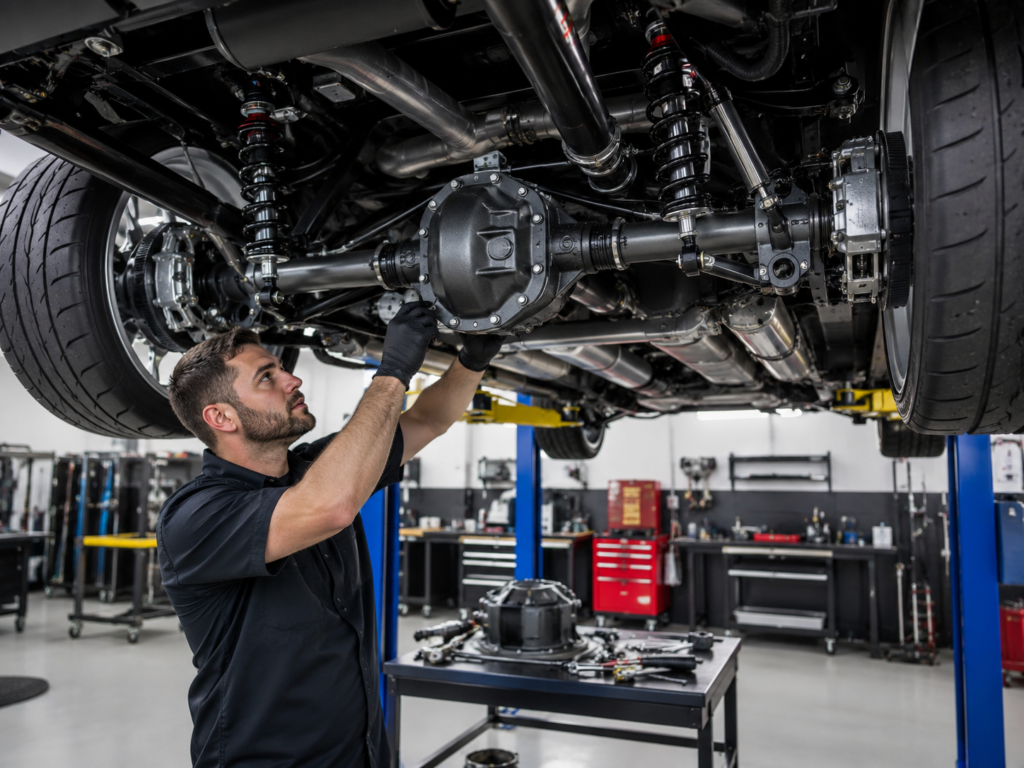
The driveline should be evaluated for:
A powertrain may operate without failure during light driving but fail when the vehicle is launched aggressively or equipped with higher-grip tires.
The gear ratio should also match the engine’s powerband, transmission ratios, tire diameter, and intended use.
A different engine may alter:
A heavier engine can increase front-axle load and understeer. A lighter engine may change ride height and damper behavior.
Suspension planning may involve:
Engine placement should account for handling and balance—not just whether the engine fits.
Additional power and speed increase the importance of braking.
The vehicle may require evaluation of:
A classic vehicle with original brakes may not be appropriate for a modern high-output powertrain without supporting upgrades.
Street vehicles need predictable cold braking and safe operation in traffic. Motorsport vehicles may require greater heat capacity and resistance to repeated high-speed stops.
The driver must be able to monitor critical vehicle information.
Engine-swap gauge integration may involve:
Possible solutions include:
A completed conversion should provide accurate information—not merely decorative gauges that do not communicate properly with the new powertrain.
Many restomod owners want modern performance without sacrificing comfort.
Air-conditioning integration may require:
Power steering, power brakes, cruise control, and other comfort systems may also require additional planning.
These systems should be considered before the engine bay becomes crowded and major component locations are finalized.
A classic vehicle may benefit from:
However, modernizing the engine alone does not create a complete restomod.
A balanced restomod may also require:
The objective should be a vehicle that starts, drives, shifts, cools, turns, and stops as a coordinated system.
A street-driven engine conversion should account for:
A conversion that performs well during full-throttle driving may still be frustrating if it overheats in traffic, creates excessive vibration, has poor low-speed manners, or requires impractical fuel.
Street use should influence engine selection, camshaft, transmission ratios, mounts, exhaust, cooling, and calibration.
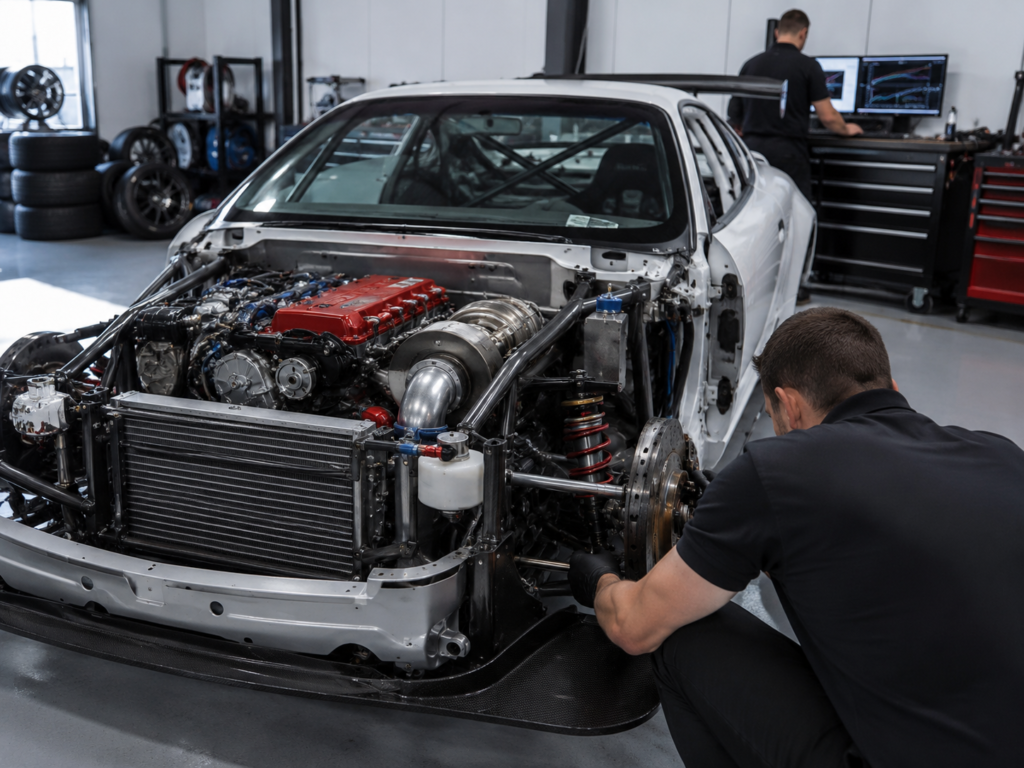
A motorsport conversion may prioritize:
Different motorsport disciplines require different solutions.
A drag-racing conversion may prioritize launch torque and driveline strength. A road-course conversion may place greater emphasis on oil control, cooling, braking, and sustained operation. An autocross vehicle may benefit from light weight, immediate response, and balanced handling.
The swap should be developed for the intended competition environment.
An inexpensive engine can become an expensive project when the required transmission, wiring, fuel system, accessories, mounts, and supporting parts are considered.
A compatible engine and transmission do not guarantee compatibility with the vehicle, ECU, accessory drive, oil pan, exhaust, or gauges.
Modern engines require accurate sensor, power, ground, communication, and control circuits.
A vehicle may operate correctly at highway speed but overheat in traffic because of inadequate airflow or fan control.
Incorrect pressure, limited pump capacity, poor electrical supply, or unsuitable lines can create drivability problems and engine risk.
Incorrect engine, transmission, or differential positioning can cause vibration and premature component wear.
More power does not improve the vehicle’s ability to stop or maintain traction.
Street-driven vehicles must comply with applicable emissions, inspection, registration, and safety requirements.
Components should be positioned with future access to filters, spark plugs, sensors, belts, fluids, and fasteners in mind.
The project begins by determining:
The vehicle should be assessed for:
The engine and transmission should be selected together.
The plan should also identify the required:
Street-driven projects should be reviewed for potential emissions, safety-inspection, registration, and insurance implications before major work begins.
The project scope should document:
The existing engine and related components are removed according to the project plan.
The engine bay can then be inspected for:
Initial positioning helps establish:
Fuel, cooling, wiring, exhaust, drivetrain, gauges, and other systems are integrated around the final powertrain location.
The control system must match the final engine, transmission, sensors, fuel system, and vehicle configuration.
Before extended operation, the project should be evaluated for:
A street-driven vehicle should be evaluated under appropriate conditions for:
The cost of an engine swap depends on far more than the purchase price of the engine.
Major cost factors include:
A low-cost donor engine does not guarantee a low-cost conversion.
The most accurate estimate requires a defined engine, transmission, vehicle, parts list, and project scope.
Parts purchased before a complete plan is established may create problems.
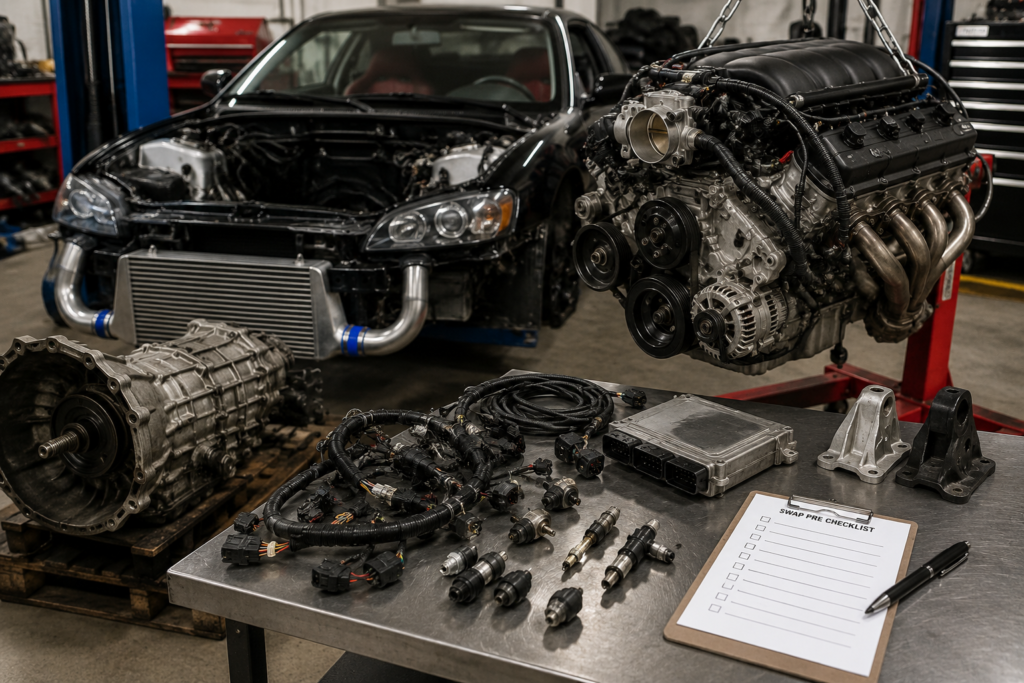
Possible issues include:
Before purchasing a donor engine or swap kit, confirm:
Big South Performance should evaluate the proposed combination before major components are purchased.
A used engine may have an incomplete or unknown history.
Where appropriate, evaluation may include:
No inspection can guarantee the remaining life of a used engine. However, gathering information before installation may reduce the likelihood of installing a powertrain with an obvious problem.
Engine swaps in street-driven vehicles must comply with applicable federal, state, and local requirements.
The U.S. Environmental Protection Agency’s current vehicle and engine tampering policy addresses modifications that remove, bypass, defeat, or render required emissions-control systems inoperative.
North Carolina also requires eligible vehicles to complete annual safety inspections. Eligible vehicles registered in designated counties may require an on-board diagnostic emissions inspection:
Vehicle owners should evaluate how a proposed conversion may affect:
Big South Performance does not recommend using software, hardware, or engine-swap work to conceal faults or defeat legally required emissions controls.
Regulations can change. Current federal and North Carolina requirements should be reviewed before modifying a street-driven vehicle.
Big South Performance considers the engine, transmission, wiring, ECU, fuel system, cooling, exhaust, drivetrain, suspension, brakes, and gauges together.
The project is evaluated around the vehicle’s intended use and performance goal—not simply whether the engine can physically fit.
Modern engine swaps depend on proper electronic control and communication. Big South Performance’s performance focus includes ECU tuning and motorsport engineering.
Classic vehicles require careful integration of modern powertrains with older chassis, electrical, fuel, cooling, steering, and braking systems.
A daily-driven conversion and a competition vehicle require different decisions regarding powerband, mounting, cooling, fuel, gearing, noise, and serviceability.
A larger conversion can often be divided into logical stages so supporting systems are completed in the correct order.
A responsible swap plan considers cost, complexity, parts availability, legal requirements, maintenance, and long-term usability.
Big South Performance serves performance enthusiasts from Winston-Salem and nearby communities, including:
Owners of classics, restomods, modified street cars, and motorsport vehicles may travel beyond their immediate area for specialized powertrain planning and integration.
Provide:
Detailed information helps Big South Performance evaluate compatibility and identify the systems that may require additional work.
An engine swap may include engine and transmission fitment, mounts, wiring, ECU integration, fuel delivery, cooling, exhaust, driveshaft changes, gauges, and calibration. The exact scope depends on the vehicle and powertrain.
No. An engine replacement generally installs the same or directly compatible engine. An engine swap installs a different engine configuration and usually requires additional integration.
Not practically. Physical size, weight, mounting, oil-pan clearance, steering, transmission, wiring, cooling, fuel, exhaust, drivetrain, legal requirements, and budget all affect compatibility.
Cost depends on the vehicle, engine, transmission, wiring, ECU, fuel system, cooling, exhaust, drivetrain, suspension, brakes, gauges, parts availability, and labor. A specific estimate requires a defined project scope.
The timeline depends on project complexity, parts availability, vehicle condition, fabrication needs, wiring, supporting upgrades, and calibration. A completion schedule should be established after evaluation.
Many modern engine swaps require ECU programming, configuration, or calibration. The exact requirements depend on the engine, transmission, control system, fuel system, and vehicle.
Potentially. Air-conditioning retention depends on compressor fitment, accessory-drive clearance, hose configuration, controls, condenser capacity, and ECU integration.
Original gauges may require compatible sending units, signal converters, CAN interfaces, or an aftermarket instrument system.
Possibly, but the transmission must be mechanically compatible and capable of supporting the engine’s torque. Adapters, controllers, clutch components, or other changes may be required.
Higher torque, vehicle weight, tire grip, and aggressive use may require drivetrain upgrades. The existing components should be evaluated before the build is finalized.
It may. Increased acceleration and speed should be considered alongside braking, suspension, tires, and overall vehicle control.
Customer-supplied parts may be evaluated, but compatibility and condition must be confirmed. Previously purchased parts may not support the complete project.
A used engine may have an unknown history. Inspection and available records can provide useful information, but they cannot guarantee remaining engine life.
A street-driven conversion must comply with applicable federal emissions law and North Carolina inspection, registration, and safety requirements. The specific requirements depend on the vehicle and conversion.
Yes, when the project is planned around street drivability, cooling, noise, fuel availability, serviceability, inspection requirements, and reliable system integration.
There is no universal best engine. The correct choice depends on the vehicle, desired character, power, weight, fuel, transmission, electronics, legal requirements, budget, and future plans.
It is usually better to establish the complete conversion plan first. An inexpensive engine may require costly supporting components or may not be suitable for the vehicle.
An incomplete or previously modified project may be evaluated. The existing fitment, wiring, fuel system, cooling, exhaust, drivetrain, and ECU configuration must first be understood.
A successful engine swap begins with a complete plan—not with an engine purchase.
Contact Big South Performance to discuss your vehicle, proposed engine and transmission, intended use, performance goals, existing parts, budget, and long-term build direction.
Big South Performance serves Winston-Salem, Forsyth County, and the surrounding Piedmont Triad with performance-focused powertrain planning, restomod development, ECU integration, and motorsport engineering.
Tell us what you drive, what powertrain you are considering, and what you want the completed vehicle to accomplish.